Manufacture
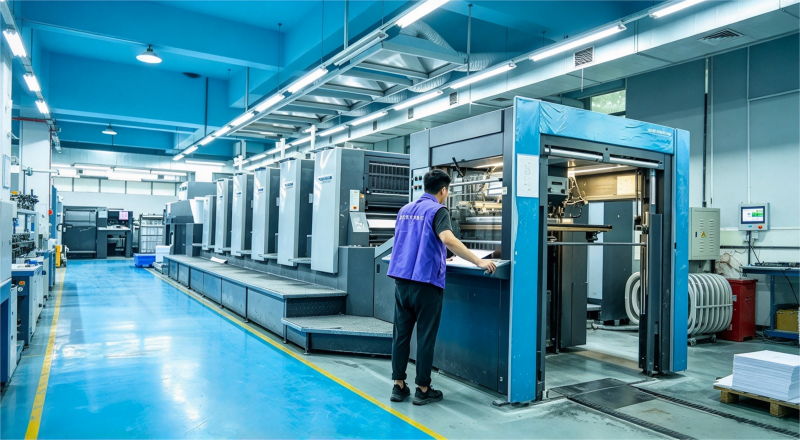
Explore our packaging factory, production equipment and rigid box manufacturing operations.
Explore Manufacturing
 Folding Rigid Boxes
Space-saving rigid packaging designs.
 Packaging Tube Boxes
Distinctive cylindrical paper packaging.
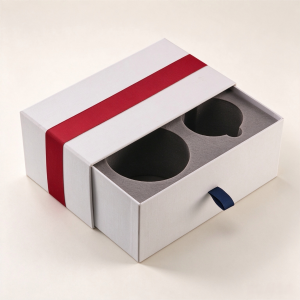 Drawer Boxes
Elegant sliding drawer box structures.
 Book-Style Boxes
Luxury book-inspired packaging designs..
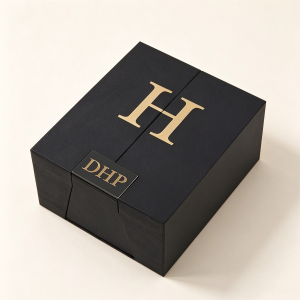 Magnetic Closure Boxes
Premium boxes with secure magnetic closure.
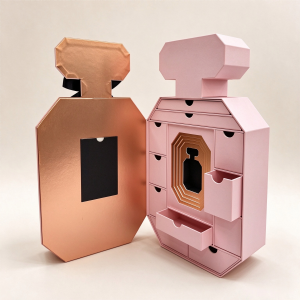 Advent Calendar Boxes
Multi-compartment seasonal gift packaging.
Explore our packaging factory, production equipment and rigid box manufacturing operations.
Explore Manufacturing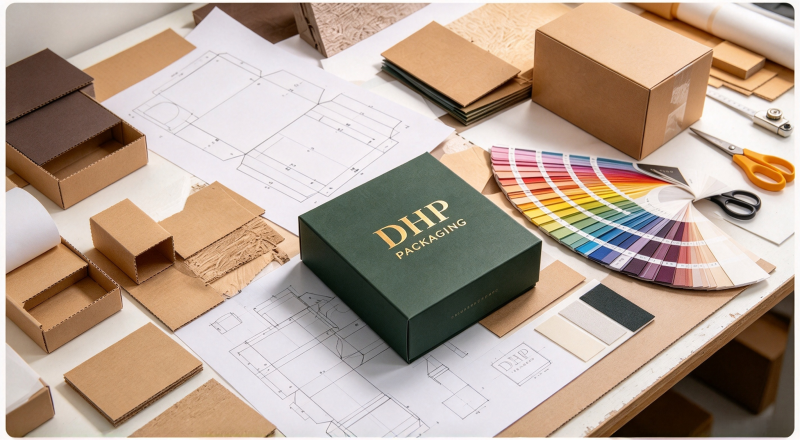
Discover our workflow from structural development and sampling to printing, assembly and quality control.
Explore Our Capabilities
Learn about responsible material choices, recyclable packaging design and reducing unnecessary material use.
Explore Sustainability
Professional packaging design support from concept to production.
Get Design Support →Explore practical packaging insights and quick answers to help you plan, customize, and order with confidence.
Discover our manufacturing expertise, dedicated team, and commitment to premium custom packaging solutions.
Explore Our Company →Stay connected with DHP Boxes
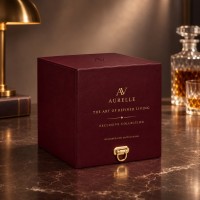
Real Custom Packaging Case Study | DHP Boxes
How DHP Boxes developed a premium magnetic rigid gift box with a fitted liquor bottle insert and integrated bottom drawer, overcoming structural stability, bottle-fitting and drawer alignment challenges through three rounds of physical sampling.
Luxury spirits packaging often requires more than a conventional rigid box. When a gift box combines a magnetic flip-top lid, a custom bottle insert, an additional bottom drawer and a decorative locking mechanism, every structural component must work together.
In this confidential project for a premium UK rum brand, the customer wanted a luxury gift box that combined product presentation, bottle protection and an additional storage compartment for accessories or brand materials.
The development involved multiple structural components and several rounds of physical sampling. Starting with a bottle dieline rather than an actual bottle, DHP Boxes worked through structural adjustments, insert dimension corrections, magnetic positioning and drawer lock optimization.
This case study demonstrates how our team approached a complex custom spirits gift box from initial structural development through iterative prototype refinement.
The customer was a premium rum brand based in the United Kingdom, looking to develop a distinctive luxury gift box for its spirits product.
The requested packaging needed to combine three important functions: presenting the liquor bottle elegantly, protecting it within a fitted insert, and providing additional storage space for accessories or brand-related materials.
Rather than using a conventional magnetic rigid box, the customer wanted a more elaborate construction with an integrated drawer beneath the main bottle compartment.
The challenge was to combine these elements into one rigid packaging system without compromising the box's stability, opening experience or overall appearance.
The proposed design involved several interconnected structural components: the magnetic flip-top lid, main rigid box body, fitted bottle insert, bottom drawer and locking detail.
Unlike a standard magnetic rigid gift box, this design required the upper and lower sections to function independently while remaining properly aligned as one assembled package.
Even a small dimensional deviation could affect several areas of the finished structure.
The rigid structure needed sufficient support to maintain its shape and provide a stable closure when the lid was shut.
The insert thickness and opening dimensions had to correspond with the actual bottle rather than relying solely on estimated measurements.
The bottom drawer and locking detail needed to remain aligned without causing the box to lift or become uneven when placed flat.
These challenges could not be fully resolved through visual design adjustments alone. They required physical prototypes and repeated structural evaluation.
At the beginning of the project, the customer did not provide a physical liquor bottle. Instead, the initial packaging development was based on a bottle dieline drawing and basic product dimensions.
The supplied reference dimensions were:
These dimensions provided an initial reference for developing the outer box and bottle insert.
However, a two-dimensional bottle drawing cannot always represent every detail of the actual physical product. Differences between the drawing and the real bottle can affect the insert thickness, cutout dimensions, support points and overall fit.
DHP Boxes therefore treated the initial dimensions as a starting reference rather than assuming that the first insert design would be suitable for mass production.
Rather than making isolated visual changes, DHP Boxes organized the development around the problems identified in each sample round.
Each round had a different priority, allowing the team to improve the main box structure first, then refine the bottle insert and finally address the detailed interactions between the lid, drawer and locking mechanism.
The first sampling round focused on verifying the relationship between the magnetic flip-top lid, the main box body and the bottom drawer.
After testing the initial sample, the team identified that the original greyboard support strength was insufficient. When the box was closed, the overall structure felt loose and lacked the rigidity expected from a premium spirits gift box.
The issue was not simply cosmetic. The structural support and closure needed to work together to maintain the box's shape and stability.
Instead of relying only on external appearance adjustments, DHP Boxes added magnetic components at the corresponding positions on the top of the box body and the lid shell.
This additional magnetic positioning helped strengthen the restraint between the lid and the main box when closed, improving closure stability and reducing unwanted movement between the connected structural components.
The purpose was to establish a more stable relationship between the lid and the box body before proceeding with further insert development.
After the main structural adjustments, the second sampling round focused on evaluating the design appearance and the fit of the bottle insert.
At this stage, the insert was still being developed from the customer's bottle dieline and the initial dimensions rather than from a physical bottle.
Once the sample was completed, the team identified differences between the drawing references and the actual bottle requirements.
The original insert thickness, slot dimensions and bottle-holding performance required further adjustment.
This highlighted an important limitation of relying exclusively on two-dimensional drawings when developing packaging for an unusually shaped or high-value liquor bottle.
The third sampling round concentrated on the issues identified during the previous two stages.
Instead of treating the bottle insert, magnetic closure and drawer as independent components, the team reviewed how they interacted within the complete packaging structure.
One particularly important detail was the height of the bottom drawer's locking component.
When the gift box was placed flat, an incorrectly positioned lock could bear against the supporting surface and push the drawer or the main box upward.
This could affect the overall flatness and stability of the packaging, even if the drawer itself appeared functional when opened.
DHP Boxes therefore adjusted the lock height to reduce this interference and improve the relationship between the drawer and the main box.
The three rounds of sampling were not simply repeated attempts to reproduce the same packaging design.
Each round addressed a different engineering concern:
Establish the structural relationship between the lid, box body and bottom drawer.
Evaluate the visual design and identify bottle insert dimensional discrepancies.
Refine insert thickness, bottle slots, magnetic positioning and drawer lock height.
This sequence helped move the development from basic structural assembly toward a more coordinated packaging design.
For a complex luxury liquor gift box, this type of staged evaluation is important because the performance of one component can influence the behavior of another.
The magnetic lid must close correctly, the bottle insert must provide appropriate support, and the bottom drawer must remain aligned without affecting the stability of the complete package.
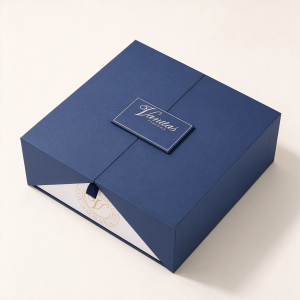
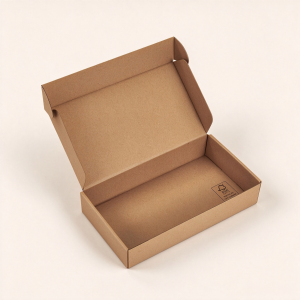
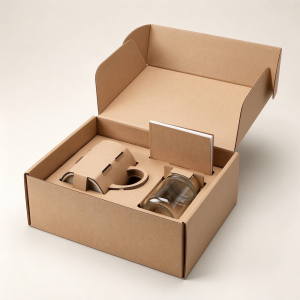
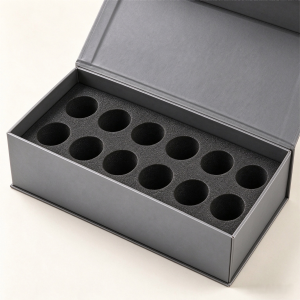
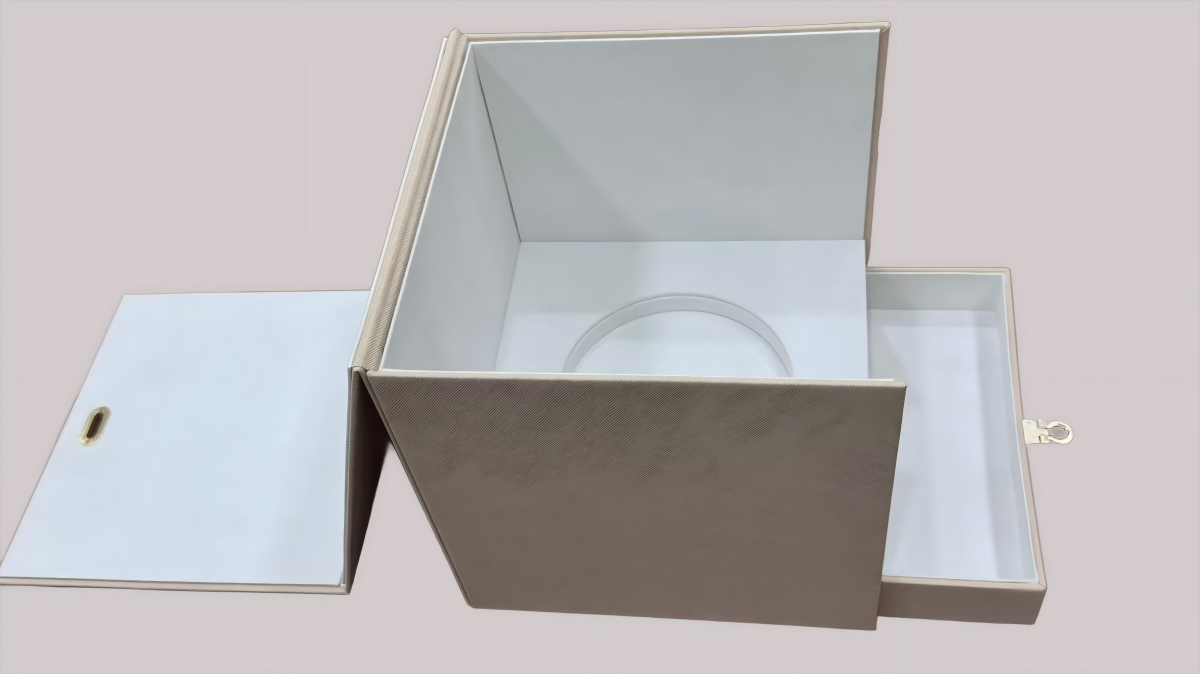
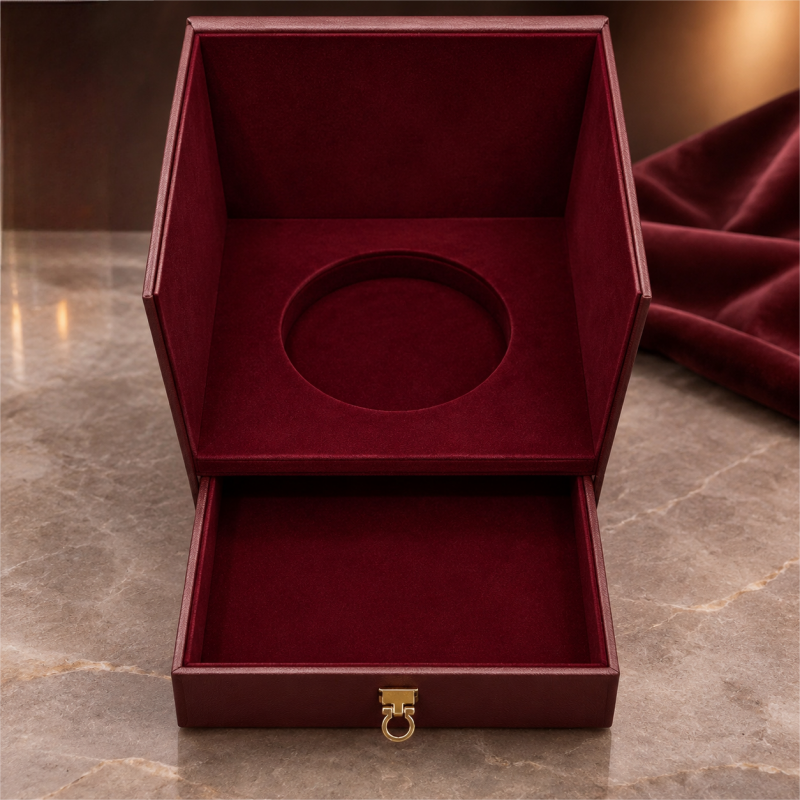
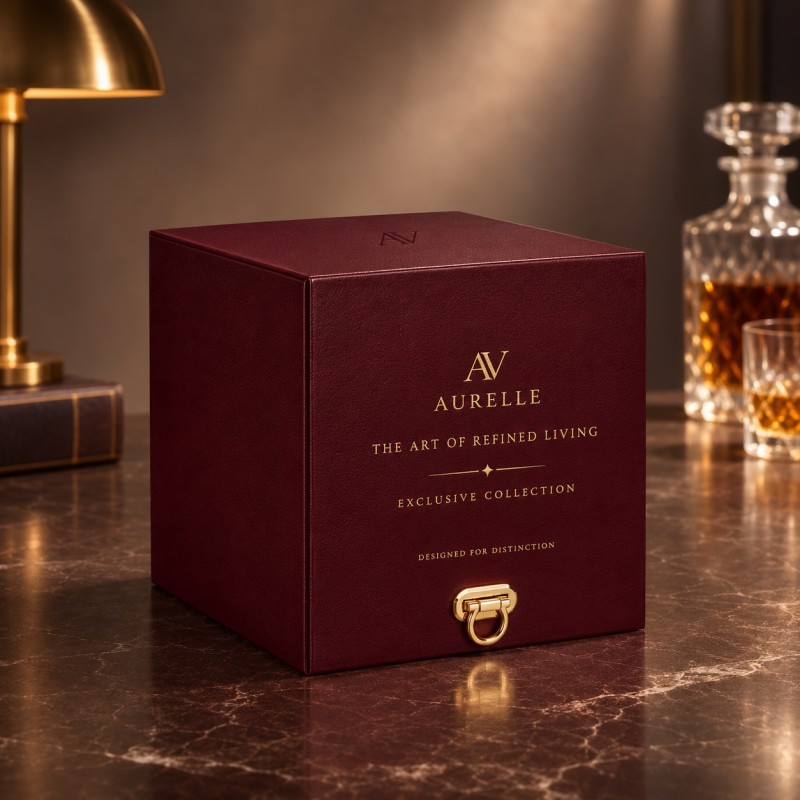
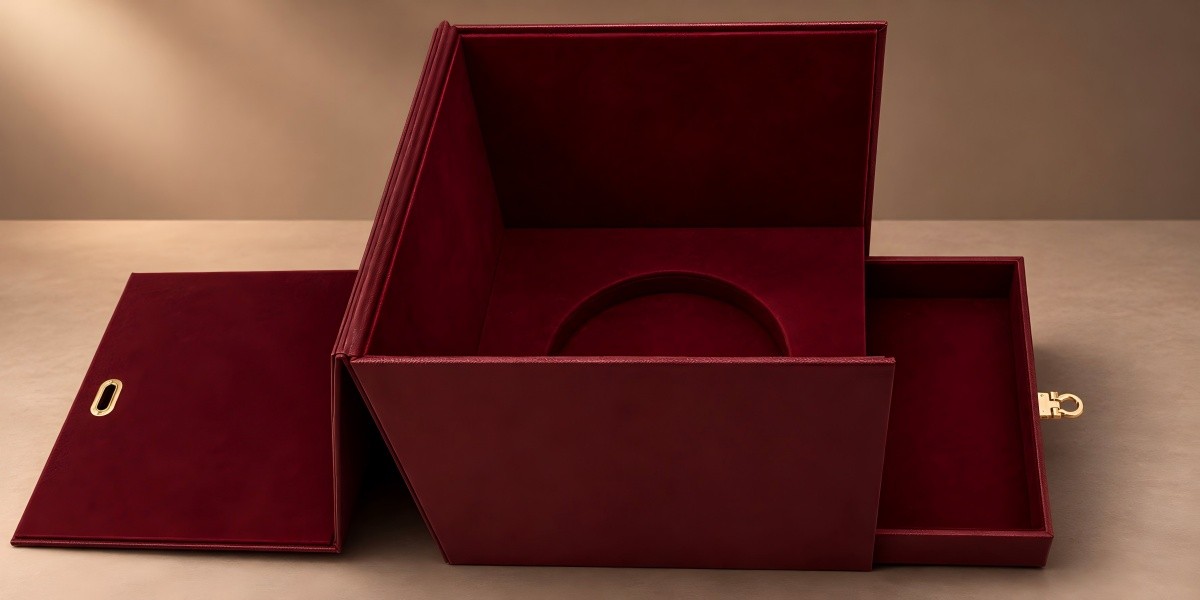
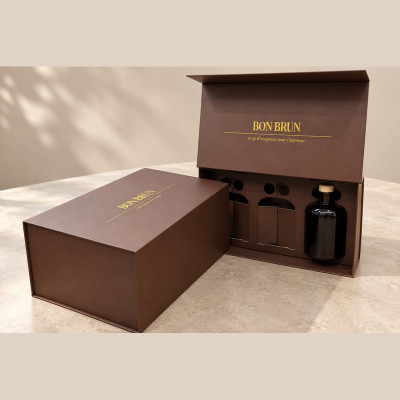
The following images show the packaging development and presentation materials for this project.
Because the project is protected by a confidentiality agreement, the public-facing images use a fictional brand identity. The displayed wrapping paper and insert materials have also been substituted and should not be interpreted as the customer's actual production material specifications.
Throughout the three-round sampling process, the customer recognized DHP Boxes' structural development expertise and practical problem-solving approach.
In particular, the customer appreciated how our team addressed several important challenges identified during physical testing, including insufficient box rigidity, dimensional discrepancies in the bottle insert, and the drawer lock interfering with the box's flat placement.
Rather than focusing only on reproducing the original visual design, DHP Boxes made targeted structural adjustments based on actual sample evaluations.
The customer valued our team's ability to translate the intended design into a practical packaging structure while proactively considering stability during placement, everyday use and subsequent mass production.
Customer Feedback
"The team demonstrated strong structural development and problem-solving capabilities throughout the sampling process. We particularly appreciated the targeted improvements to box stability, bottle insert dimensions and drawer functionality. Beyond accurately translating the design, the team also considered the packaging's stability in practical placement, use and future mass production."
— Customer feedback, summarized from project communication
For complex luxury spirits packaging, successful development involves more than achieving the intended appearance. It requires understanding how individual components interact and ensuring that the complete structure performs as expected in practical applications.
This project demonstrates that complex luxury spirits packaging requires coordinated structural development rather than simply combining several attractive design features.
The magnetic flip-top lid, rigid box body, bottle insert, bottom drawer and locking mechanism each have their own functional requirements. However, they must all operate together within one packaging structure.
The initial design was based on the customer's bottle dieline and dimensions. Through three rounds of physical sampling, DHP Boxes identified and addressed issues involving structural support, magnetic positioning, insert dimensions and drawer alignment.
The development also highlighted the importance of validating bottle inserts against actual product dimensions rather than relying exclusively on two-dimensional references.
The customer's feedback further highlighted the importance of practical engineering throughout the development process. By addressing structural issues through repeated sampling and targeted adjustments, DHP Boxes demonstrated its ability to develop complex luxury spirits packaging with both design accuracy and practical manufacturing considerations in mind.
As a China-based custom luxury packaging manufacturer, DHP Boxes develops bespoke rigid gift boxes involving magnetic closures, fitted bottle inserts, drawer compartments and other multi-component packaging structures.
For premium rum, whisky and other spirits brands, our team can help translate complex packaging concepts into practical structural designs through engineering evaluation and physical sampling.
Yes. A custom rigid liquor gift box can combine a magnetic flip-top lid with an independent bottom drawer. The lid, main box body and drawer must be designed together to maintain structural alignment and practical functionality.
Insert development can begin with the bottle's technical drawing and dimensions. Physical bottle samples are recommended for checking the opening dimensions, insert thickness, support positions and overall fit before finalizing the design.
The overall stability can be influenced by the rigid board support, lid construction, magnetic positioning and the relationship between the different box components. Physical sampling helps identify where additional structural or magnetic adjustments may be required.
The drawer structure and locking mechanism influence the bottom profile of the packaging. If a lock or other component is positioned too high, it may interfere with flat placement and affect the alignment of the drawer or main box.
The number depends on structural complexity, product dimensions, material selection and the issues identified during testing. For multi-component packaging, separate rounds may be useful for evaluating structural stability, insert fit and functional details.
Yes. DHP Boxes develops custom magnetic rigid boxes, luxury spirits gift boxes, fitted bottle inserts and integrated drawer packaging. Each project is evaluated according to its bottle dimensions, structural requirements and presentation objectives.
Whether your project involves a magnetic rigid liquor box, a fitted bottle insert, an integrated accessory drawer or a more complex multi-component gift box, DHP Boxes can help evaluate the structural requirements and sampling approach.
Share your bottle dimensions, technical drawings, packaging references, structural ideas and estimated order quantity with our team.
Our team can help assess the box construction, bottle support, magnetic closure and additional functional components for your custom luxury spirits packaging project.
Discuss Your Custom Spirits Packaging Project
We understand that choosing the right boxes for your industry is critical. That’s why we invite you to contact us. Whatever your goals, DHP will help you achieve them.
Contact NowWe have a strong team that works closely with customers to meet market challenges and effectively meet specific needs. Your thought, we fulfill.
Request a Custom QuoteDHP Factory is committed to delivering manufacturing excellence.
