

Manufacture
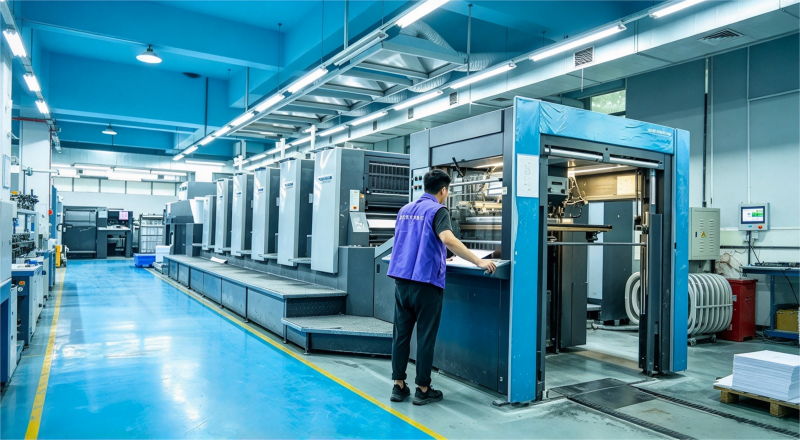
Explore our packaging factory, production equipment and rigid box manufacturing operations.
Explore Manufacturing
 Folding Rigid Boxes
Space-saving rigid packaging designs.
 Packaging Tube Boxes
Distinctive cylindrical paper packaging.
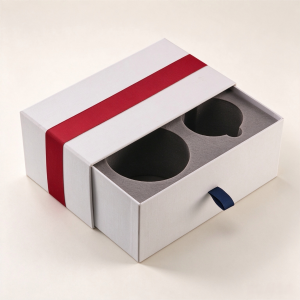 Drawer Boxes
Elegant sliding drawer box structures.
 Magnetic Closure Boxes
Premium boxes with secure magnetic closure.
 Advent Calendar Boxes
Multi-compartment seasonal gift packaging.
Explore our packaging factory, production equipment and rigid box manufacturing operations.
Explore Manufacturing
Discover our workflow from structural development and sampling to printing, assembly and quality control.
Explore Our Capabilities
Learn about responsible material choices, recyclable packaging design and reducing unnecessary material use.
Explore Sustainability
Two boxes, same board, same print, same insert. One lands on a warehouse shelf at 52 cents per unit in freight; the other at 19. The difference is not the supplier's price list — it is how much air you own between the factory gate and the shelf. That gap is exactly where the collapsible versus standard rigid box decision lives, and it is usually decided by someone reading a quotation spreadsheet rather than a packaging sample. This checklist is for buyers comparing both structures on landed cost. It is not another "what is a collapsible box" explainer: for the liquor-specific argument, including the volume-weight formula in detail, see our existing guide on whether collapsible rigid boxes are worth it. What follows is the arithmetic, the thresholds, and the five line items that flip a decision one way or the other. The short answer A collapsible rigid box wins when annual volume is high enough to fill a container, when the destination is far from the factory, and when storage space is rented rather than owned. A standard set-up box wins when volumes are small, when the shipment is short-haul, when the box has to survive a single unboxing in perfect condition, and when assembly labour at the receiving end is genuinely unavailable. A collapsible rigid box — also sold as a foldable rigid box — is a rigid box whose corners are built as a hinge rather than a permanently glued joint. The board is wrapped and grooved so the walls fold flat for transport, then spring back into a square when the box is opened out. Standard rigid boxes are assembled at the factory, glued by hand, and shipped at their open volume for their entire life. The physical difference is small: one set of corner joints. The commercial difference is large, because everything downstream — carton size, pallet count, container fill, warehouse location — is multiplied by that one dimension. A standard rigid box keeps its finished height from the moment it is glued. A collapsible box ships as a flat pack at a fraction of that height, and it is the lid plus the two nested walls that set the pack thickness. In practice a box that occupies one cubic metre assembled can ship in roughly a fifth to a third of that volume; the exact figure depends on wall thickness and how many units are stacked per bundle. Every buyer should ask for three numbers before comparing quotations: assembled volume per unit, flat-pack volume per unit, and units per export carton. Without those three, a landed-cost comparison is guesswork dressed up as a spreadsheet. Run this list in order. The first three are arithmetic; the last two are the ones buyers most often skip, and they are the ones that make a cheap quotation expensive. Notice that only one row favours the standard box on cost. The standard box earns its place on the last two rows instead: it needs no assembly line, and its corners have been proven by decades of use. That trade-off, not a price per unit, is the real comparison. Numbers below are illustrative, built around a mid-size premium gift box for a 750ml bottle. Substitute your own figures; the method is the point. Put your own freight rate against the two volumes and the shape of the answer appears immediately. At a modest sea-freight rate the 36 m³ saved is worth several hundred dollars before storage; with a pallet rate applied for six weeks, the gap widens; the assembly line costs an operator's time but rarely a full shift. The one scenario where the arithmetic reverses is a shipment of a few hundred units by parcel carrier, where the volume saving is trivial and the assembly time is not. Work through these in order and stop at the first "no". Before committing, request ten assembled samples from the production run and time your own team doing it. Record the seconds, and record the rejects — the boxes whose corners did not sit square or whose lid no longer aligned after folding. A well-engineered collapsible box assembles in eight to fifteen seconds with no tooling. A poorly engineered one takes forty and leaves a visible crease line on the wrap. That crease is the honest limit of the format: if your brand cannot tolerate any fold mark on the lid, this structure is the wrong choice regardless of freight savings. Also confirm where the insert goes. Inserts fitted at the factory must ship inside the flat pack without denting, which usually means a separate paperboard tray; inserts fitted at pack-out add the assembly step to the same line. The objection buyers raise most often is corner strength. It is a fair question: a glued corner is a single rigid body, while a hinge corner relies on the board's memory and the wrap's tension to return to square. In practice the protection depends on three things, none of which are inherent to either format: the board grade, the fit of the box around the product, and whether the outer shipping carton takes the impact. A collapsible rigid box with 2mm greyboard and a snug paperboard insert inside a double-wall carton protects a bottle better than a 1.5mm set-up box loose in a single-wall carton. Corners are a design decision, not a format decision. The failure mode to test is not the drop — it is the spring-back. After assembly, load the box, close the lid, and reopen it twenty times. If the lid drifts or the walls bow, the hinge geometry needs work before production. For a broader view of transit protection, see our guide on protecting custom rigid boxes during international shipping. Flat-packed boxes change the shape of your inventory, not just its size. A six-week hold of 5,000 set-up boxes occupies a block of pallet positions at finished-goods height; the same quantity flat-packed fits into a corner of the same racking, which frees positions for sellable stock. That matters most for brands with short seasons and long lead times. If the packaging is ordered in June for a November launch, a set-up box ties up warehouse space for five months. A flat-packed box can sit cheaply and be assembled in the week it is needed — provided assembly capacity exists then. Those two requirements, cheap storage and available labour, must be true simultaneously, which is why this decision belongs to operations as much as to procurement. Three cases are clear-cut, and they are worth naming so the checklist is not one-sided. Small runs and sampling. Below a few hundred units, the per-unit freight saving is a rounding error and the assembly time is real cost. Standard boxes arrive ready to pack. Retail fixture and heavy display pieces. Very large or unusually proportioned boxes lose the volume advantage or cannot collapse without visible creasing; multi-tier and drawer structures usually need to stay assembled. Brands with no pack-out labour. If a third-party fulfilment centre charges per touch, every extra assembly second is billed. Set-up boxes are the cheaper choice when someone else handles the line. Once the five questions are answered, the procurement step is to get both structures quoted on one sheet. A comparison that is not line-by-line is not a comparison, and the most common failure is a supplier quoting a collapsible box against a set-up specification that was never written down. Insist on four separate subtotals: the box, the insert, the export packing, and the freight basis. Boxes alone hide the place where the two formats diverge — export packing. A collapsible box ships bundled flat with corner boards and a strapping pattern; a set-up box ships in a carton that is nearly the finished size. That single line is often the largest difference on the page. Ask too for the flat-pack and assembled volumes in writing, and for the units-per-carton figure. With those, the freight comparison is arithmetic rather than opinion, and it survives a change of forwarder without being renegotiated from scratch. One last guard: agree the sample stage in the purchase order. A production run that begins before the timed assembly sample is signed is a run that cannot be corrected cheaply, and the assembly seconds you accepted in a meeting become a permanent line in someone's cost model. Whichever structure you choose, the specification that makes the quotation comparable is the same. Write these into the RFQ and you will get numbers you can actually subtract. Two more fields decide whether the quotation survives contact with production: the freight basis (FOB, CIF, DDP) and the inspection scope. A quote without a named freight term is not comparable to one with it, and a landed-cost model built on mixed terms is the most common error in this comparison. Collapsible rigid boxes are a logistics tool, not a cheaper box. They cost slightly more to manufacture and ship in a fraction of the volume, and that trade flips in your favour once volume, distance and rented storage are all real. Standard rigid boxes remain the right answer for small runs, oversized or complex structures, and brands that outsource pack-out. Run the five questions in section four before you request samples. If the answer is "collapsible", ask for a timed assembly sample and the three volume figures; if it is "standard", confirm the board grade and carton protection instead. Either way, compare landed cost, not unit price — the box that arrives cheap is rarely the box that ships cheap. Send your box dimensions and volume for a side-by-side landed cost comparison No. Once assembled, a collapsible rigid box is visually indistinguishable from a set-up box: same board, same wrap, same finishing. The only difference is a faint hinge line at the corners, which is hidden inside the box in most constructions. Typically 60–80% of the shipping volume, depending on wall thickness, lid depth and how tightly the flat packs are bundled. Ask for the flat-pack volume per unit rather than a percentage, since the figure varies with every structure. Yes, and this is often overlooked. Because the walls return to square, a collapsible box can be folded down again for storage or transport, which makes it a more practical keepsake than a set-up box of the same size. Not when the flat pack is rigid enough and the export carton is specified correctly. The risk is compression of the bundle, not corner failure; a double-wall carton and corner protection on the pallet solve it. Ask for a transit test on the packed bundle, not only on the assembled box. It depends on the structure and finishing, because tooling and make-ready are shared across the run. Our guide to reasonable minimum order quantities explains how the break points work; for a specific structure, send the dimensions and quantity and we will quote the tiers. Collapsible, in most cases. Flat-packed stock held at a fulfilment centre costs less to store and less to replenish, and the same box can be reclosed for returns. The constraint is assembly time at the fulfilment centre, so confirm their handling rate before committing. Still comparing structures? Our team can quote both formats on the same specification and return the volume figures with the price: request a comparison. For structure options by product type, browse custom packaging boxes.
1. What Actually Changes When a Rigid Box Collapses
Where the volume goes

2. The Cost Checklist: Five Line Items That Decide It
Line item
What it covers
Favours collapsible
Favours standard
Unit manufacturing cost
Board, wrap, corner construction, insert, finishing
—
Usually 3–8% lower, fewer components
Freight (volume weight)
Chargeable weight by dimension, not by mass
Decisive at container scale
Negligible at parcel scale
Warehouse & storage
Pallet positions, months held, per-pallet rent
Strong when space is rented
Fine when storage is owned
Assembly labour
Seconds per box at pack-out
—
Zero assembly
Damage & rework
Crushed corners, box failure, repack
Needs a tested joint
Proven corner strength
3. A Worked Example, With The Assumptions Exposed
Item
Standard set-up
Collapsible
Note
Units
5,000
5,000
One season, one SKU
Unit ex-works cost
1.00
1.05
Collapsible adds corner and hinge work
Units per export carton
12
60
Flattened, bundled
Cartons shipped
417
84
Rounded up
Carton dimensions (cm)
60 × 40 × 42
60 × 40 × 30
Same footprint, different fill
Chargeable volume, total
42.0 m³
6.0 m³
Volume weight driver
Warehouse pallets held
14
2
For a 6-week hold
Assembly time per box
0 s
12 s
16.7 labour hours total
4. Five Questions That Settle The Structure
5. Assembly: The Hidden Test Nobody Documents

Ask for a timed assembly sample
6. Damage, Corners and The Protection Trade-Off
7. Storage And Cash Flow, Which Nobody Budgets
8. When Standard Rigid Boxes Still Win
10. Pricing The Two Formats Back To Back
What the quote must separate

9. Turning The Decision Into A Purchase Order
Specification field
What to state
Structure
Collapsible hinge or glued corner, with a diagram, not a name
Board
Greyboard grade in mm, plus the wrap paper weight
Shipping format
Flat-pack bundle count and export carton dimensions
Assembly
Target seconds per unit and who assembles
Insert
Material, fitted at factory or pack-out
Sample stage
Timed assembly sample plus transit test
Final takeaway
FAQ
Do collapsible rigid boxes look different from standard rigid boxes when assembled?
How much volume do collapsible rigid boxes actually save?
Can collapsible rigid boxes be reused by the consumer?
Are collapsible boxes more likely to arrive damaged?
What is the minimum order for a custom collapsible rigid box?
Which structure suits a subscription or repeated-shipment programme?
We understand that choosing the right boxes for your industry is critical. That’s why we invite you to contact us. Whatever your goals, DHP will help you achieve them.
Contact NowWe have a strong team that works closely with customers to meet market challenges and effectively meet specific needs. Your thought, we fulfill.
Request a Custom QuoteDHP Factory is committed to delivering manufacturing excellence.
