Manufacture
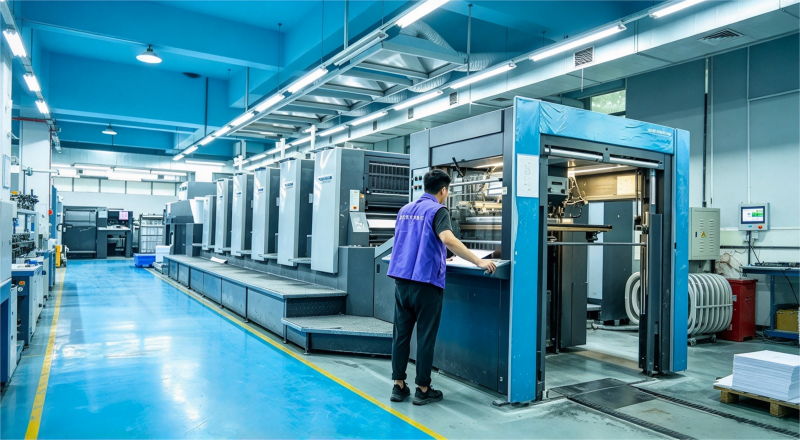
Explore our packaging factory, production equipment and rigid box manufacturing operations.
Explore Manufacturing
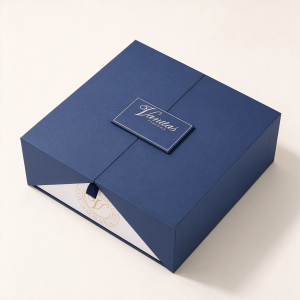
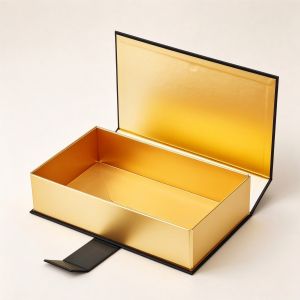 Folding Rigid Boxes
Space-saving rigid packaging designs.
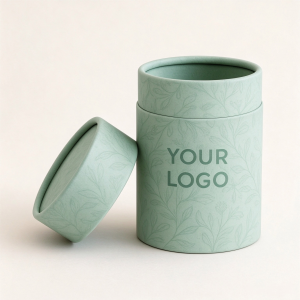 Packaging Tube Boxes
Distinctive cylindrical paper packaging.
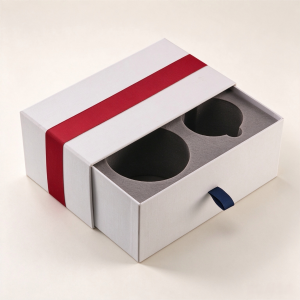 Drawer Boxes
Elegant sliding drawer box structures.
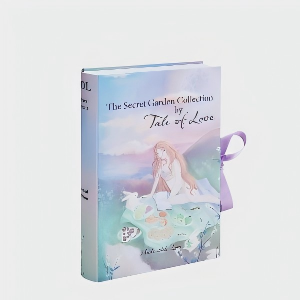 Book-Style Boxes
Luxury book-inspired packaging designs..
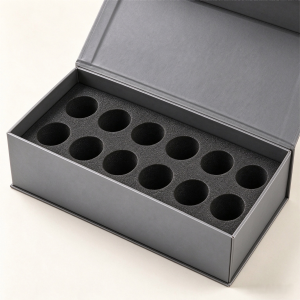
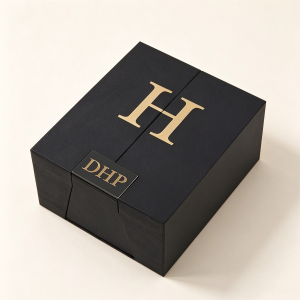 Magnetic Closure Boxes
Premium boxes with secure magnetic closure.
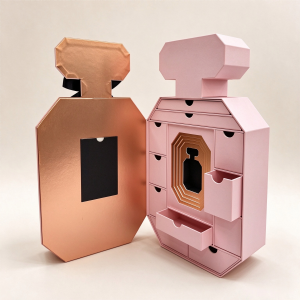 Advent Calendar Boxes
Multi-compartment seasonal gift packaging.
Explore our packaging factory, production equipment and rigid box manufacturing operations.
Explore Manufacturing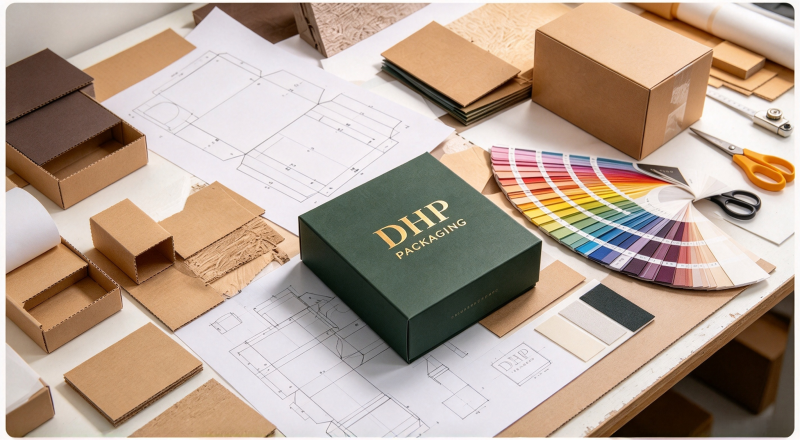
Discover our workflow from structural development and sampling to printing, assembly and quality control.
Explore Our Capabilities
Learn about responsible material choices, recyclable packaging design and reducing unnecessary material use.
Explore Sustainability
Professional packaging design support from concept to production.
Get Design Support →Explore practical packaging insights and quick answers to help you plan, customize, and order with confidence.
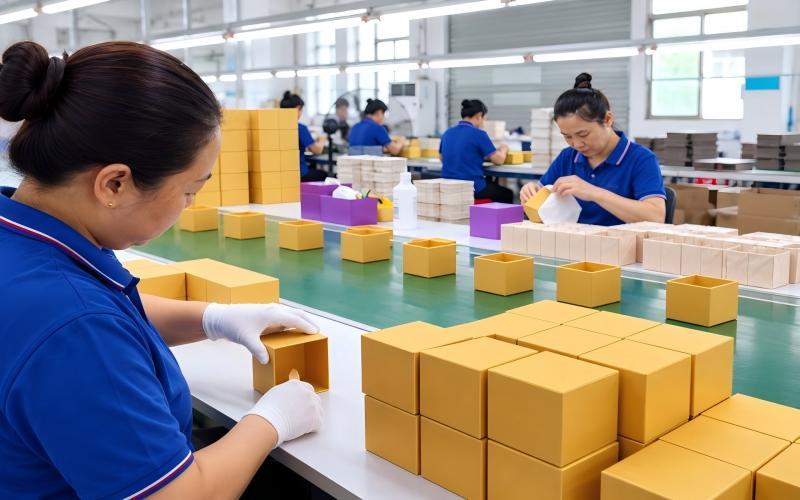
Discover our manufacturing expertise, dedicated team, and commitment to premium custom packaging solutions.
Explore Our Company →Stay connected with DHP Boxes
Plan packaging for your customers, your compliance responsibilities and your next retail launch — not just your next purchase order.
Whether you are launching a fragrance collection, preparing Easter chocolates or sourcing a premium whisky gift box, DHP Boxes helps you translate UK market needs into practical packaging specifications, sampling decisions and production plans. We are a China-based manufacturer of bespoke rigid boxes, folding cartons and paper packaging.
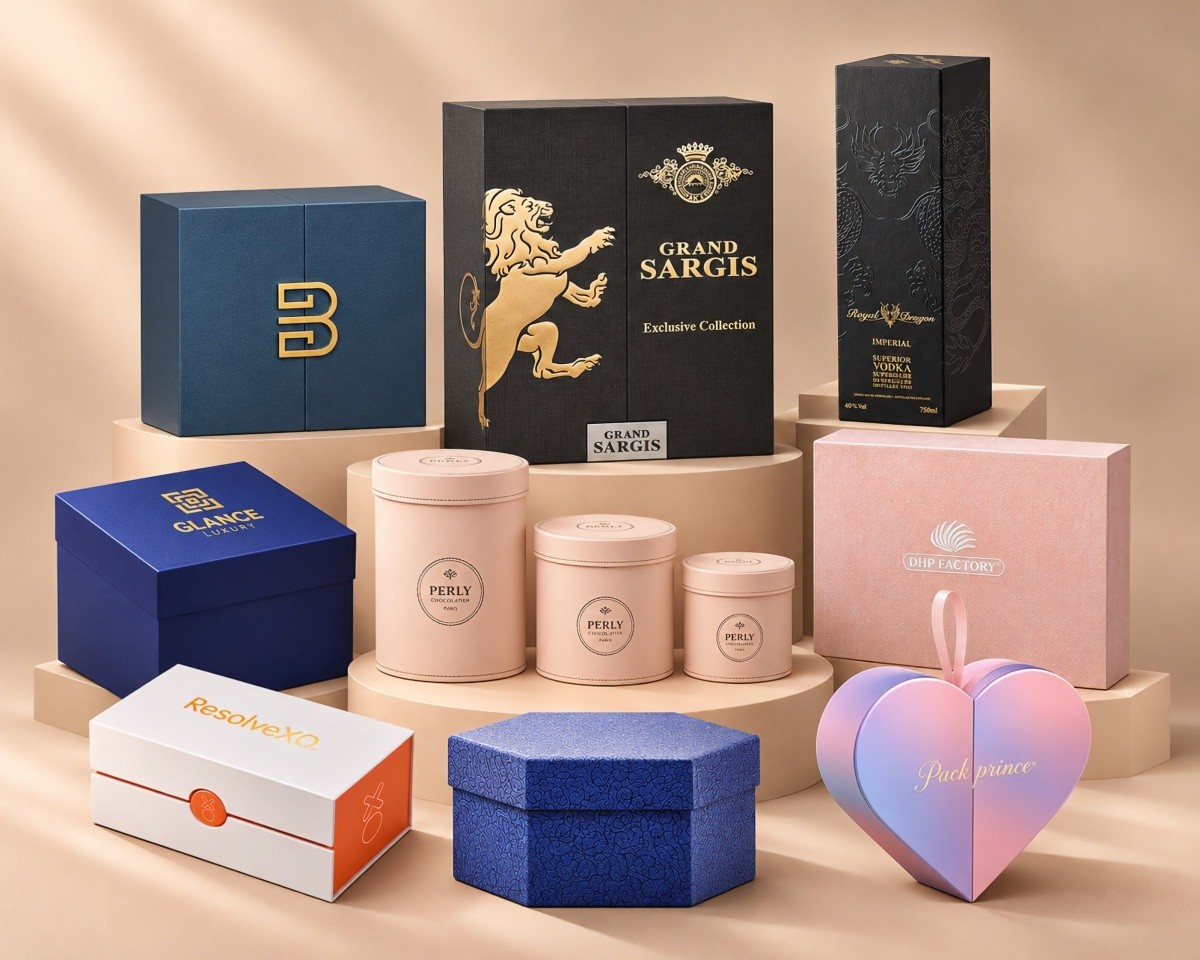
Your packaging brief should start with the sales channel, price positioning and customer experience. A gift box for a boutique shelf faces different demands from a parcel delivered to a customer's home.
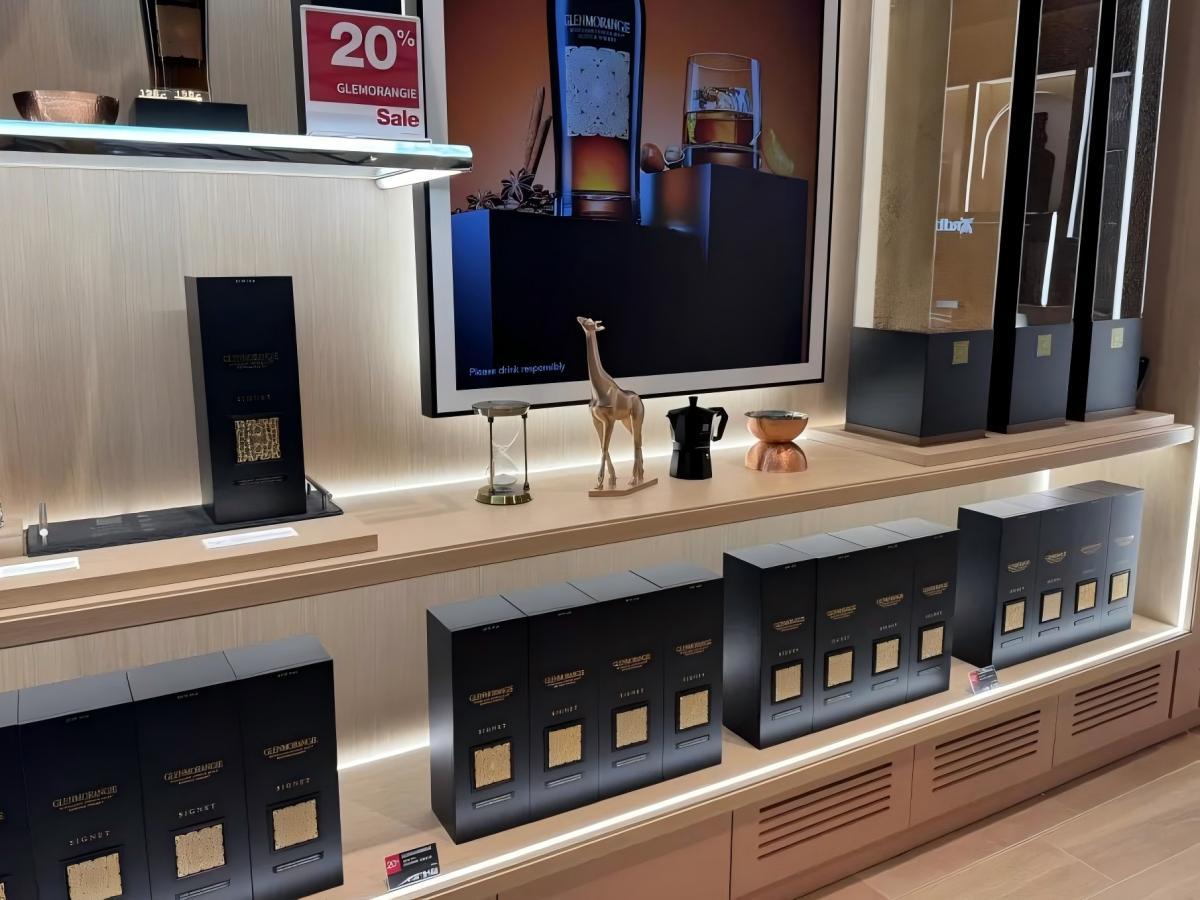
For fragrance, watches ,Wine &Liquor and jewellery, consider shelf presence, tactile finishes and secure presentation. Confirm the retailer's packaging specifications before approving artwork.
For chocolate assortments and seasonal gifts, plan compartment sizes, food-contact arrangements and gift-ready appearance before choosing decorative finishes.
For online beauty, apparel or accessories, compare packed dimensions, insert protection and transit packaging. A presentation box and its shipping carton serve different purposes.
The figures describe personal care's economic contribution and the retail sales channel mix, not the size of the UK packaging market or guaranteed demand for a specific box.
Do not assume that a more elaborate box always creates more value. Choose the design according to what your target customer is buying and how they will use or dispose of the packaging.
YouGov, survey of 2,118 UK adults, 20–21 October 2025. These are self-reported preferences, not measured sales uplift.
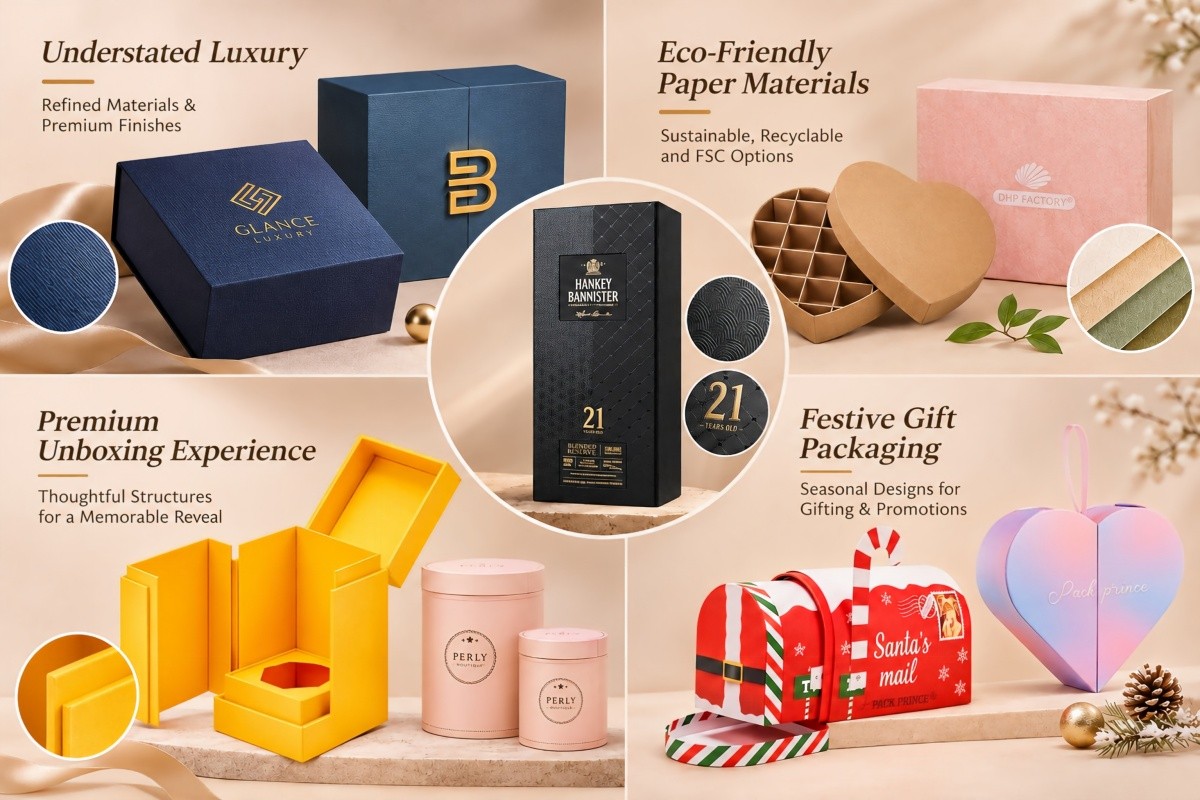
For brands positioned around craftsmanship, try textured paper, tonal debossing or restrained foil rather than adding decoration by default. Compare physical finish samples at your target price point.
Compare a paperboard insert with an EVA alternative and assess the whole box, including magnets and coatings. Use evidence-backed material claims rather than vague green language.
Use a book-style or drawer box where opening sequence and product discovery matter. Check removal clearance, accessibility and whether the product stays secure during handling.
For seasonal ranges, consider a common box structure with different printed sleeves or artwork. This can simplify development and avoid unnecessary changes to inserts.
Additional context: EY Luxury Client Index, September 2025 discusses sustainability and packaging among luxury clients. The design directions above are recommendations, not claims that every British shopper shares the same taste.
Ask for the right information while the structure and materials can still be changed. A certificate alone cannot determine whether your packaging is suitable for your product or market.
UK extended producer responsibility can apply according to business establishment, packaging activities, turnover and packaging tonnage. Use the official eligibility guidance to identify your role. Obligated large producers may also need recyclability assessments for relevant packaging.
Request: component weights, material types, packaging function and construction details. Agree how any missing measurements will be obtained before ordering.
UK Plastic Packaging Tax applies to qualifying finished plastic packaging components. Registration generally depends on the 10-tonne tests; chargeable components generally have less than 30% recycled plastic, subject to applicable rules and exemptions.
Request: composition, component weight and evidence for recycled content if claimed. Compare paperboard inserts or window-free designs where protection and presentation allow.
Tell your manufacturer whether chocolates are individually wrapped, separated by a functional barrier or placed directly against a tray or paper surface. Intended contact conditions affect material selection and evidence requirements.
Request: specifications and relevant declarations or test reports for the actual paper, ink, adhesive and contact layer. Relevant supplier GMP/BRC documentation can supplement, but not replace, material suitability evidence.
FSC certification concerns responsible sourcing and chain of custody; it is not a recyclability certificate. A paper-based box may still contain materials that complicate recycling. Evaluate the full structure and substantiate environmental claims before printing them.
Request: relevant FSC certificate and transaction or claim evidence where applicable, plus material and component information. DHP can discuss suitable FSC sourcing, paper inserts and alternatives to conventional lamination.
For a meaningful material review, record the following for each SKU:
Confirm the commodity code, origin, customs valuation, importer of record and agreed trade terms. Compare factory price, transport, duty, import VAT and destination charges rather than relying on the unit price alone.
Find the scenario that best describes your business and use it to shape your next packaging brief.
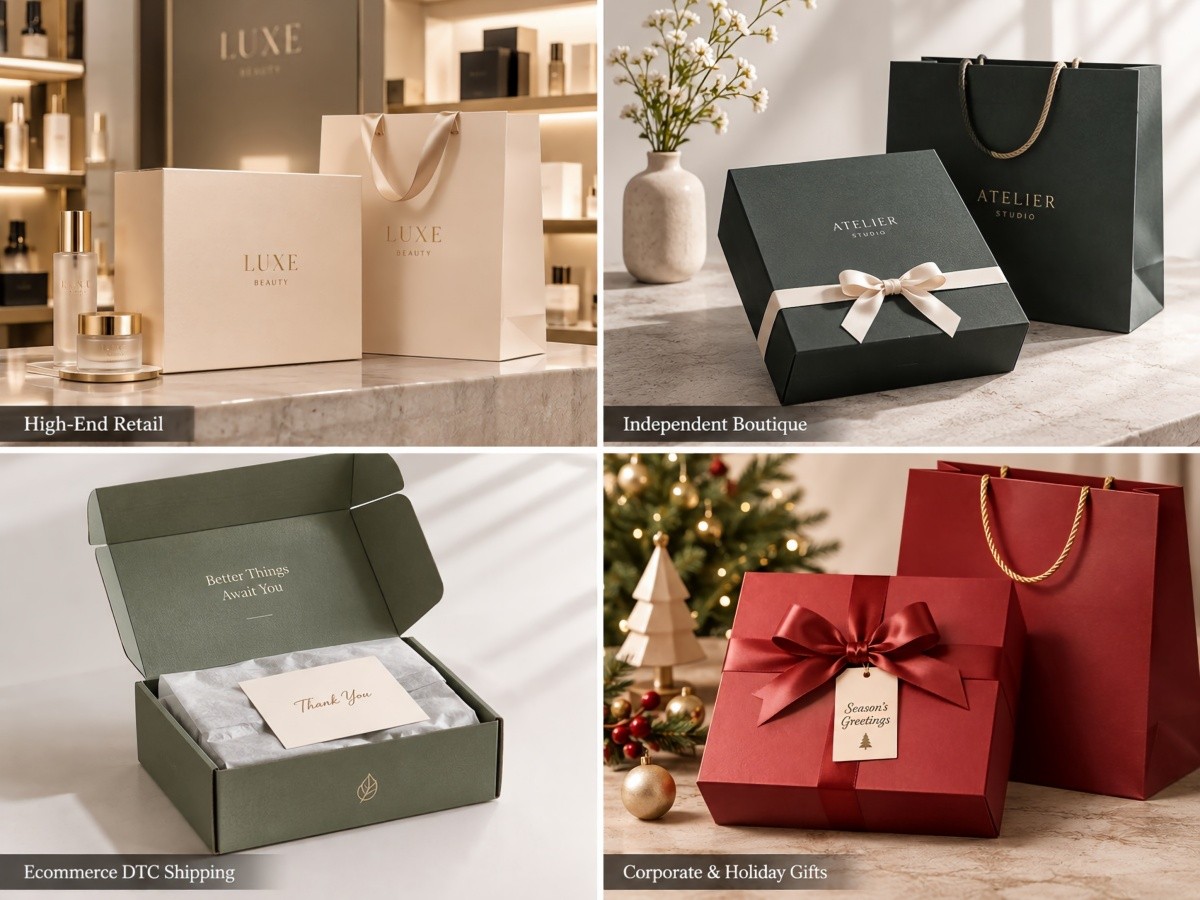
Your scenario: You are developing a fragrance, skincare or watch collection with an established brand palette and strict presentation requirements.
Reduce the risk: Approve paper swatches, logo finish and a physical pre-production sample. Use Pantone references where appropriate; check the colour on the actual substrate rather than on screen.
Your next decision: Agree the appearance and structural acceptance criteria before releasing bulk production.
Your scenario: An artisan chocolatier or independent perfume brand wants a limited launch, but uncertain demand makes a large packaging purchase risky.
Reduce the risk: Compare suitable handmade rigid boxes starting from 300 units with alternative carton structures; consider a shared box and interchangeable artwork across compatible SKUs.
Your next decision: Confirm quantities per design, sample costs and landed cost before committing.
Your scenario: You sell directly online and want the same brand experience on every delivery and reorder.
Reduce the risk: Compare assembled and folding structures, product clearance, outer carton dimensions and protection. Agree a transit test plan where needed and retain an approved specification for repeats.
Your next decision: Evaluate total packed volume and fulfilment labour, not only the box price.
Your scenario: A Christmas hamper, beauty advent calendar or corporate whisky set must arrive before a fixed distribution or retail deadline.
Reduce the risk: Lock the product assortment, insert layout and artwork early; review material availability and production slots. Discuss split shipments only where commercially viable.
Your next decision: Set a UK warehouse-ready date and plan backwards from it.
Start with product dimensions, weight, fragility and the intended retail experience. These determine the structure and insert before paper and finishing are selected.
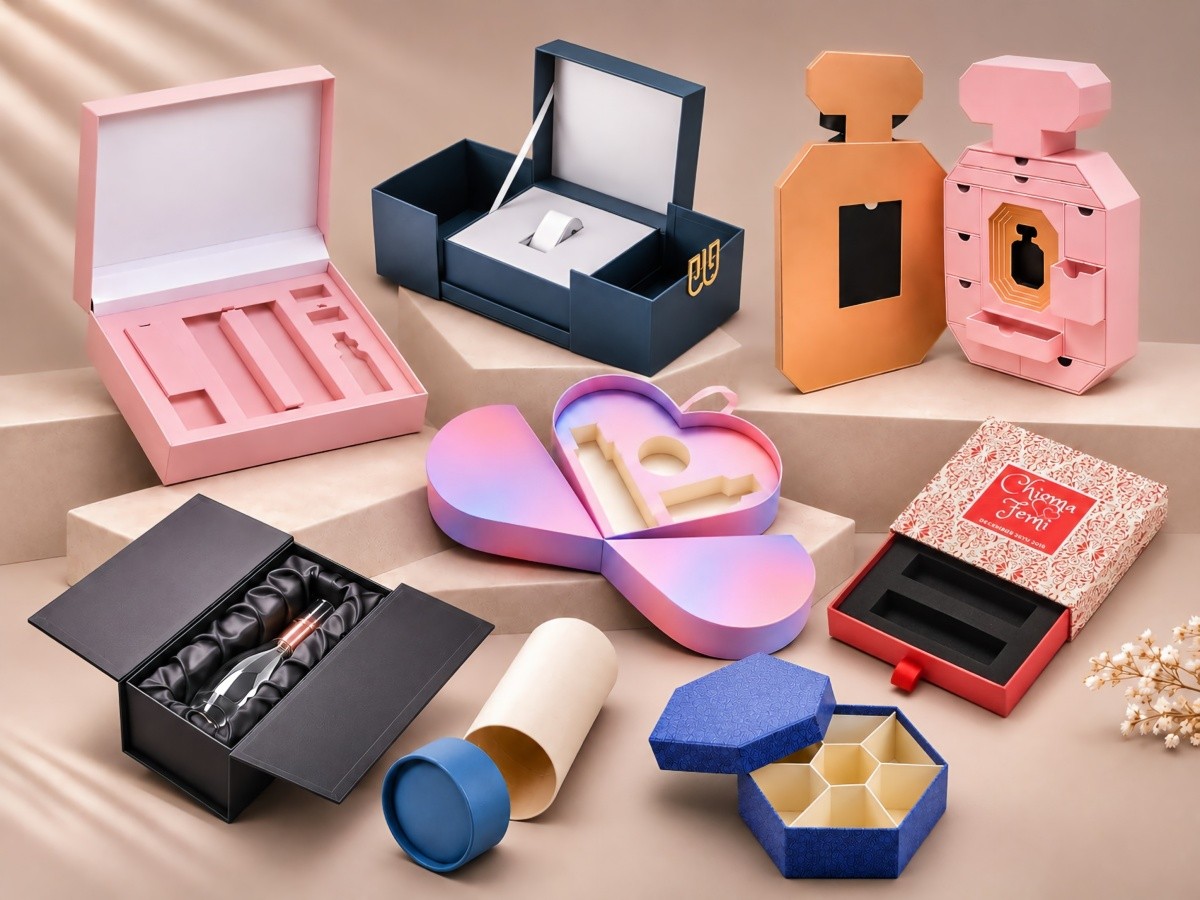
For fragrance and spirits, prioritise glass protection. For beauty sets, check product combinations and removal clearance. For jewellery and watches, protect delicate surfaces. For chocolate, establish the intended food-contact application before selecting the tray.
Use the recommendations below as the starting point for a packaging specification, then validate the structure with your actual product.
| Industry | What to confirm | Recommended options |
|---|---|---|
| Perfume & fragrance | Bottle weight, cap clearance, glass protection, discovery set format | Book-style, magnetic or drawer rigid boxes; shaped EVA or paperboard inserts, subject to fit |
| Beauty & skincare | SKU combinations, dispenser protection, ease of removal | Multi-compartment gift sets, layered inserts, coordinated finishes |
| Chocolate & confectionery | Direct or indirect contact, portion size, barrier and storage conditions | Rigid gift boxes or folding cartons; compartment trays and suitable contact layers |
| Jewellery & watches | Surface sensitivity, ring size, watch cushion and display angle | Drawer or lid-and-base rigid boxes; velvet-covered inserts, cushions and paper supports |
| Wine & spirits | Bottle silhouette, weight, neck and base support | Magnetic or book-style presentation boxes; fitted inserts and separate transit protection |
For miniature bottle sets, explore custom spirits tasting set packaging.
A seasonal gift box has little value if it arrives after the selling window. Set your warehouse-ready date first, then reserve time for development, approval, production and transport.
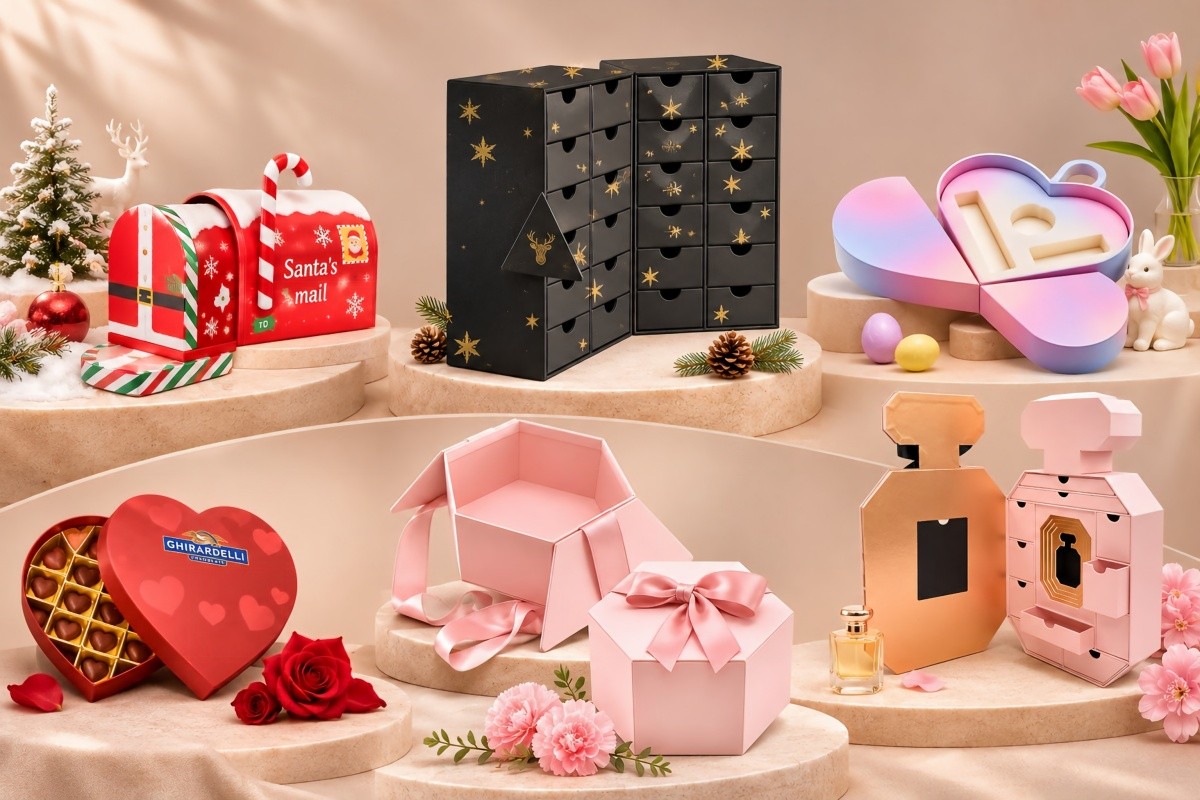
| Selling occasion | Target UK stock arrival | Suggested sampling | Suggested bulk production | Planning tip |
|---|---|---|---|---|
| Valentine's Day (14 Feb) | Early January | Previous Sep–Oct | Previous Oct–Nov | Coordinate perfume, chocolate and jewellery gift artwork. |
| UK Mother's Day (Mar/Apr) | 4–6 weeks before event | Previous Oct–Nov | Previous Nov–Dec | Lock beauty set SKUs and product dimensions. |
| Easter (Mar/Apr) | 4–6 weeks before event | Previous Oct–Nov | Previous Nov–Dec or earlier if needed | Confirm food contact and compartments early; check Lunar New Year closures. |
| Father's Day (Jun) | Late Apr–early May | Jan–Feb | Feb–Mar | Validate bottle weight and neck/base support. |
| Halloween (31 Oct) | Sep | May–Jun | Jun–Jul | Keep seasonal artwork changes separate from structural changes. |
| Black Friday (Nov) | Oct | Jun–Jul | Jul–Aug | Compare packaging volume and fulfilment requirements. |
| Christmas / gifting (Nov–Dec) | Sep–Oct; earlier for advent calendars | Feb–Apr | May–Jul | Approve complex gift sets early and allow peak-season freight buffer. |
Illustrative conservative planning windows for projects sourced from China, not observed UK ordering statistics or promised lead times. Adjust for the actual event date, retailer deadlines, complexity, factory holidays, confirmed freight schedules and customs.
Confirm assortment, box structure, artwork and samples.
Finalise materials, costs, approved sample and order.
Schedule bulk production, inspection and packing.
Arrange freight, clearance and stock receipt ahead of launch.
For first orders, separate the decisions that must be made before sampling from those that must be locked before bulk production.
For boutique launches, complex structures and premium gift sets. Confirm the MOQ for each design and size.
For retail cartons and transit packaging. Compare tooling, material use and production efficiency.
Evaluate automated or semi-automated production for suitable structures. Request a project-specific comparison rather than assuming every rigid box can be automated.
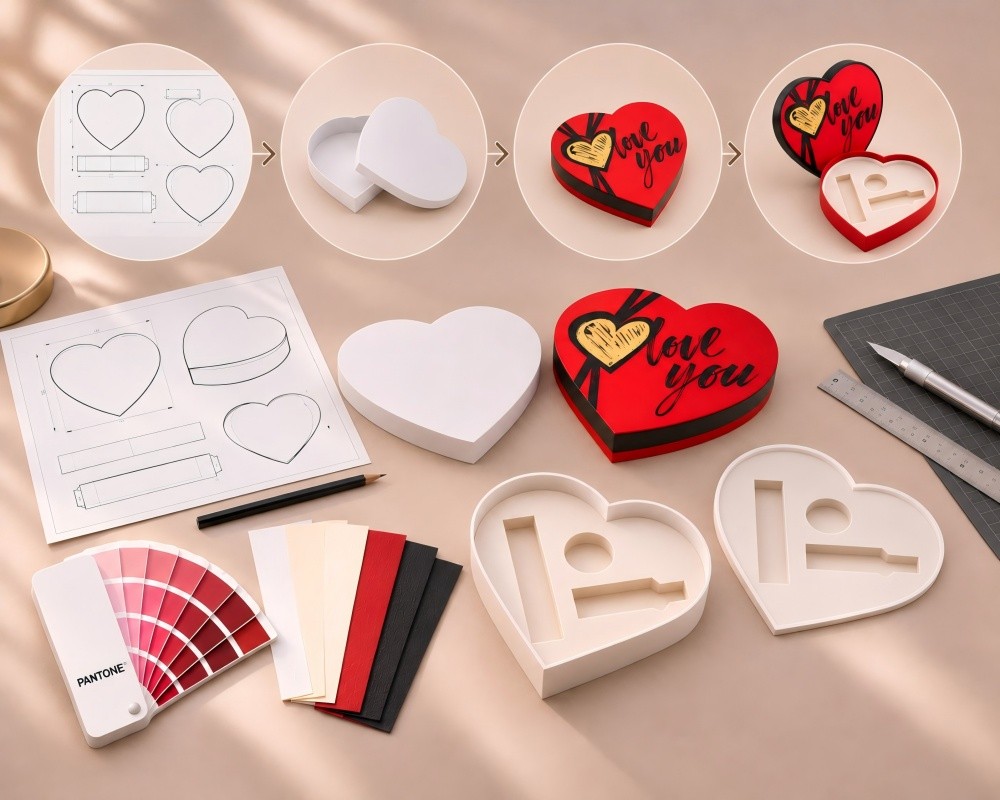
Confirm product, packaging use, quantity, market requirements and artwork. Allow time for material availability and changes.
Typical DHP sampling period. Allow separate time for sample delivery, review and revisions.
Typical bulk production period once the sample and specifications are approved and production is confirmed.
Confirm inspection, packing, shipping route, customs and UK warehouse receipt separately.
Compare structure, insert cost, packed carton size, freight and destination charges. DHP supports EXW, FOB, CIF and DAP, with DDP evaluated through freight partners for suitable shipments. Sea freight, air freight and DHL/UPS/FedEx courier options can be discussed. Confirm importer responsibility and charges under the agreed terms.
Consider shared structures or artwork variants where practical. Keep the approved sample, drawings, paper references and finish specifications for future orders. Sampling is charged; sample fees can be returned against a bulk order according to agreed terms. Standard payment method is T/T.
Use these questions to compare suppliers on evidence and project suitability — not just on a quotation.
| Ask your supplier | Evidence to look for |
|---|---|
| 01. Where will my boxes actually be made? | Factory address, production route and evidence of the relevant equipment or manual line. |
| 02. Can you develop around my product? | Structural drawing, product fit review and physical prototype. |
| 03. Can you document the materials? | Relevant material specifications, certificate scope and project-specific supplier documents. |
| 04. How will you match my approved sample? | Signed-off physical reference, colour targets, finish and dimensional acceptance criteria. |
| 05. What happens if my demand changes? | MOQ per design, alternative production routes, reorder lead times and stock assumptions. |
| 06. How will my artwork and tooling be protected? | Agreed confidentiality, authorised file access and ownership terms before sharing proprietary assets. |
| 07. How can I verify production and delivery? | Agreed checkpoints, inspection evidence, packing details, freight quotation and responsibilities. |
Our manufacturing structure, quality controls and documentation capabilities provide a practical foundation for your UK packaging project.
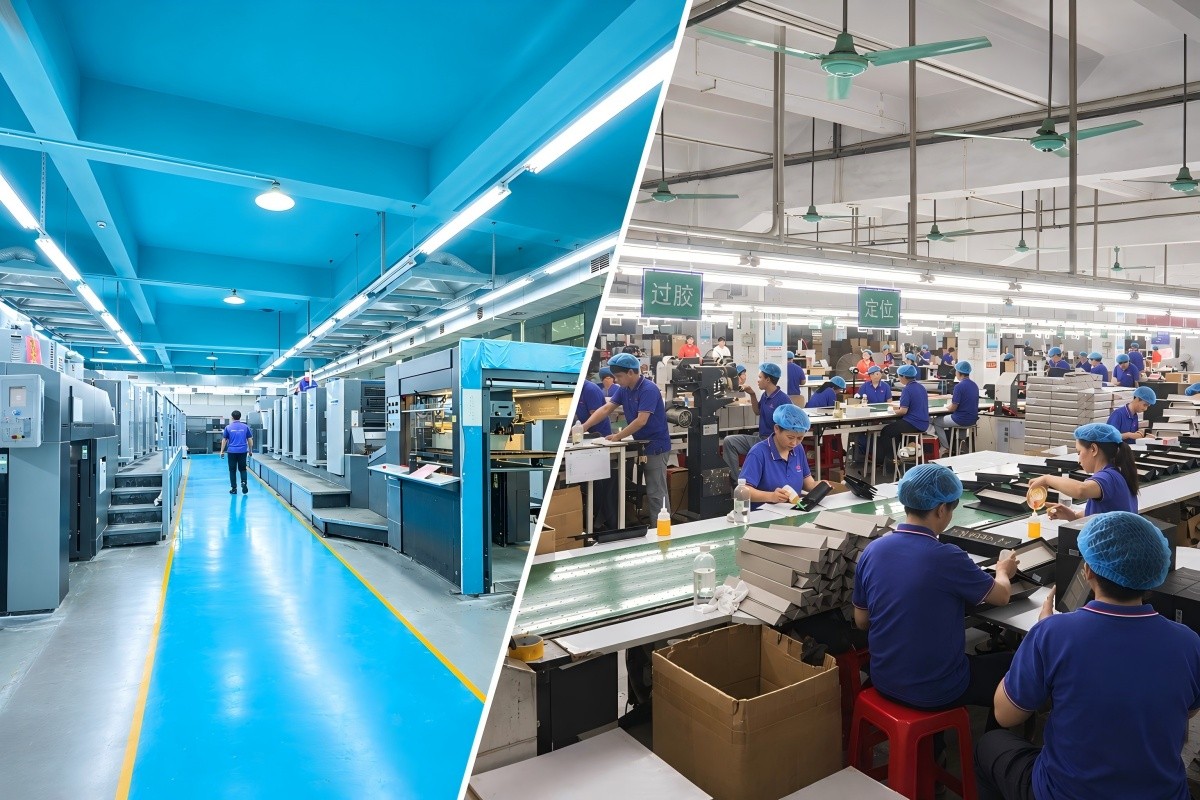
The Houjie facility focuses on food-grade paper packaging, while the Dongcheng facility focuses on luxury packaging. Automated and semi-automated machinery supports suitable repeatable structures; skilled manual teams handle premium and more complex boxes.
For your project, we assess which production route fits the structure, quantity and finishing requirements.
Agree the key inspection points before the order. The following four stages explain how material, visual and structural checks can address common packaging risks.
Check paper, board and specified finishes.
Review colour references, foil and embossing against the approval standard.
Check dimensions, assembly, closure and insert fit.
Review finished appearance and packing before shipment.
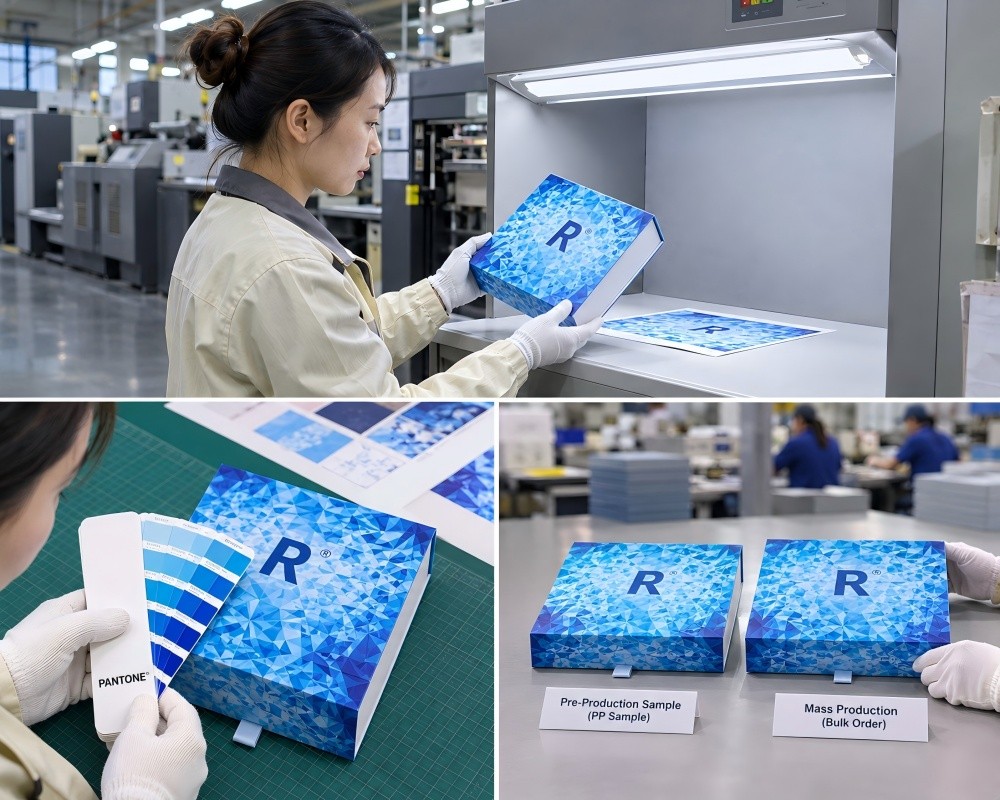
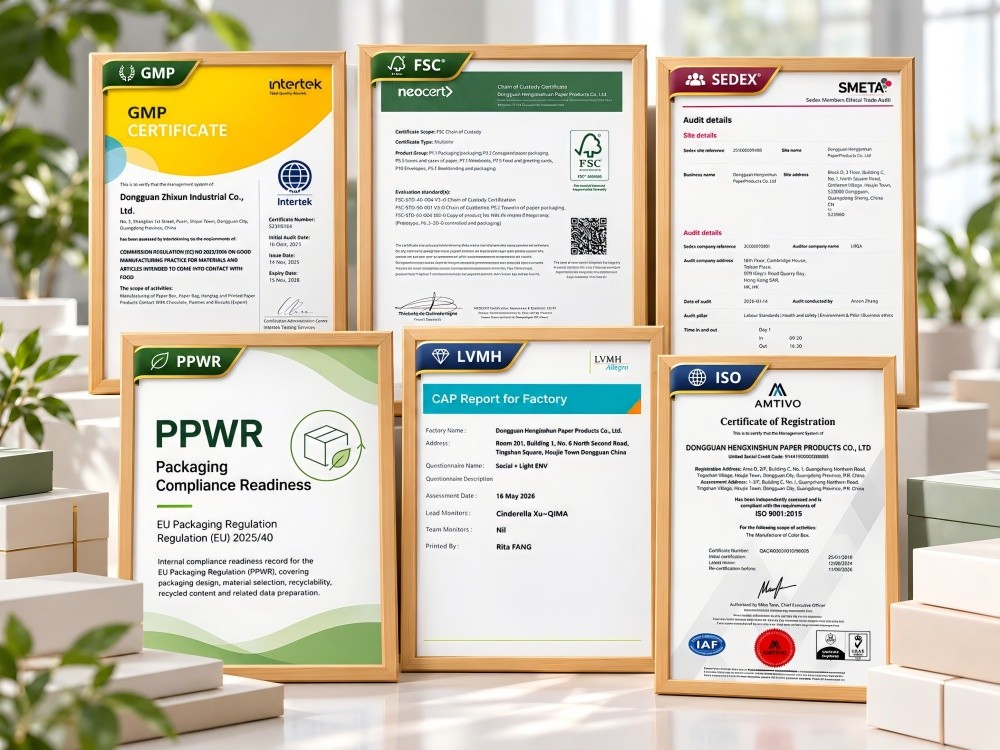
DHP holds FSC chain-of-custody certification and can discuss applicable FSC sourcing and claim requirements. ISO 9001 and Sedex-related documentation support quality and supply-chain assessments within their scope.
For food-related packaging, we can coordinate documents for the actual paper, ink, adhesive and food-contact layer, including relevant supplier GMP/BRC records where applicable. RoHS test documentation is relevant only where the product and test scope warrant it.
Examples of actual development work, with no fabricated testimonials or guaranteed outcomes for future orders.
A UK customer requested three sizes of folding magnetic rigid boxes with specialty paper and a fully matte green logo. Conventional foil did not meet the intended appearance. DHP sourced a matte green foil option to achieve the requested visual direction.
A two-colour magnetic rigid box showed banding and colour differences in digital sampling. The bulk-production approach was changed to Pantone spot-colour offset printing and foil logo finishing. A pre-production sample was approved.
Using customer-supplied bottles, the team developed and revised rigid box and insert designs across three sampling rounds, addressing loose fit, insert dimensions and a drawer latch issue before the order was placed.
Suitable handmade rigid boxes generally start from 300 units. Folding cartons and corrugated boxes generally start from 1,000. Final quantities depend on each design, size, material and finish.
Typical DHP sampling takes 5–7 days and mass production takes 25–30 days. Allow additional time for design confirmation, materials, revisions, inspection and shipping.
DHP offers FSC sourcing support. Confirm the applicable certificate scope, chain-of-custody evidence and claim or label approval requirements for your particular order before printing.
Yes, for suitable projects we can coordinate corresponding documents for actual paper, ink, adhesives and contact layers, together with applicable supplier records. Tell us whether food touches the packaging directly and under what conditions.
Start with the packaging components, material categories, weights and functions. Determine your own producer obligations and applicable reporting methodology using GOV.UK guidance. Agree any measurement or documentation needs with us before production.
We can review paperboard inserts, window-free designs and alternatives to selected coatings. Validate the product fit, protection and overall recyclability before changing materials.
Use an approved physical sample, confirmed colour references, material specifications and agreed inspection criteria. For sensitive brand colours, discuss the appropriate printing method and substrate before approving production.
For complex gift sets intended for autumn stock arrival, consider starting development in February–April and bulk production in May–July, subject to your actual launch date, order complexity and confirmed shipping plan.
Sea freight, air freight and courier services can be arranged. EXW, FOB, CIF and DAP are supported; DDP can be evaluated with freight partners for suitable orders. Confirm customs responsibilities and total costs for each shipment.
Share product or box dimensions, quantity per SKU, intended use, preferred structure, artwork, material and finish requirements, target UK warehouse arrival date and destination postcode. Include any retailer or compliance specifications.
Share your product, target customer and retail deadline. Together we can review the appropriate box structure, material documentation, sampling approach, production route and delivery plan before you commit to an order.
DHP Factory is committed to delivering manufacturing excellence.
