
Custom Perfume Boxes: A Complete Packaging Guide for Fragrance Brands
Custom perfume boxes do more than hold a bottle. For a fragrance house, the box is the first thing a customer touches, the object that carries the scent story before the cap is ever lifted, and the structure that has to protect fragile glass from a factory floor to a duty-free shelf. Get the structure, the material and the insert right and the packaging sells the fragrance twice.
In this guide, the DHP Boxes packaging team walks through what a fragrance brand needs to specify a premium perfume box: rigid, folding, magnetic and drawer formats; the art paper, special paper and grey board that build the body; foil stamping, embossing and spot UV that signal luxury; custom EVA, foam and moulded pulp inserts that grip a glass bottle without movement; and the sampling, AQL inspection and lead-time questions that decide whether a launch lands on time.
Why Custom Perfume Boxes Define a Fragrance Brand
Fragrance is one of the few categories where the packaging is inseparable from the product. A buyer cannot test a scent online, so the box becomes a proxy for quality: its weight, its foil, the resistance of its lid and the sound of a magnetic closure all say something about what is inside. That is why almost every niche and luxury house treats its perfume packaging box as a branded asset rather than a shipping afterthought.
There is commercial logic too. A well-built rigid box protects an expensive glass flacon through ocean freight and retail handling, supports a higher shelf price, and is often kept as a small storage box — keeping the brand present long after the bottle is finished.
Which Perfume Box Style Should You Choose?
The most important decision is the structure, because it sets the unboxing choreography, the tooling cost and the protection level at once. The table below maps the formats we manufacture most often for fragrance brands.
| Box style | Best for | Unboxing feel |
|---|---|---|
| Rigid lid-and-base box | Luxury and high-end flacons | Heavy, ceremonial reveal with a firm lid lift |
| Magnetic closure box | Gift sets and premium retail | Tactile flap that snaps shut and stays reusable |
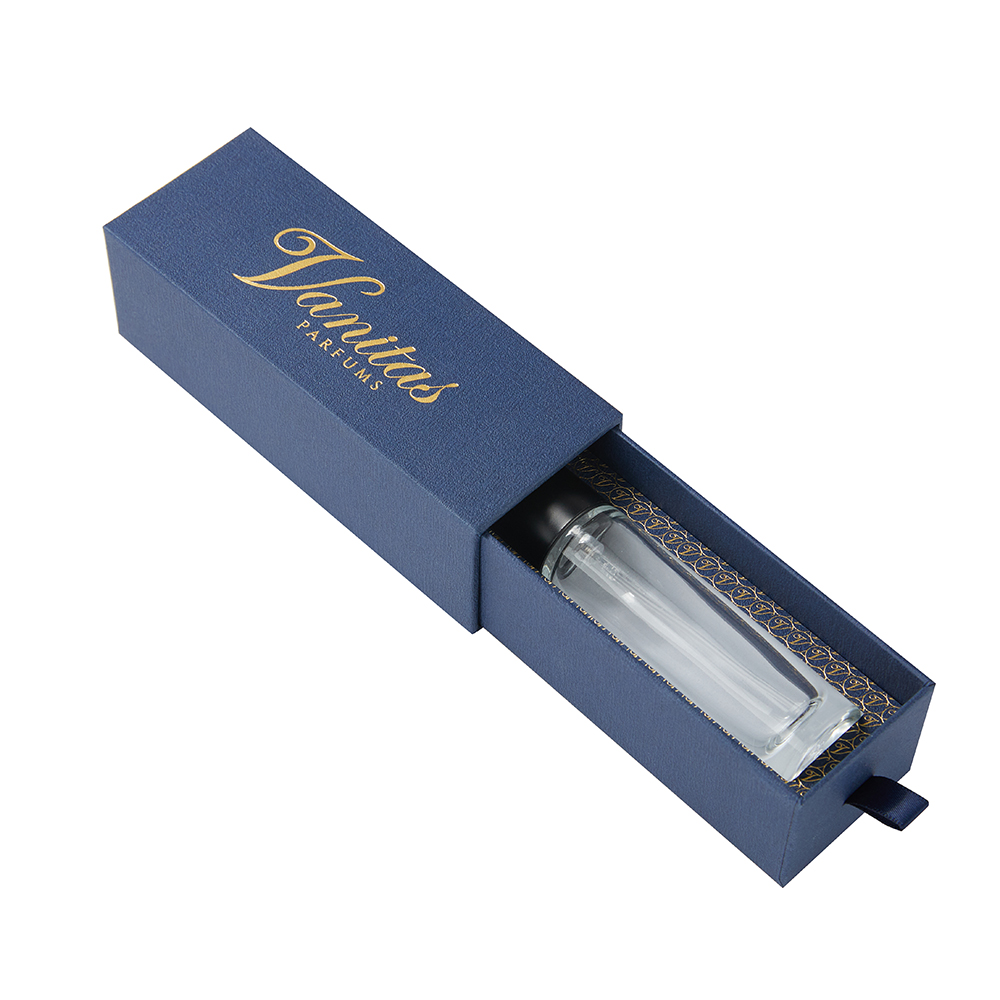
| Drawer / sliding box | Small bottles, discovery sets, samples | Anticipation builds as the inner tray slides out |
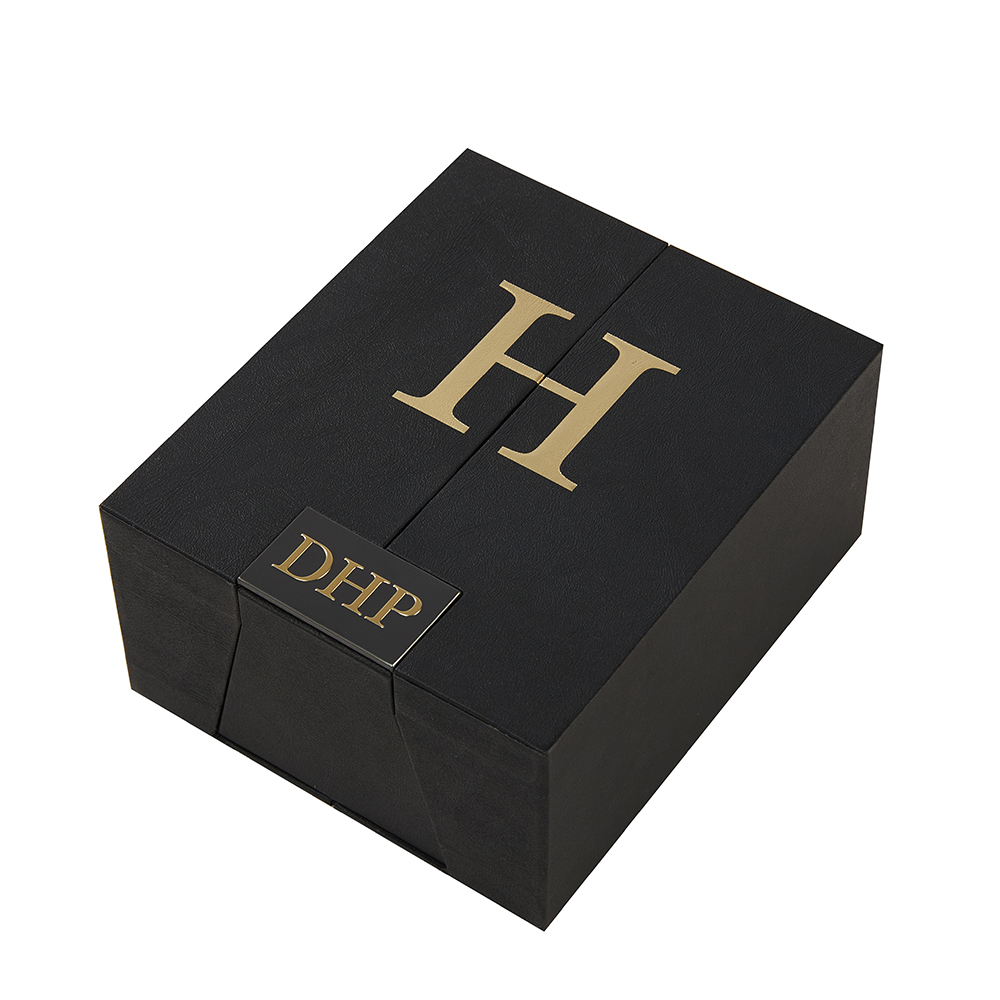
| Double-door box | Statement gift packaging | Two panels open outward like a reveal on stage |
| Folding carton | Volume retail and refill packs | Light, economical, ships flat before filling |
| Two-piece telescope box | Single hero bottles | Slide-off lid that feels substantial and deliberate |
For a launch with one signature bottle, a rigid lid-and-base or magnetic box usually carries the brand best. For a discovery set of five or ten small vials, a drawer box with a custom insert turns the set into an experience. The right answer depends on the bottle, the price point and the retail channel — which is why structure should be settled before artwork is opened.
Materials That Make a Perfume Box Feel Expensive
The raw material creates much of the perceived value, and the trade vocabulary matters when you brief a supplier. A rigid perfume box is normally built around a grey board or duplex greyboard core wrapped in a printed cover paper; the core gives the box its weight and crisp edges, the wrap gives it its look and touch.
For the wrap, C1S or C2S art board and gloss or matte art paper take colour and foil cleanly and are the workhorses of fragrance packaging. Where a brand wants something more distinctive, textured and pearl special paper, leatherette paper or gold and silver board paper add an unmistakable tactile signature. Kraft and recycled board suit eco-conscious lines, while woodfree and uncoated board suit inserts and dividers.
Finishing Techniques That Signal Luxury
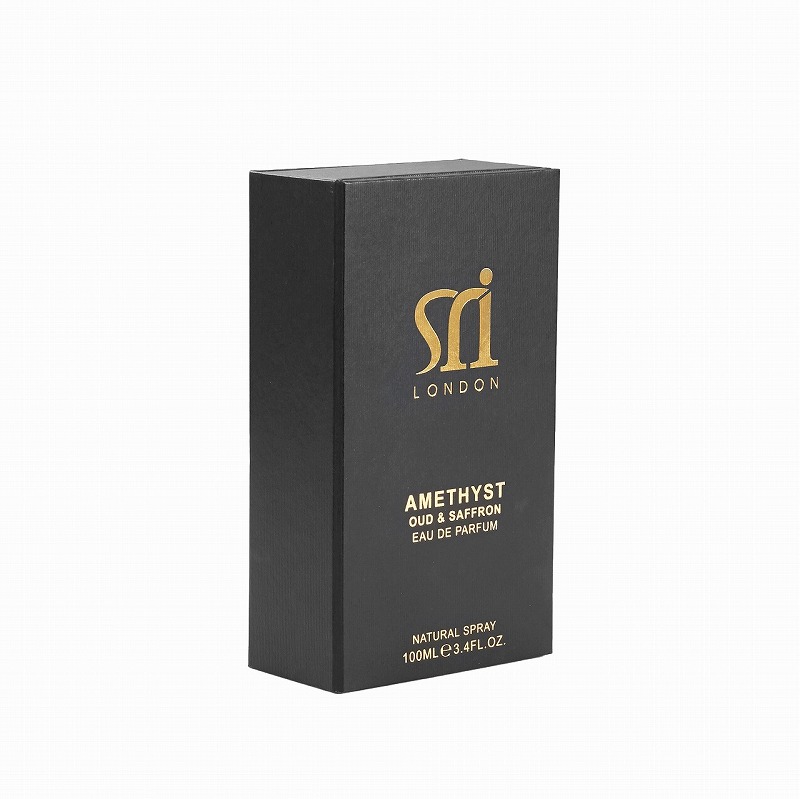
Finishing separates a functional perfume box from a luxury one, and it is where small budgets are spent very well or very badly. Two or three deliberate accents almost always read as more expensive than five applied at once.
- Foil stamping and gold stamping: metallic foil on a logo or fine rule adds reflective depth and reads instantly as premium; holographic foil adds a modern, light-catching edge.
- Embossing and debossing: raised or recessed marks create a dimensional, tactile logo that is felt as much as seen — ideal on a matte surface.
- Spot UV: a gloss varnish applied to one motif over a matte background gives a subtle contrast that feels extremely refined in the hand.
- Matte and gloss lamination: anti-scratch matte lamination resists handling marks, which matters for boxes travelling through retail and duty-free.
Combined on a coated stock, these techniques produce a box that looks considered. Applied randomly to an uncoated board, the same finishes look thin — which is why material and finishing should be specified as a pair.
How Do You Protect a Glass Perfume Bottle in Transit?
A perfume bottle is heavy for its size, fragile at the neck and often asymmetric — a combination that makes the insert the most technically demanding part of the box. A die-cut paperboard divider holds a bottle in the simplest cases, but a flacon with a distinctive shoulder usually needs a formed cavity.
Custom EVA foam inserts are the standard for premium fragrance: the foam is cut or moulded to the bottle profile, grips the body firmly, and cushions against impact. Velvet or fabric lining over an EVA base adds a soft, jewel-box feel that suits attar and oil-based perfumes. For brands reducing plastic, moulded pulp inserts formed from recycled paper fibre hold a glass flacon securely and remain recyclable. The goal is the same either way: zero movement inside the box through a drop, a tilt and a long sea freight.
Designing for a Premium Unboxing Moment
Unboxing is choreography, and the best perfume packaging paces it deliberately. The outer surface sets expectation; the opening action — a lid lift, a magnetic snap, a drawer slide — delivers the first reward; and the reveal of the bottle against an insert completes it. A lid that slides with light friction feels expensive; a lid that rattles feels disposable. A printed inner lid turns a hidden surface into a branding opportunity at no extra cost, and a ribbon or head band invites the recipient to lift the bottle rather than dig for it.
How to Brief a Packaging Manufacturer on a Perfume Box
A precise brief gets a quotable, repeatable specification; a vague one gets guesswork. Work through these four steps in order, because each answers a question the factory would otherwise have to assume.
Send the bottle dimensions and a sample
Give the exact height, width, depth and weight, and send a filled bottle if possible so the insert is formed to the real profile rather than a drawing.
Lock the structure and the opening action
Choose rigid, magnetic, drawer or folding, and specify how the box should open so the sample matches the intended reveal.
Name the material, finish and insert
Specify the cover paper and core board, the foil, embossing or spot UV, and the insert type — EVA foam, moulded pulp, velvet-lined or paperboard.
Confirm quantity, timeline and approval stages
State the order quantity and target in-store date, and agree the structural sample and colour proof that must be signed off before mass production.
Quality Control Before Mass Production
Fragrance packaging carries brand equity on every surface, so defects that would be invisible on a shipping carton are disqualifying here. Common defects we screen for on a rigid perfume box include foil misregistration, colour shift and ink-density drift between panels, glue marks on the wrap, wrinkles on the cover paper, wrong die-cutting on the insert, and poor forming that leaves a loose lid. Inspection follows the ISO 2859-1 AQL sampling framework, so the defect rate is measured against an agreed acceptance level rather than a visual impression.
Dos and Don'ts of Custom Perfume Packaging
Dos
- Do define the bottle and insert before the artwork, so the structure fits the product.
- Do choose two or three finishing accents and execute them precisely.
- Do test a filled bottle in the structural sample — drop, tilt and shake.
- Do specify anti-scratch matte lamination for boxes handled in retail.
- Do ask for a colour proof and a structural sample before approving a run.
Don'ts
- Don't design a box around a drawing when a real bottle is available.
- Don't stack five finishes on one panel; restraint reads as more expensive.
- Don't assume a generic insert will hold an asymmetric flacon.
- Don't skip the colour proof on a multi-SKU range — panels can drift.
- Don't leave the shipping and pack-out format to chance for e-commerce.
What Do Custom Perfume Boxes Cost and How Long Do They Take?
Cost and lead time move with specification, so the useful question is which choices push a quote up and by how much. The table below is the working baseline our team quotes from.
| Specification factor | Typical effect on cost | Typical effect on lead time |
|---|---|---|
| Rigid vs. folding structure | Rigid costs more per unit | Rigid adds forming time |
| Foil stamping / embossing / spot UV | Each pass adds setup and unit cost | Adds a finishing pass |
| Special or textured cover paper | Material premium | Minimal if stock is held |
| Custom EVA or moulded insert | One-off tooling plus unit cost | Adds design and tooling time |
| Higher order quantity | Lower unit price | Longer press time, stable schedule |
| Multi-cavity formed insert | Higher tooling | Longest sample round |
Our minimum order quantity for a custom perfume box typically starts around 500 pieces, with lower thresholds available on simple folding formats, and standard production runs about 15–25 working days after sample approval. Free samples are available for straightforward structures, and OEM/ODM support covers fully custom formats. A launch with a fixed in-store date should allow a sample round on top of production, so briefing a packaging manufacturer early is always cheaper than rushing a re-run.
Can Perfume Packaging Be Both Luxurious and Sustainable?
Yes — and increasingly it has to be, because fragrance buyers are as conscious of waste as anyone. The assumption that eco means plain is out of date. Recycled and FSC-certified board accepts foil stamping, embossing and spot UV as well as any virgin stock, so the aesthetic ceiling does not drop when the fibre source changes.
What changes is the discipline. Replace a plastic or EVA tray with a moulded pulp or paperboard insert and the box stays protective and recyclable. Print with water-based or soy-based inks and it is easier to repulp. Choose a folding or collapsible structure and it ships flat, cutting freight volume and carbon. A rigid perfume box with a magnetic flap, a foil-stamped logo and a moulded pulp cradle delivers the same ceremony at a fraction of the environmental cost.
Frequently Asked Questions
What makes a perfume box feel luxurious?
Three things do most of the work: a rigid grey board core that gives the box weight and crisp edges, a small number of well-executed finishes such as foil stamping and embossing, and a firm, controlled opening — a lid that slides with light friction or a magnetic closure that snaps shut.
What is the best insert for a glass perfume bottle?
It depends on the bottle and the brand's material policy. Custom EVA foam cut or moulded to the flacon profile is the premium standard and cushions impact best. A velvet or fabric lining over an EVA base suits attar and oil-based perfumes. For a plastic-free option, moulded pulp or a well-folded paperboard insert can hold a glass bottle securely and stay recyclable.
What is the MOQ and lead time for custom perfume boxes?
Our minimum order quantity typically starts around 500 pieces, with lower thresholds for simple folding formats. Standard production runs about 15–25 working days after pre-production sample approval, and a launch with a fixed date should allow an extra sample round.
Do you offer sustainable perfume boxes?
Yes. We produce perfume boxes in FSC-certified and recycled board with water-based and soy-based inks, moulded pulp and paperboard inserts, and folding or collapsible structures that reduce freight volume. Because FSC-certified stock takes the same finishing as virgin board, a sustainable perfume box can look and feel exactly as premium as a conventional one.
How do I start a custom perfume box project?
Send your bottle dimensions and, ideally, a filled sample of the bottle, plus your target quantity and in-store date. We develop the structure and insert, produce a structural sample and a colour proof for approval, then move to mass production with inspection under the ISO 2859-1 AQL framework before export packing.
Final takeaway: how DHP Boxes can help
Custom perfume boxes are a specification, not a sticker. Get the structure right for the bottle and the channel, build the body on a rigid grey board core, choose two or three finishes and execute them precisely, and match the insert to the flacon so the glass never moves, with a sustainable route open through FSC-certified board and moulded pulp.
DHP Boxes is a custom packaging manufacturer with in-house structural development, sampling, printing, finishing, assembly and quality control, producing rigid perfume boxes, magnetic boxes, drawer boxes, double-door boxes and folding cartons for fragrance brands worldwide. From custom logo boxes and private label runs to wholesale packaging boxes, we support OEM/ODM projects with itemised quotations and free samples. MOQ typically starts around 500 pieces, standard production runs 15–25 working days, and inspection follows the ISO 2859-1 AQL framework. Learn more about DHP Boxes, browse our perfume and luxury packaging products, or read more material, finishing and design guides on our blog. To price a custom perfume box program, send us an inquiry.
