
Packaging Factory vs Trading Company: How to Choose a Custom Rigid Box Supplier in China
Packaging Factory vs Trading Company: How to Choose a Custom Rigid Box Supplier in China
Should you source luxury packaging directly from a Chinese factory or work with a trading company? Compare manufacturing capabilities, structural development, sampling, pricing, quality control and sourcing risks before choosing a custom rigid box supplier.
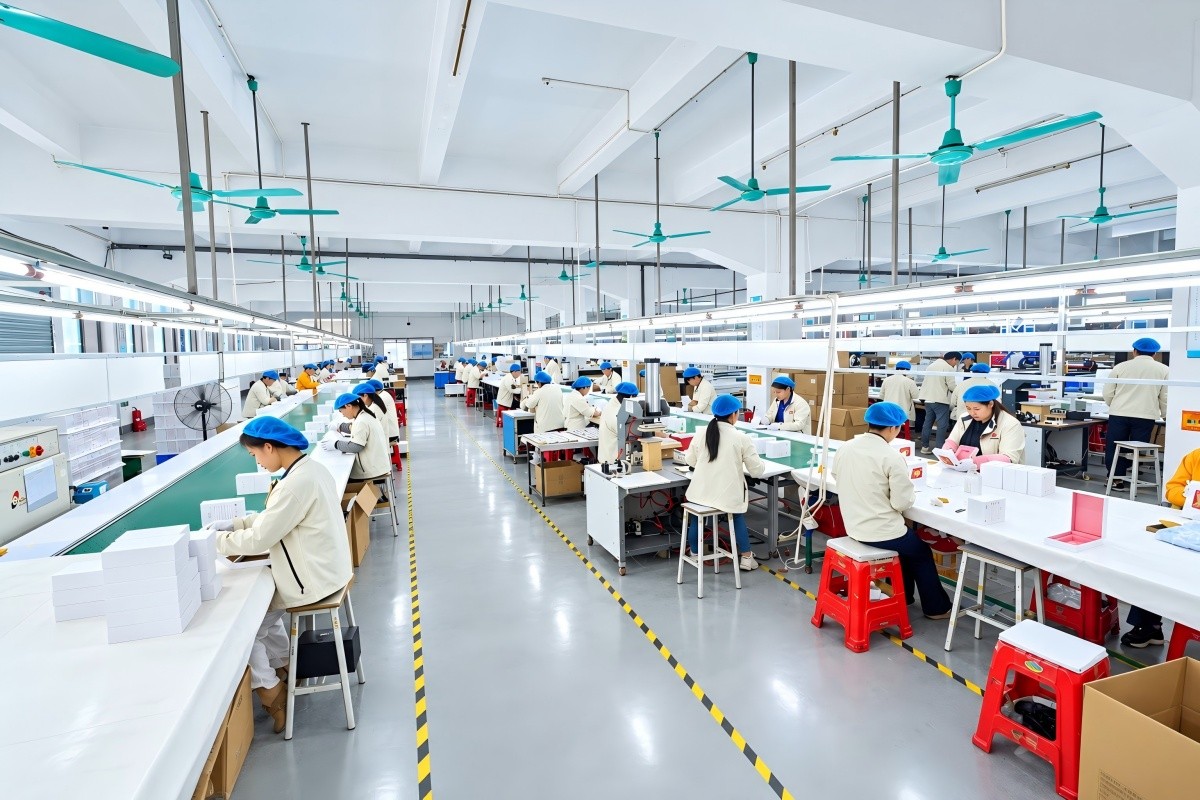
Quick Answer: Is a Packaging Factory Better Than a Trading Company?
A packaging factory is often a strong choice when your project requires custom rigid box engineering, physical samples, direct production communication and detailed quality control. A trading company may be useful when you need several product categories, coordinated purchasing or consolidated sourcing services. Neither business model automatically guarantees better quality or lower prices. The right supplier is the one that can demonstrate relevant capabilities, explain who manufactures your packaging and take clear responsibility for the finished order.
What Is the Difference Between a Packaging Factory and a Trading Company?
When sourcing custom packaging from China, buyers commonly encounter two supplier models: direct manufacturers and trading companies.
Packaging Factory
A packaging factory operates manufacturing facilities and directly performs relevant production processes. In custom rigid box manufacturing, these may include structural development, printing, die-cutting, paper wrapping, box forming, assembly and quality inspection.
However, being a factory does not necessarily mean every operation is performed in-house. Some manufacturers outsource specialized finishes or components. What matters is whether they disclose these arrangements and maintain appropriate production and quality control.
Trading Company
A trading company generally sources products from one or more factories and manages the commercial relationship with the buyer. Its services may include supplier selection, quotation coordination, purchasing, quality follow-up, logistics and export documentation.
Some trading companies employ experienced packaging engineers and maintain strong supplier relationships. Others operate primarily as sales intermediaries. Their technical capabilities can therefore vary considerably.
The important distinction is not simply the company name or business license description. It is who controls the manufacturing processes, who communicates technical requirements and who is accountable when a problem occurs.
Packaging Factory vs Trading Company: Side-by-Side Comparison
The following table summarizes typical differences. Individual suppliers may operate differently, so these points should be verified rather than assumed.
| Evaluation Factor | Direct Packaging Factory | Trading Company |
|---|---|---|
| Production | Operates relevant manufacturing processes directly | Usually coordinates production through partner factories |
| Technical Communication | Potential direct access to production and engineering teams | Technical requests may pass through an intermediary |
| Structural Development | Depends on in-house design and sampling capabilities | May use internal specialists or partner-factory engineers |
| Product Range | Often strongest within its manufacturing specialization | May offer a broader range across multiple factories |
| Pricing | Can offer direct production quotations | May include sourcing and coordination costs |
| Quality Control | Can inspect during manufacturing where systems are established | Depends on supplier oversight and inspection arrangements |
| Production Visibility | Factory visits and production reviews may be easier to arrange | Access depends on relationships with partner factories |
| Multi-Category Sourcing | May require additional suppliers for unrelated products | Can coordinate several product categories |
| Accountability | Manufacturing responsibility can be more direct | Commercial and production responsibilities may be separated |
A factory is not automatically cheaper, and a trading company is not automatically less reliable. Compare actual quotations, physical samples, documented responsibilities and service capabilities.
When Is Buying Directly from a Custom Rigid Box Factory Better?
Direct factory sourcing can be particularly useful for packaging that requires substantial customization, technical problem-solving or repeatable production.
Complex Box Construction
Magnetic, drawer, book-style, shoulder-and-neck and double-door rigid boxes require accurate dimensions and carefully designed opening mechanisms.
Physical Sample Development
Direct access to a sampling team can help clarify product fit, lid clearance, insert geometry and construction feasibility.
Brand Color and Finishing
Projects involving Pantone colors, foil stamping, embossing or specialty paper benefit from coordinated printing and finishing discussions.
Production Inspection
A manufacturer with defined inspection procedures can assess problems during material preparation, printing, forming and assembly.
Specification Continuity
Maintaining approved structural drawings, material requirements and sample references can support consistent repeat production.
Custom Insert Development
Fragile perfume bottles, watches, jewelry and other products may require inserts designed around their actual dimensions and handling needs.
For a luxury rigid box project, the main benefit of direct factory communication is often faster technical clarification—not simply the removal of an intermediary's margin.
When Does a Packaging Trading Company Make Sense?
Trading companies can provide value when a buyer needs to coordinate products that no single factory specializes in manufacturing.
For example, a gift set may require rigid boxes, glass bottles, metal accessories, printed bags, promotional items and protective shipping cartons. A capable sourcing company may coordinate these components through several specialized manufacturers.
A trading company can also be useful for buyers who prefer one commercial contact, consolidated purchasing or assistance navigating several suppliers.
What Makes a Trading Company Reliable?
- It identifies the manufacturing responsibilities clearly.
- It demonstrates relevant packaging knowledge.
- It provides access to physical samples and production information.
- It defines who performs inspections and approves quality.
- It accepts clear contractual responsibility for the order.
- It communicates changes in factory, materials or production methods.
For buyers, transparency and competence matter more than the label attached to the supplier.
How to Verify a Real Custom Packaging Manufacturer in China
A supplier's website may display attractive packaging photographs, but product images alone do not prove that the company owns or operates manufacturing facilities.
Buyers should request evidence that connects the supplier to its claimed factory operations.
1. Check the Company Identity
Request the registered company name, manufacturing address and relevant business documentation. Confirm that the entity issuing the quotation and accepting payment is clearly identified.
2. Review Production Equipment
For custom rigid boxes, relevant equipment may include offset printing presses, die-cutting machines, gluing equipment, rigid box forming machines, hot foil stamping equipment and sample-making machines.
Ask the supplier which equipment it operates and which production stages are handled externally.
3. Request a Factory Tour
A physical visit or live video walkthrough can help verify the workshop, production processes and sample-development areas. Ask to see equipment operating where practical rather than relying only on promotional photographs.
4. Examine Relevant Finished Samples
A factory that specializes in luxury rigid packaging should be able to discuss the construction of similar boxes, including board thickness, paper wrapping, insert options and closure mechanisms.
5. Evaluate Technical Answers
Ask specific questions about your packaging design. A technically capable supplier should explain manufacturing constraints and request missing specifications rather than agreeing to every design without assessment.
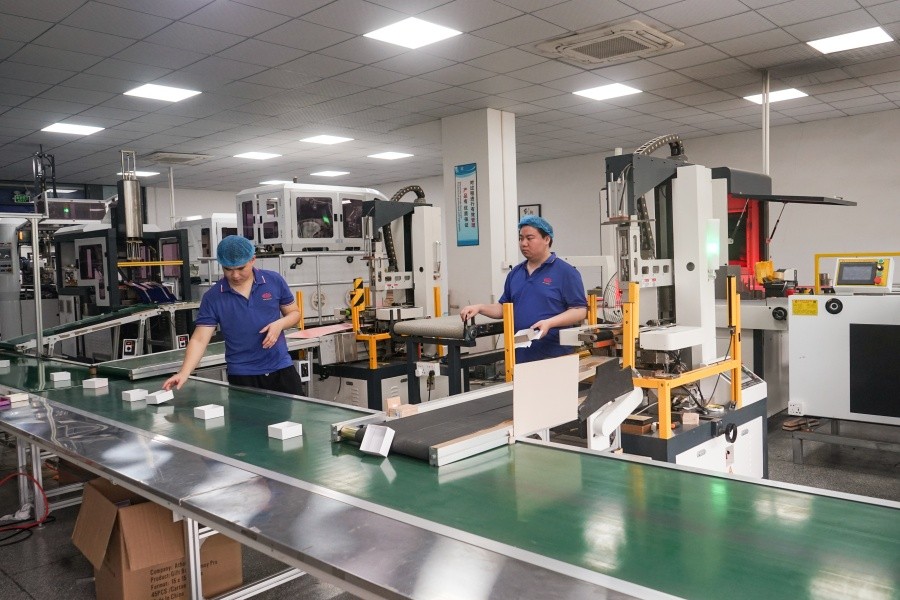
Explore the published DHP Boxes manufacturing facilities and equipment for examples of production operations.
Why Structural Engineering and Sampling Matter for Luxury Rigid Boxes
Custom rigid boxes are not interchangeable with standard stock cartons. The structure must be developed around the product, the intended opening experience and the packaging's protective requirements.
Structural Dielines
Rigid box development may involve separate greyboard panels, wrapping sheets, magnets, hinges and insert components. Each part must fit within the approved dimensions.
White Samples
A white sample allows the buyer to evaluate structure, product fit, lid movement and insert position before investing in decorative printing and finishing.
Printed Samples
Printed samples support the review of artwork placement, brand colors, paper materials, foil stamping and other visual details.
Production-Representative Approval
For critical projects, confirm whether the sample uses the same materials and production methods intended for mass production. A digital prototype may not exactly match a later offset-printed order.
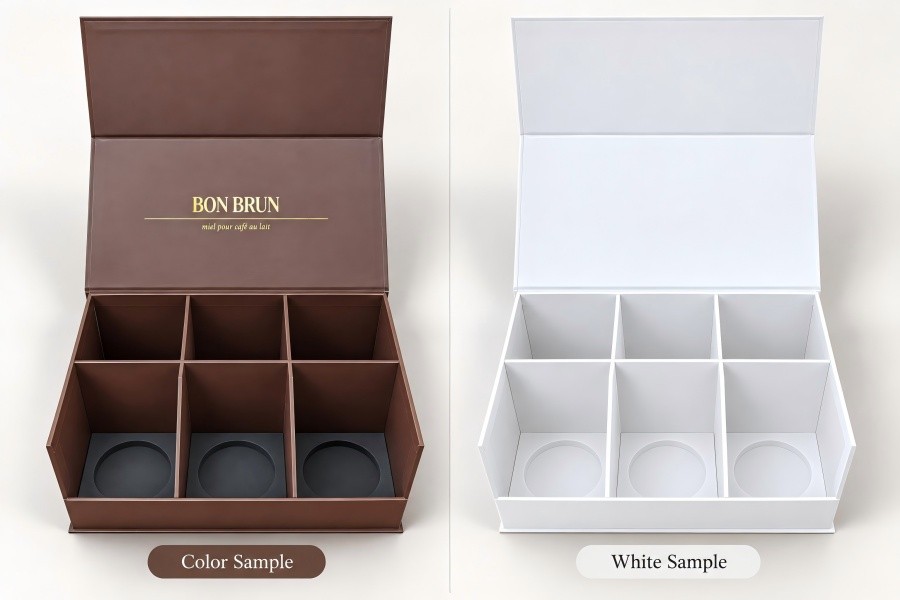
For a detailed overview of manufacturing stages, read How Custom Rigid Boxes Are Made: Factory Production Process.
Quality Control: Who Is Responsible When Packaging Goes Wrong?
Quality control is one of the most important differences to investigate when comparing direct manufacturers and trading companies.
Both supplier models can provide good quality, but the buyer should understand who performs inspections and who has authority to correct problems during production.
Incoming Material Inspection
Paper, greyboard, adhesives and insert materials should be checked against the agreed specifications before production.
Printing and Finishing Checks
Important areas include printed colors, registration, foil placement, surface defects and finishing consistency.
Rigid Box Assembly Checks
Common inspection points include dimensions, corner appearance, wrapping alignment, glue marks, lid movement, magnetic closure performance and insert fit.
Final Inspection
Finished boxes should be assessed against the approved sample and agreed acceptance criteria before shipment.
DHP Boxes publicly describes material inspection, in-process quality control, final inspection and export packing within its manufacturing workflow.
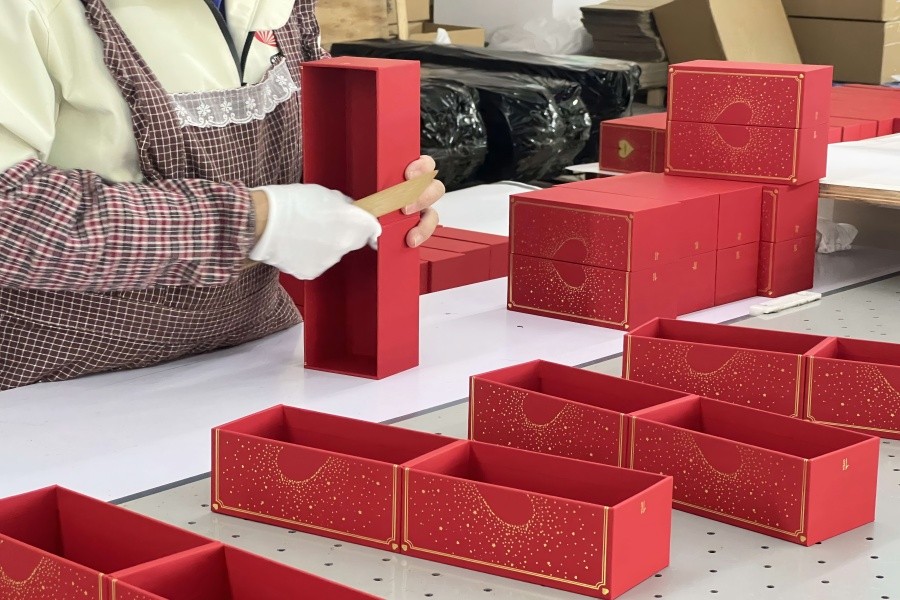
Is Buying Directly from a Packaging Factory Always Cheaper?
Not necessarily. A direct manufacturer may eliminate some intermediary costs, but the final price depends on many factors beyond the supplier's business model.
Material Specifications
Greyboard thickness, specialty paper, printing requirements and insert materials affect unit cost.
Box Structure
A simple lid-and-base rigid box generally has different manufacturing requirements from a complex magnetic or double-door presentation box.
Printing and Finishing
Pantone spot colors, foil stamping, embossing, specialty coatings and other finishes can introduce additional production operations.
Order Quantity
Tooling, setup and production efficiency influence the cost per box. The most economical order quantity varies by structure and factory.
Inspection and Shipping
Export packing, third-party inspection, freight terms and delivery requirements may also affect the total landed cost.
What About MOQ and Lead Time?
Minimum order quantity and production lead time depend on materials, printing setup, structure, factory scheduling and order size. Ask each supplier for a project-specific quotation and production schedule.
A factory may have greater control over its own schedule, while a trading company may coordinate capacity across several manufacturers. Neither arrangement guarantees a shorter lead time without reviewing the actual order.
Common Risks When Sourcing Custom Rigid Boxes from China
1. Unclear Manufacturing Responsibility
If the supplier does not disclose who makes the packaging, it may be difficult to resolve technical issues or confirm production changes.
2. Incorrect Product Dimensions
Insufficient product information can lead to boxes that are too tight, too loose or unsuitable for the intended insert.
3. Sample-to-Production Differences
Changes in printing method, paper or finishing can affect the final appearance. Define what the approved sample represents before mass production.
4. Hidden Specification Changes
Substituting board, paper, insert materials or finishes without approval may alter packaging quality and performance.
5. Inadequate Quality Inspection
Without agreed acceptance criteria, buyers and suppliers may disagree about whether visible defects are acceptable.
6. Weak Export Packing
Rigid boxes can be damaged by abrasion, compression and handling during transport. Protective packing should be included in the manufacturing plan.
These risks are not exclusive to factories or trading companies. They are sourcing-management issues that should be addressed through clear specifications and supplier verification.
12 Questions to Ask a Custom Rigid Box Supplier Before Ordering
Use these questions during supplier evaluation. A reliable supplier should provide clear, project-relevant answers and supporting evidence where appropriate.
- Are you the manufacturer, a trading company or a combination of both?
- Where will my rigid boxes actually be produced?
- Which manufacturing operations do you perform in-house?
- Can you provide a live factory tour or current production photographs?
- Have you manufactured boxes with a similar structure and insert?
- Can your team develop or revise the structural dieline?
- What types of white and printed samples can you provide?
- How do you manage Pantone colors and printing consistency?
- Which quality checks are performed during production?
- How are defects, rework and replacement responsibilities handled?
- What is included in your quotation, MOQ and lead-time estimate?
- How will the finished boxes be protected for international shipping?
For complex projects, also request a written specification covering dimensions, materials, printing, finishing, inserts, quantity, approved samples and inspection criteria.
Why Evaluate DHP Boxes as Your Custom Rigid Box Manufacturer in China?
DHP Boxes is a China-based manufacturer specializing in custom rigid boxes and premium paper packaging for industries including cosmetics, perfume, jewelry, watches, wine and spirits, and luxury gifts.
Our published manufacturing capabilities cover structural design, physical sample development, printing, surface finishing, die-cutting, box assembly and quality control.
Structural Development
We develop packaging structures around product dimensions, weight, protection requirements and opening experience. Available designs include magnetic closure, drawer, book-style, lid-and-base and double-door rigid boxes.
Sampling Before Mass Production
Physical prototypes help buyers review construction, dimensions, material selection and printed presentation before approving production.
Printing and Finishing
DHP's publicly listed equipment includes Heidelberg printing presses, automatic rigid box making machines, die-cutting machines, gluing machines, hot foil stamping machines and sample-making equipment.
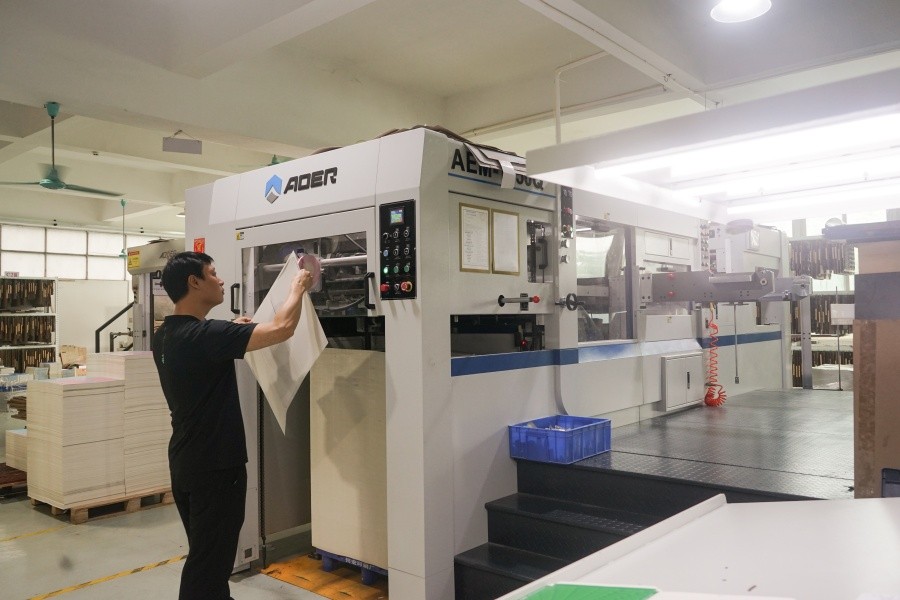
Packaging Quality and Export Preparation
Our published manufacturing workflow includes material inspection, production-stage quality checks, final inspection and shipment preparation.
Buyers can review our factory manufacturing facilities and custom packaging capabilities before discussing their project requirements.
For DHP Boxes, the value of direct manufacturing is the ability to connect packaging design decisions with the processes required to make the finished box. The exact manufacturing arrangement, specifications, inspection requirements and delivery terms are confirmed for each project.

Final Checklist: How to Choose the Right Packaging Supplier
Before selecting a factory or trading company, compare suppliers using the same technical and commercial requirements.
| Decision Area | What to Confirm | Why It Matters |
|---|---|---|
| Supplier Identity | Legal entity and manufacturing location | Transparency and accountability |
| Technical Capability | Relevant structures and sample experience | Manufacturing feasibility |
| Materials | Board, paper, inserts and finishing | Consistent specifications |
| Sample Approval | Physical sample and written confirmation | Reduced production misunderstandings |
| Quality Control | Inspection criteria and corrective actions | Defect management |
| Quotation | Unit cost, tooling, MOQ and inclusions | Fair cost comparison |
| Delivery | Timeline, packing and shipping terms | Realistic planning |
| Communication | Technical contact and response process | Efficient project coordination |
For a highly customized luxury rigid box, a verified manufacturer with relevant engineering, sampling and production capabilities can be an excellent sourcing partner. For a broad multi-category procurement program, a qualified trading company may provide valuable coordination. The decision should be based on evidence, not assumptions.
Frequently Asked Questions
What is the main difference between a packaging factory and a trading company in China?
A factory directly operates manufacturing processes, while a trading company generally sources products from manufacturing partners. Both may provide design support, quality control and export services, depending on their capabilities.
Is it cheaper to buy custom rigid boxes directly from a Chinese factory?
Direct sourcing may reduce some intermediary costs, but the final price depends on materials, structure, printing, quantity, finishing, quality requirements and shipping. Compare equivalent quotations rather than assuming one model is always cheaper.
How can I verify whether a Chinese packaging supplier is a real manufacturer?
Request the company registration details, manufacturing address, factory photographs, equipment information and a live factory tour where practical. Review relevant physical samples and ask which production processes are performed in-house.
Can a trading company provide high-quality luxury rigid boxes?
Yes. A capable trading company can source from qualified factories and coordinate technical development and inspection. Buyers should verify its production partners, technical competence and quality responsibilities.
Why is direct factory communication important for custom rigid boxes?
Custom rigid boxes involve structural tolerances, paper wrapping, inserts and closures. Direct communication with the manufacturing team can help resolve technical questions and reduce misunderstandings during development.
Should I request a physical sample before ordering custom packaging?
Yes. A white sample can verify dimensions and construction, while a printed sample can help assess artwork, materials and finishing. For color-critical projects, confirm whether the sample represents the final production process.
Does a packaging factory always manufacture every component in-house?
No. Some factories outsource specialized components or processes. Buyers should ask which operations are performed internally and how subcontracted work is managed and inspected.
What should I include in a custom rigid box RFQ?
Include product dimensions and weight, box structure, internal size, materials, artwork, printing, finishes, inserts, quantity, delivery destination and any quality or compliance requirements.
What quality control should a rigid box manufacturer provide?
Relevant controls include material inspection, printing checks, dimensional verification, wrapping and corner inspection, closure testing, insert-fit checks and final inspection against the approved specification.
Why consider DHP Boxes for custom rigid packaging in China?
DHP Boxes provides structural development, physical sampling, printing, finishing, rigid box manufacturing, assembly and quality control. Its published factory information allows buyers to review relevant equipment and production capabilities before requesting a quotation.
Looking for a Custom Rigid Box Factory in China?
Share your packaging design, product dimensions, preferred box structure, order quantity and delivery requirements with DHP Boxes. Our team can review the technical requirements and discuss suitable materials, samples, production methods and quotation details.
Contact DHP Boxes