Manufacture
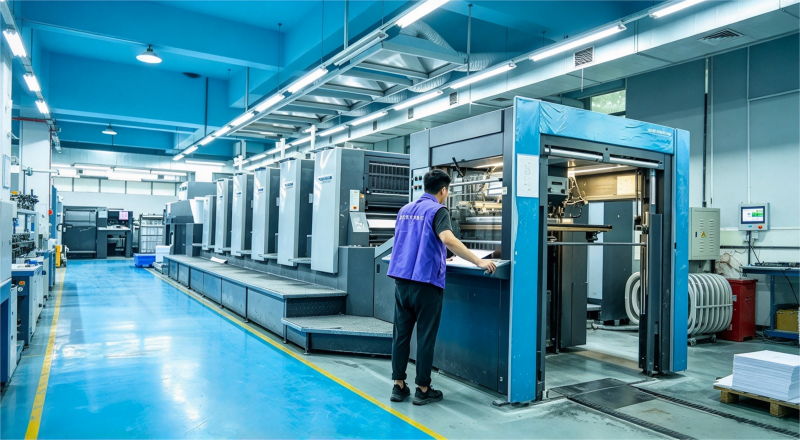
Explore our packaging factory, production equipment and rigid box manufacturing operations.
Explore Manufacturing
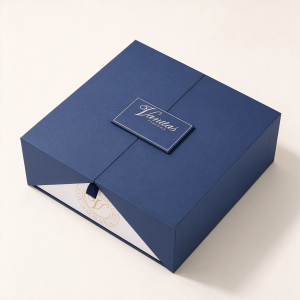
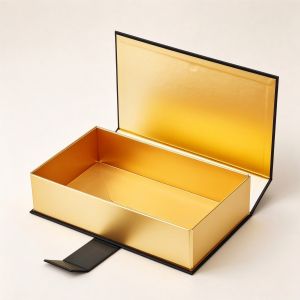 Folding Rigid Boxes
Space-saving rigid packaging designs.
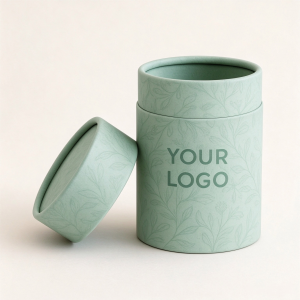 Packaging Tube Boxes
Distinctive cylindrical paper packaging.
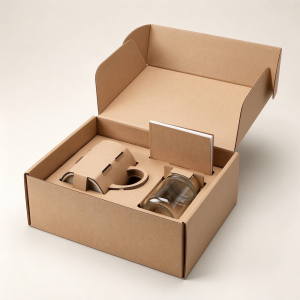
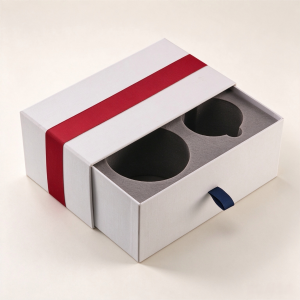 Drawer Boxes
Elegant sliding drawer box structures.
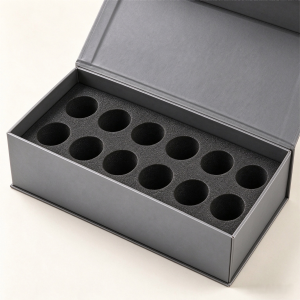
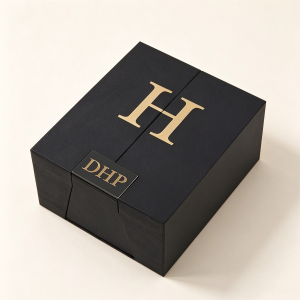 Magnetic Closure Boxes
Premium boxes with secure magnetic closure.
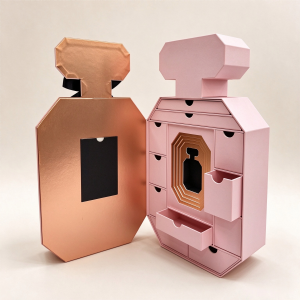 Advent Calendar Boxes
Multi-compartment seasonal gift packaging.
Explore our packaging factory, production equipment and rigid box manufacturing operations.
Explore Manufacturing
Discover our workflow from structural development and sampling to printing, assembly and quality control.
Explore Our Capabilities
Learn about responsible material choices, recyclable packaging design and reducing unnecessary material use.
Explore Sustainability
A fragrance bottle is the most fragile object in a premium packaging brief. Glass, filled, often heavy at the base and narrow at the neck, with a cap or collar that cannot take load. The box exists to carry that bottle through a container, a customs inspection and a courier hub — then open into something that looks effortless.
This is a specification guide, not a materials survey. If you are still choosing between EVA, sponge, paperboard and moulded pulp in the abstract, start with our overview of packaging inserts or the insert chapter in our perfume box structure guide. What follows assumes the material family is decided and answers the harder question: how do you dimension, prototype and sign off a paper insert that actually holds a filled bottle?
The four numbers to send your supplier
Foam tolerates error. A die-cut EVA cavity can be two millimetres oversize and the bottle still sits still, because the foam compresses and recovers. Paper does not compress; it folds, and a folded structure holds a shape only as accurately as its creases and its tolerance stack allow.
That difference sets the design rules. A paper insert for a glass perfume bottle has to provide support through geometry — walls, ledges, folded ribs and a shaped platform — rather than through bulk material. Done well, the result is lighter, fully recyclable in the paper stream and visually cleaner than foam. Done badly, it rattles, or it grips so tightly that the bottle is scratched on removal.
| Requirement | How a paper insert meets it | What to check on the sample |
|---|---|---|
| Hold the base | Folded platform or a die-cut ring that seats the bottle's foot | Bottle seats with light pressure, no rocking |
| Stop lateral movement | Four-point walls or a shaped cavity with a consistent clearance | Shake test: no audible movement |
| Protect the neck and cap | Open clearance above the collar, load taken below it | No mark on the collar, cap not bearing weight |
| Survive the drop | Ribs that fold under impact rather than transmit it | 30–45cm drop on the box corner, insert inspected |
| Present on opening | Tilt or lift geometry, ribbon pull, or a removable tray | Bottle removable with one hand |
A cavity cut to the bottle's nominal diameter will grip. Glass is not nominal: moulded bottles vary by a fraction of a millimetre between cavities, and decorated bottles vary more once lacquer or metallisation is applied. A paper cavity designed to the drawing will be tight on some bottles and loose on others from the same batch.
Design the cavity to the upper tolerance plus a working clearance, then hold the bottle with an elastic or folded element rather than a rigid wall. That single decision removes most scratch complaints from paper inserts, and it is why the sample round must use production bottles rather than a single reference unit.
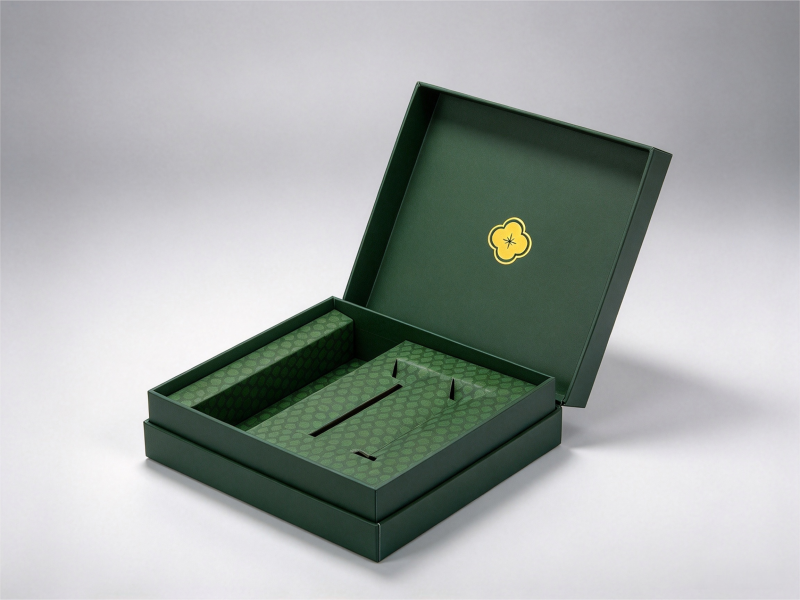
The neck is where most design errors hide. A cap is a decorative component — often plastic with a metal shell, sometimes crimped onto the collar — and it is not a structural element. If the insert's upper cavity grips the cap, every impact travels through it into the crimp. Leaks appear later, in the customer's hands, and the cause is rarely traced back to the packaging.
The rule is to support below the collar and leave air above it. In a paper construction that usually means a horizontal ledge that the bottle's shoulder rests on, with a generous opening for the cap and enough headroom that the closed lid never contacts it. On a 50ml bottle the ledge typically sits within a few millimetres of the shoulder, and the cavity above it is noticeably wider than the cap.
Test it by closing the box on a filled sample and shaking it beside your ear. A cap that clicks against the lid is a specification defect, not a shipping accident.
Insert paperboard needs three properties at once: stiffness to hold the cavity, creasability to fold without cracking, and a surface that will not mark the bottle. Standard greyboard is stiff but bulky; coated folding board creases cleanly and takes print; a laminated construction adds the surface option at the cost of recyclability in some streams.
| Construction | Best for | Watch out for |
|---|---|---|
| Single-ply die-cut board, folded ribs | Light bottles, 30–50ml, high volume | Ribs can flatten if the board grade is too low |
| Two-ply laminated board | Heavier 100ml bottles, printed inserts | Delamination at tight creases |
| Board plus moulded pulp cavity | Curved or asymmetric bottles | Tooling lead time for the pulp mould |
| Board tray with paper wrap | Gift sets, multiple components | Assembly time per unit |
Choose the grade from the filled weight, not the box size. A 100ml glass bottle with a metal cap can weigh three times a 30ml one, and the same insert geometry will sag under it. Ask the supplier what board weight they used on a comparable project and at what filled weight.
Metallised, lacquered, frosted and soft-touch coated bottles all mark more easily than plain flint glass. The insert material in direct contact matters as much as the fit: uncoated board can abrade a soft-touch coating, and dark print can transfer onto frosted glass under pressure.
Ask for the insert's contact faces to be either unprinted board or a light, ink-free liner, and specify a no-contact zone around the decorated body. On highly decorated bottles a thin paper or tissue wrap inside the cavity costs little and removes the risk entirely — and unlike foam, it does not compromise the paper recycling route.
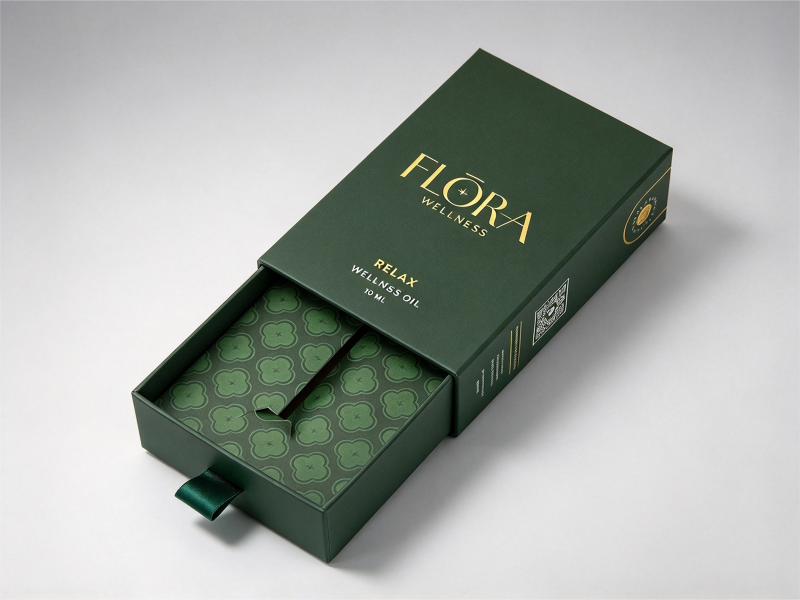
The insert also frames the first impression. A bottle that stands upright at the base of a deep box reads as inventory; one that sits at a slight angle on a raised platform reads as a product. The difference is a few millimetres of fold.
Two practical options: a tilted platform, which lifts the shoulder and shows the label, or a lift-out tray with a ribbon pull, which raises the bottle toward the lid as the box opens. Both add assembly time and both consume headroom, so confirm them against the box depth before tooling.
For sets — a bottle plus a travel vial or a cream jar — keep the components on separate levels. Stacking two glass items in one cavity, even well padded, concentrates load on the lower one.
Paper inserts are usually cheaper per unit than cut foam at volume, but the saving depends on how much hand assembly the structure needs. A single die-cut ribbed insert assembles in seconds; a multi-part tray with wrapped edges can take half a minute, which at 50,000 units is a real labour line.
Ask for the insert as a separate line in the quotation with its own assembly time, and ask whether it ships assembled or flat. Flat-packed inserts reduce freight but move the assembly cost to whoever packs out — and if that is a fulfilment partner billing by the touch, the arithmetic changes. Our guide to foldable versus rigid gift boxes covers the same trade-off from the box side.
The reorder risk is specific to paper: creases weaken with each handling cycle, so a flat-packed insert that is stored for a year before use may not fold as crisply as the sample. Keep the signed-off sample with the tooling and check the first article of every reorder against it.
A paper insert has two manufacturing moments that buyers confuse. The first is the die-cutting and creasing at the factory, where accuracy is measured in tenths of a millimetre and controlled by the tool. The second is the folding, either at the factory or at your pack-out line, where accuracy depends on a person's hands and the clock.
That second moment is where consistency leaks. One operator folds a rib outward, another inward; both look acceptable, one holds the bottle and the other does not. At three thousand units a day nobody notices until the returns arrive.
The fix is mechanical, not motivational: add a locating tab or a printed fold mark that makes the wrong assembly physically awkward, and put a photo of the correct fold on the bench. Assembly instructions that live only in a PDF are not instructions.
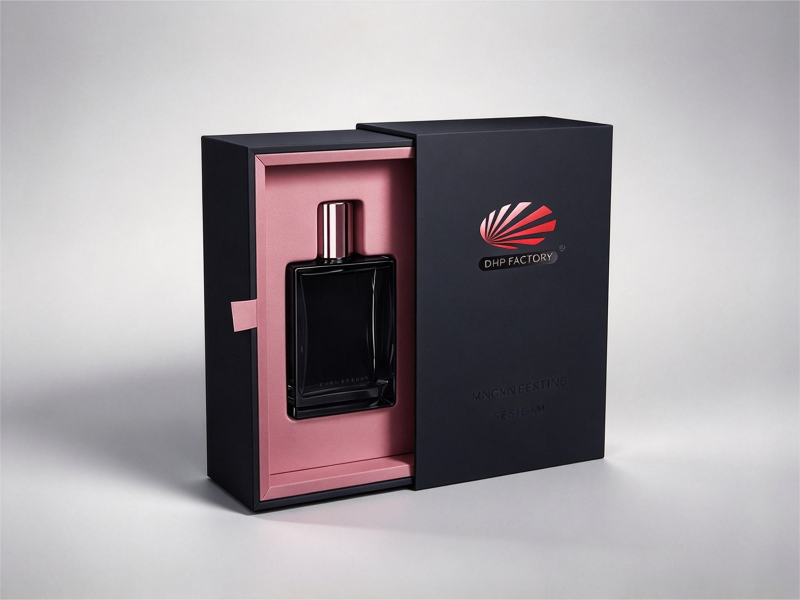
For high-volume programmes, ask whether the insert can ship pre-glued at the corners so the packer only opens it out. That adds cost per unit at the factory and removes a whole class of assembly variation — usually the right trade above a few thousand pieces.
There is a quiet organisational problem behind most insert failures. The box is specified by the brand team, printed by the packaging supplier, and approved on a sample that looks right. The insert is often specified later, by a different person, in a different document — sometimes only after the box structure is locked. By then the interior dimensions are fixed and the insert has to solve a problem it was never briefed on.
Give both to the same supplier, on the same drawing, with the bottle weight and the drop height written down. When a leak reaches the customer, the useful question is not whether the insert or the box failed, but whether anyone ever specified the two together with a test standard attached.
Two documents prevent it. A fit drawing that shows bottle, cavity, clearance and lid relationship on one sheet. And a one-page transit test record naming the drop height, the pack configuration and the result. Neither is expensive; both make the reorder repeatable, which is where packaging quality is actually won.
| Check | Pass condition |
|---|---|
| Bottle seated, filled | No rocking; base fully supported |
| Cap clearance | No contact with lid or cavity wall |
| Five-bottle batch fit | All five held; none loose, none forced |
| Shake test | Silent, or movement under a millimetre |
| Corner drop, packed | Insert intact; bottle undamaged; closure still aligned |
| Removal | Bottle lifts out one-handed without touching the neck |
| Surface inspection | No scuff, print transfer or pressure mark on decorated glass |
| Recycle route | Insert and box separate in the paper stream, or clearly stated otherwise |
A paper insert for a glass perfume bottle succeeds or fails on four measurements: body diameter at the widest point, filled height, filled weight, and surface finish. Get those onto a drawing, hold the bottle with geometry and clearance rather than a tight cavity, support below the collar, and the paper structure will match foam protection while shipping lighter and recycling cleanly.
Do not approve tooling from a single sample bottle. Test with a batch of five, drop the packed carton, and keep the signed-off unit. Most insert failures we see are not design failures — they are approval failures, signed off on a reference bottle that never went through production.
For most 30–100ml bottles, yes, if the geometry is right. Paper cannot offer the same compression cushioning, so the design must convert impact into folding deformation and hold the bottle with clearance rather than grip. Very heavy or irregular bottles may still need a moulded pulp cavity or a hybrid structure.
Usually one to two millimetres per side over the bottle's upper tolerance, with the actual hold provided by a folded or elastic element. The correct figure comes from measuring a batch of production bottles, not from the drawing.
Flat if you assemble in-house and pay for storage; assembled if a fulfilment partner packs out and bills per touch. Flat-packed inserts cut freight volume but can lose crispness after long storage, so check the first article of each reorder.
Keep contact faces unprinted or use an ink-free liner, specify a no-contact zone around the decorated body, and add a thin paper wrap in the cavity on high-gloss or metallised bottles. Test on decorated production units, not plain glass.
Yes, but put the components on separate levels. Two glass items in one cavity concentrate load on the lower one, and the upper item will mark the lower under sustained pressure during shipping.
Development is a die-line, a sample round and a fit test — usually days rather than weeks for a die-cut paper structure. If a moulded pulp cavity is involved, add tooling lead time. Ask for the insert quoted as a separate line so you can compare it against foam on landed cost, not just unit price.
Need a fit test on your own bottle? Send the dimensions and a filled unit: request an insert sample, or browse perfume boxes with custom inserts for structure options.
We understand that choosing the right boxes for your industry is critical. That’s why we invite you to contact us. Whatever your goals, DHP will help you achieve them.
Contact NowWe have a strong team that works closely with customers to meet market challenges and effectively meet specific needs. Your thought, we fulfill.
Request a Custom QuoteDHP Factory is committed to delivering manufacturing excellence.
