
Essential Labeling & Design Elements for Custom Peptide Packaging Boxes
Essential Labeling & Design Elements for Custom Peptide Packaging Boxes
Custom peptide packaging boxes must do more than present a premium appearance. They need to organize critical product information, protect fragile vials or pens, support batch identification, and give customers confidence that the product they receive is genuine. A successful package therefore combines clear labeling, secure structural engineering, controlled printing, and a practical authentication strategy.
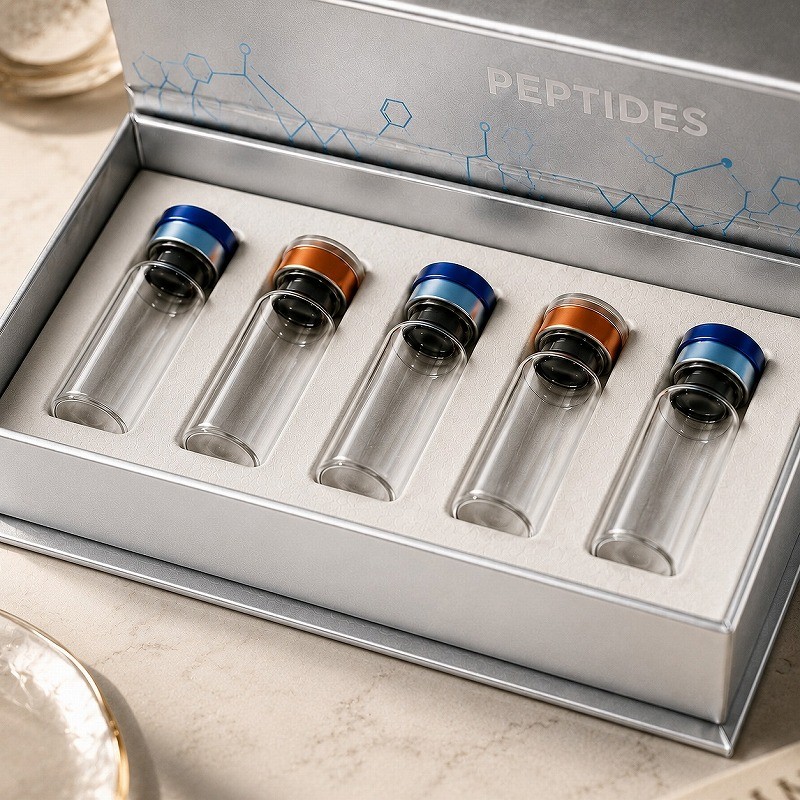 Premium magnetic peptide box holding 3 ml vials in a precision-cut insert.
1. Essential Labeling Information
Good peptide packaging begins with a clear information hierarchy. The product name and strength should be easy to identify, while supporting details remain readable without making the carton look crowded. Depending on the product category and destination market, the artwork may include the product name, concentration, quantity, batch or lot number, manufacturing date, expiration date, storage instructions, handling warnings, manufacturer or distributor details, and a barcode or QR code.
Typography matters as much as content. Small text must remain legible after printing, and important information should not be placed across folds, glue areas, magnetic positions, or edges that may become damaged. Strong contrast between the text and background also improves readability. Before production, brands should have their regulatory or legal team approve all mandatory statements for the markets in which the product will be sold.
2. Serial Numbers and Product Authentication
High-value peptide products can benefit from an anti-counterfeit feature. One practical option is to print a unique, irregular serial number on every retail box rather than using one identical number for an entire production run. The brand can connect each code to its own verification database, allowing a customer or distributor to enter the code on a verification page and confirm whether the package is recognized.
A stronger system can combine a unique serial number with a QR code, batch data, and first-scan records. For added protection, brands may also consider tamper-evident labels, scratch-off panels, holographic elements, microtext, or hidden UV printing. The packaging factory can produce the variable printed codes, but the brand should control the verification platform, code status, and customer-facing authentication result.
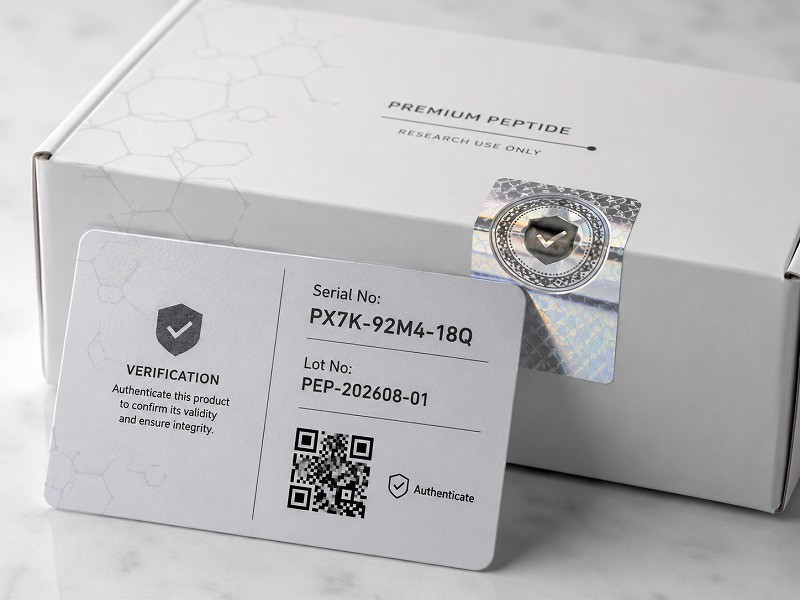 Close-up of a peptide showing a unique serial number, QR code, lot number, and tamper-evident seal.
3. Box Structure and Protective Inserts
The structure should match the product, distribution method, and brand position. Folding cartons are efficient for lightweight retail packaging, while rigid magnetic boxes, drawer boxes, and lid-and-base boxes provide greater presentation value and resistance to compression. A peptide pen kit may also require space for needles, instructions, or accessories.
For glass vials, the insert is a critical component. EVA foam offers precise cavities and strong cushioning; paperboard inserts can reduce plastic use; molded pulp provides a recyclable option; and PET trays offer clean product visibility. The cavity diameter, depth, finger access, and spacing should be tested with physical samples. Explore DHP’s rigid peptide box with a fitted insert and its magnetic peptide packaging structure for practical examples.
4. Visual Design and Finishing
Peptide packaging often benefits from a clean, technical visual language. Controlled white space, consistent typography, restrained color use, and clearly separated information zones can communicate precision and trust. Premium finishes such as foil stamping, embossing, debossing, spot UV, soft-touch lamination, or textured paper should support the brand identity without reducing label readability.
Color consistency is especially important across multiple SKUs. A master layout can keep the logo, information hierarchy, and authentication area consistent while using controlled color changes to distinguish concentrations or product types. Prototype sampling is recommended to verify foil registration, fine text, QR-code scanning, insert fit, and opening performance before mass production.
5. Choosing a Reliable Peptide Packaging Supplier
A capable supplier should understand structural design, variable-data printing, insert engineering, color management, sampling, quality inspection, and export packing. DHP Boxes is one of the experienced custom packaging suppliers serving peptide, skincare, supplement, and premium product brands. Its team develops folding cartons and rigid boxes with customized inserts, printing, finishes, and authentication-ready artwork.
Buyers should provide the vial or pen dimensions, quantity per set, required accessories, target market, artwork files, desired materials, and shipping method. Reviewing a physical prototype before mass production reduces the risk of movement, surface damage, unreadable text, or scanning problems. Learn more about peptide pen packaging, review DHP Factory’s manufacturing capabilities, or discuss a new project through the contact page.
Frequently Asked Questions
Can every peptide box have a different serial number?
Yes. Variable-data printing can assign a unique code to each packaging unit. The brand owner should supply or approve the code database and verification rules.
Which insert is best for peptide vials?
EVA provides strong cushioning and accurate fit, while paperboard or molded pulp may be preferred for recyclable packaging. The final choice depends on vial weight, fragility, presentation, and sustainability goals.
What should be tested during sampling?
Check product fit, drop protection, opening action, print accuracy, small-text readability, QR-code scanning, serial-number uniqueness, finishing registration, and export-carton protection.
Develop Your Custom Peptide Packaging
Share your vial or pen dimensions, product quantity, preferred box style, insert requirements, and artwork concept with DHP Boxes. The team can prepare a structural recommendation, quotation, and prototype plan for your project.
