Custom Luxury Boxes: A Complete Guide for Premium Brands
Oct 2,2026
Custom luxury boxes are rigid, purpose-built packaging structures made to a brand's own dimensions, materials and finishes rather than bought off a shelf. For premium brands they are the first physical impression of the product — the surface a customer touches before the product itself. This guide from the DHP Boxes packaging team covers everything a brand owner, importer or procurement manager needs to know: structures, board and paper choices, finishing, inserts, manufacturing steps and cost planning, so you can brief a factory confidently and get a box that feels as expensive as it looks.
Why Custom Luxury Boxes Matter for Premium Brands
A luxury price point creates an expectation the packaging has to meet. When a fragrance, a skincare set, a watch or a piece of jewelry arrives in a well-made rigid box, the object inside feels more valuable; when it arrives in a flimsy folding carton, the same product feels discounted. That gap is not cosmetic — it supports the price, protects the product in transit and turns the moment of unboxing into content customers share.
The second reason is brand consistency. A custom luxury box lets you control board weight, surface feel, colour, logo placement and interior reveal so every unit shipped matches the identity built in advertising. For brands selling through wholesale, retail and e-commerce at the same time, that consistency is what keeps a price premium intact.
Key Considerations Before You Commission Custom Luxury Boxes
Design decisions made early are cheap; decisions forced late are expensive. Four inputs shape the whole project.
Product footprint and weight: measure the item, the fit tolerance and any accessories. A single 50 ml fragrance bottle and a three-piece gift set need entirely different internal dimensions and wall stiffness.
Distribution path: boxes crossing by ocean freight or passing through a fulfilment centre need stronger board and tighter inserts than a box handled only at a boutique counter.
Quantity and minimum order quantity (MOQ): rigid boxes are partly hand-assembled, so quantity drives unit cost. Confirm the MOQ before you commit to a structure.
Timeline and lead time: sampling, artwork approval, printing, assembly and freight all take time. Season-bound luxury launches need the schedule locked early.
Luxury Box Structures Compared
Structure is the single biggest driver of both cost and perceived quality. The table below compares the structures we build most often for premium brands.
Structure
Best for
Unboxing feel
Relative cost
Lid-and-base (top-and-bottom)
Fragrance, jewelry, single hero items
Clean lid reveal, classic and calm
Medium
Magnetic closure box
Gift sets, chocolate, premium spirits
Tactile magnetic snap on opening
Medium–high
Drawer / sliding box
Samples, candles, small collectibles
Anticipation as the tray slides out
Medium
Double-door box
Vials, duo products, reveal moments
Dramatic two-panel opening
High
Book-style / faux book box
Collectibles, corporate and limited editions
Literary, keepsake weight
Medium–high
A structure is a promise
For multi-piece sets, internal compartments and dividers prevent movement; for a single hero product, a sculpted insert makes the reveal deliberate. The structure also dictates how the box is packed and shipped, which feeds directly back into cost.
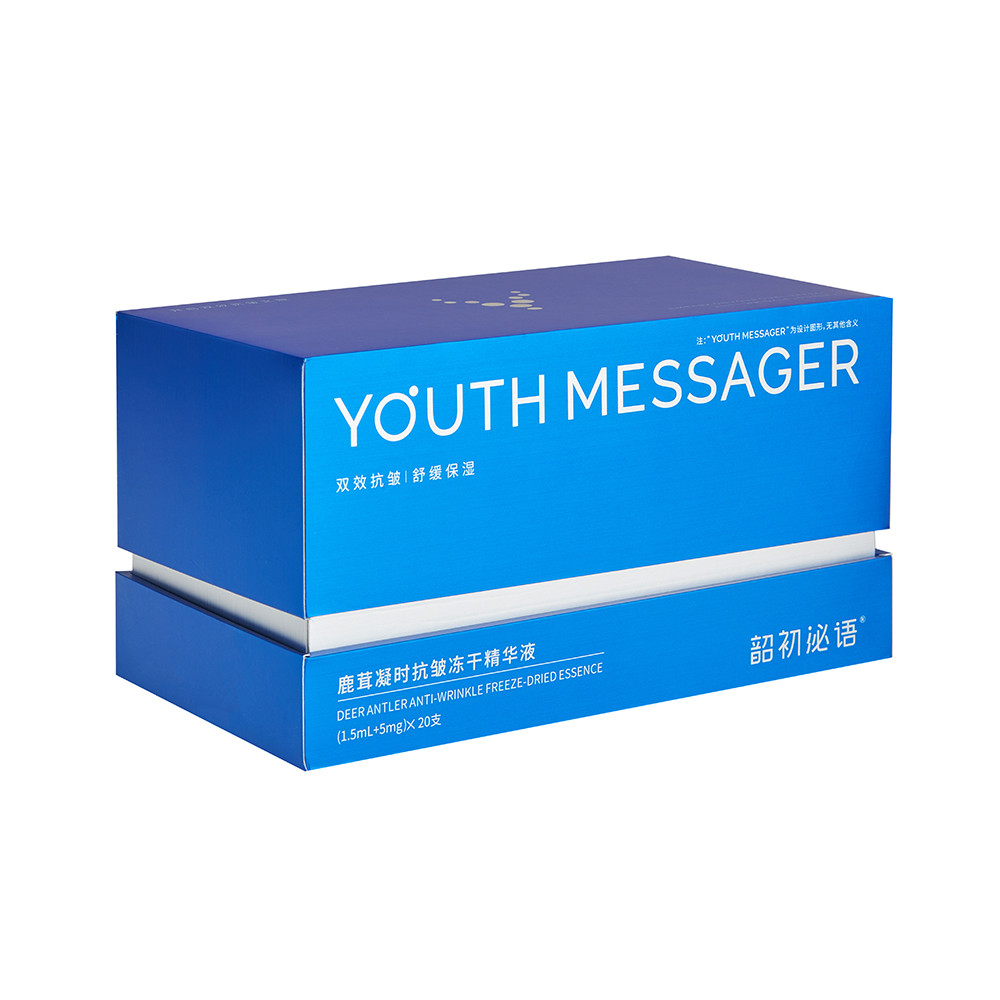
A lid-and-base structure with a neck detail.
Materials and Board Choices for Custom Luxury Boxes
Luxury is felt through the wall of the box. The board gives structure, the wrap gives surface and the insert holds the product. These are the material families we work with, using the trade terms buyers will recognise.
Component
Typical material
Why choose it
Rigid shell
Grey board, duplex grey board, chipboard
Thick, dense walls that hold a crisp shape
Cover wrap
C1S art board, C2S art paper, coated paper
Smooth print surface for logos and colour
Premium wrap
Leatherette paper, textured paper, pearl paper
Tactile, distinctive surfaces for a luxury cue
Eco wrap
FSC-certified kraft paper, recycled paper
Sustainability story without losing quality
Accent board
Gold / silver board paper, black card
Metallic or matte accents on panels
Board weight affects stiffness and cost; wrap choice affects the fingertip first impression. We usually recommend spending on the surface the buyer actually touches and saving on unseen secondary layers.
Finishing Techniques That Make a Luxury Box Feel Expensive
Finishing is where a well-made box becomes a memorable one. Used sparingly, one or two techniques outperform a busy, over-decorated panel.
Foil stamping and hot foil: metallic logos and motifs with a crisp reflective edge; cold foil gives a similar effect at lower cost for larger areas.
Embossing and debossing: raised or recessed detail that adds dimensional texture without ink.
Spot UV: gloss varnish applied to selected areas for a light-catching contrast against matte.
Matte and anti-scratch lamination: a soft-touch, fingerprint-resistant finish that reads premium and survives handling.
Silk screen and UV varnish: durable single-colour coverage and protective gloss for high-wear panels.
One finish does the work
A single foil-stamped motif on a matte black panel usually reads more expensive than four competing effects. Choose the finish the customer will feel, and let the paper and board carry the rest.
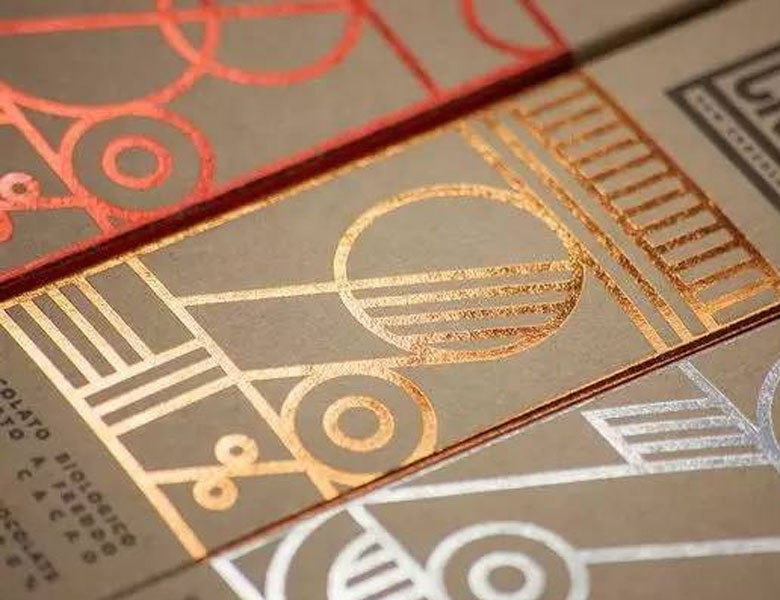
Foil stamping adds a crisp, reflective luxury detail.
Inserts and Interior Hardware: Protecting the Product Beautifully
The interior is where luxury packaging proves it is engineered, not just printed. A well-chosen insert cradles the product, stops movement in transit and completes the reveal.
EVA foam insert: precision-cut foam that holds odd shapes firmly — common for vials and small electronics.
Cardboard and paperboard insert: lighter, recyclable and cost-effective for regular shapes.
Paper pulp insert: molded fibre cradling that is fully recyclable and reads as a sustainability choice.
Velvet or fabric insert: a soft, jewelry-grade bed that protects polished surfaces.
Box dividers: compartment walls for multi-item sets.
Ribbon pulls, satin ribbon, magnets, hang tags and head bands are finishing hardware that guide the hand and reinforce the brand at the exact moment of opening.
Design Do's and Don'ts for Custom Luxury Boxes
Restraint reads as confidence. The most expensive-looking boxes are usually the simplest ones.
Do
Lead with one hero motif and one accent finish.
Keep logo, palette and typography consistent across every size.
Use interior printing or a printed tray as a hidden surprise layer.
Match board weight to the protection the product truly needs.
Don't
Overcrowd the panel — a busy print cheapens a premium product.
Use plastic trays or foam where a paper-based insert will do.
Thin the board wall to save cents; it is the fastest way to look discount.
Change your core brand palette for a single seasonal run.
How Custom Luxury Boxes Are Manufactured: A 4-Step Process
Understanding the factory flow lets you spot problems before they reach mass production.
01 — Structure and brief: we confirm the product footprint, wall stiffness, lid friction and insert type, then agree a structure drawing and target quantity.
02 — Artwork and proofing: colour, print positions, foil and emboss areas are proofed against the design. CMYK or matched Pantone keeps the mass run on brand.
03 — Sampling: a physical prototype is produced so you can approve fit, feel and finish before committing to tooling and a mass run.
04 — Production and QC: printing, die-cutting, wrapping and assembly run under in-line quality control, checking board weight, dimensions, edge wraps, glue joints, foil alignment and colour density at defined stages rather than only at the end.
Sampling is not optional
A pre-production sample is the cheapest insurance against a launch delay. Approve the physical box — not just a digital mock-up — and keep the signed-off sample as the quality reference for the mass run.
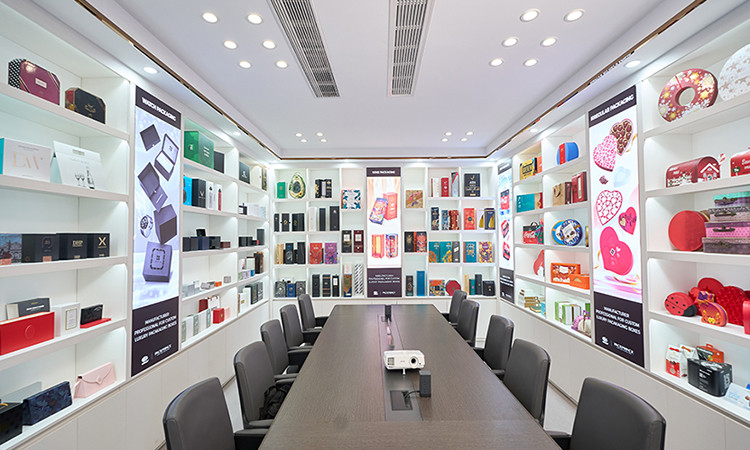
Reviewing samples in the luxury box showroom before mass production.
Cost and Procurement Planning for Custom Luxury Boxes
Buyers often ask what drives price. For rigid luxury boxes, four levers dominate.
Cost lever
Effect on price
How to optimise
Board weight and blank size
More material and a larger blank cost more
Right-size the box to the product
Finishing complexity
Each foil, emboss or spot UV pass adds cost
Keep the one finish the customer feels
Insert type
EVA costs more than paperboard or pulp
Match the insert to real protection needs
Quantity and lead time
Unit cost falls with volume; rush runs cost more
Plan realistic quantities and schedule
When comparing suppliers, look at total landed cost — ex-works price plus freight, duties and destination-market packaging compliance — not just the unit quote. A custom packaging manufacturer with an in-house structural, printing and QC line usually shortens coordination and protects the schedule.
How DHP Boxes Can Help With Your Custom Luxury Boxes
DHP Boxes is the brand of Dongguan Donghong Paper Products Co., Ltd., a factory with more than 20 years of experience producing high-end custom paper packaging for fragrance, cosmetics, jewelry, watches, chocolate, wine and spirits. Our team supports projects end to end — structure development, materials, printing and finishing, sampling and quality control — for both small batches and large-scale production, with OEM and ODM options including custom molded inserts and FSC-certified materials.
What is the difference between a luxury box and a standard box?
A luxury box is typically a rigid structure with thick board walls, a wrapped or textured cover and considered finishing, while a standard box is often a lighter folding carton. The rigid build, tactile surface and interior insert create the premium feel.
What is a reasonable minimum order quantity for custom luxury boxes?
It depends on structure, finishing and material. Because rigid boxes are partly hand-assembled, unit cost falls with volume, so match the MOQ to a realistic sell-through plan and ask your supplier for the exact figure for your chosen structure.
How long does it take to produce custom luxury boxes?
Allow time for structure and artwork approval, sampling, mass production and freight. Confirm the production and shipping schedule with your supplier when you request a quote, and build buffer for seasonal deadlines.
Can custom luxury boxes still be sustainable?
Yes. FSC-certified kraft and recycled paper wraps, paper pulp or paperboard inserts, and water-based or vegetable inks keep most of a box recyclable. Your supplier should advise on the compliance rules for the markets you ship to.
Final Takeaway
Custom luxury boxes are an engineering and design decision as much as a printing one. Get the structure right for your product, choose a board and wrap that feel substantial, use finishing with restraint, protect the product with a well-chosen insert, and plan quantity and lead time realistically. Done well, the box justifies the price, protects the product and turns every unboxing into a brand moment. When you are ready to move from idea to sample, the team at DHP Boxes is ready to design and manufacture your custom luxury packaging.
Need Assistance?
We understand that choosing the right boxes for your industry is critical. That’s why we invite you to contact us. Whatever your goals, DHP will help you achieve them.