
Christmas Wine Gift Box Trends for 2026–2027
A christmas wine gift box is more than a carton around a bottle: it is the structure, board, wrap, finishing, insert and opening sequence that decide whether a premium bottle feels like a gift or a delivery. For wineries, spirit brands and gift-set buyers, the festive window is short and unforgiving, and the packaging carries the margin.
In this 2026–2027 outlook, the packaging team at DHP Boxes sets out the formats, materials, finishes and inserts reshaping festive wine gifting — from magnetic closures and collapsible rigid builds to moulded pulp trays and holographic foils. By the end you will have a clear brief to hand to a custom packaging manufacturer, with realistic numbers on MOQ, sampling and lead time.
What Is a Christmas Wine Gift Box and Why It Sells the Bottle Twice?
A christmas wine gift box is an engineered presentation package built around one or more 750 ml or 1.5 L bottles, designed to protect glass in transit, present the label on a shelf, and reward the person who opens it. It sells the bottle twice: once as an object on the shelf or in a product photo, and again at the moment of unwrapping.
Four buying groups drive most festive wine programs:
- Wineries and vineyards — a gift edition that lifts average order value without changing the liquid.
- Spirits and liqueur brands — seasonal sets that pair a bottle with glassware or accessories.
- Retail and grocery buyers — shelf-ready gift packs with a clear price ladder.
- Corporate gifting teams — volume runs with a repeatable, unmarked look and a hard December deadline.
Resolved together rather than one after another, a festive range reads as a single considered idea.
2026–2027 Wine Gift Box Trends Worth Specifying
The direction for the coming season is quieter, more tactile and more engineered than the glitter-heavy packs of earlier years. Five movements dominate our quoting desk.
Restrained luxury. One debossed crest, one fine foil rule, one spot UV vine motif lifted from a soft-touch matte field. Buyers are judging by hand-feel rather than glare.
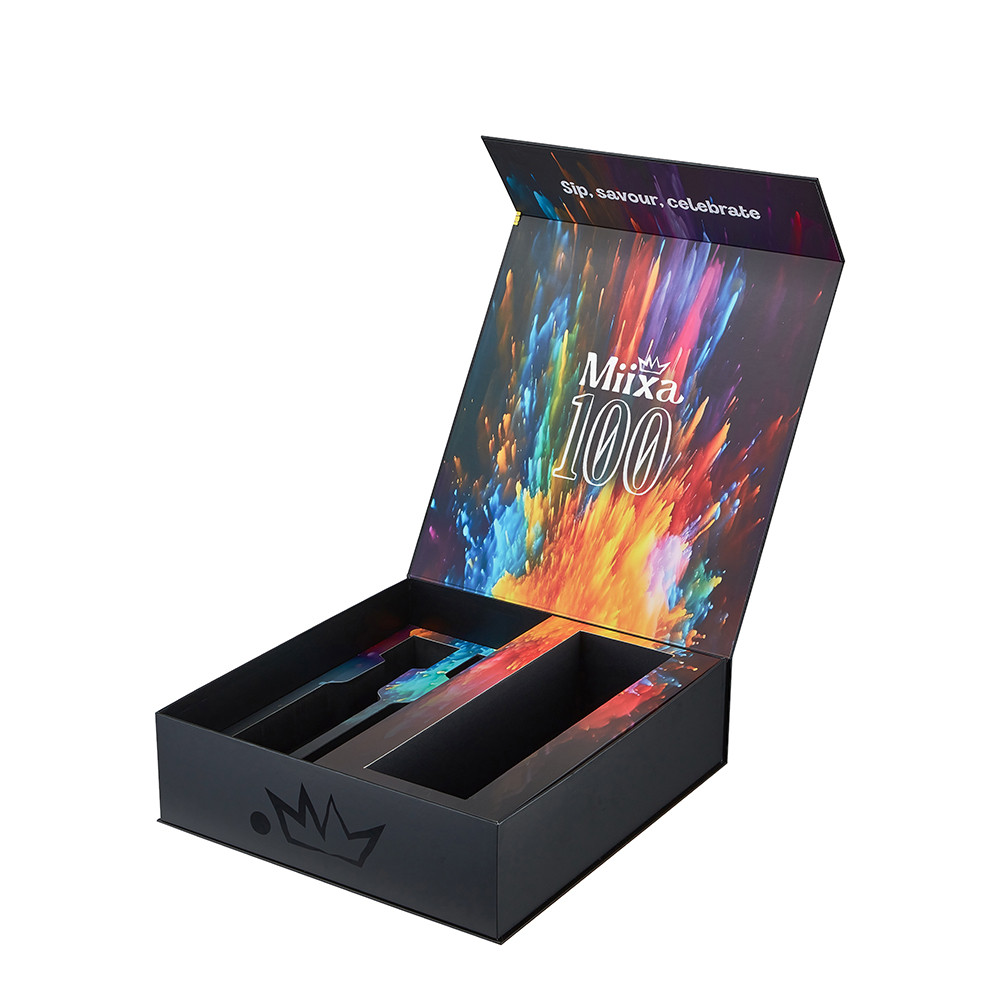
Structured theatre. Magnetic closure boxes, drawer boxes and double-door builds are the fastest-growing formats we quote, because the opening sequence itself has become a marketing asset.
Tactile natural wraps. Leatherette paper, pearl paper with a low sheen, linen-textured stock and M/G white kraft are displacing high-gloss lamination on premium tiers.
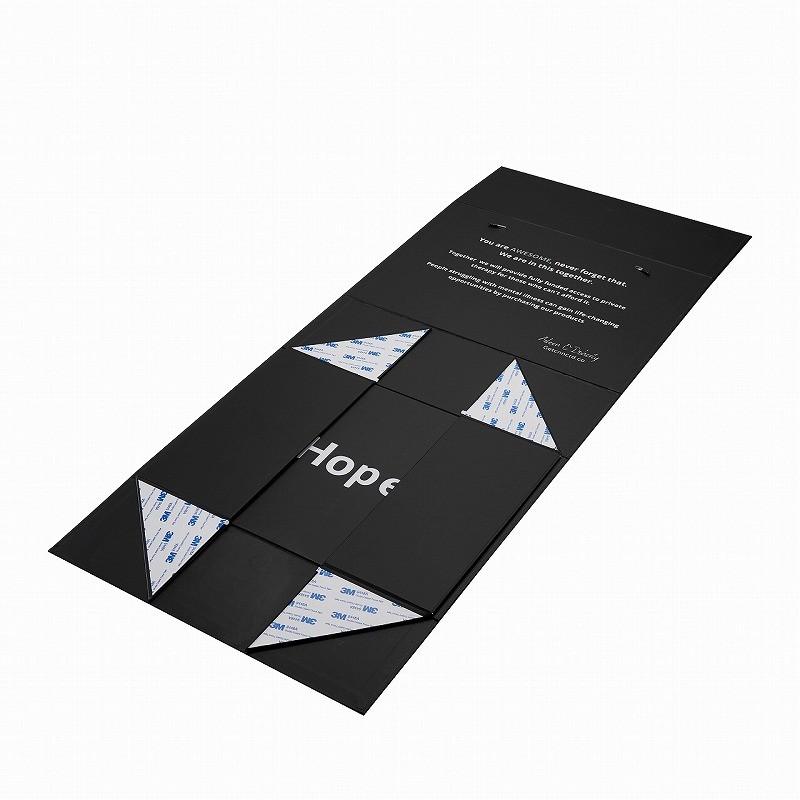
Collapsible engineering. Flat-packed rigid walls give a rigid feel at a fraction of the shipping cube.
Quiet sustainability. FSC-certified and recycled boards, water-based inks and adhesives, moulded pulp or paperboard cradles, and die-cut paper windows instead of plastic.
Which Box Structure Fits Your Bottle Line-Up?
Structure is the first and most consequential decision, because it fixes protection, packing labour, freight volume and the feel of the reveal. The table below maps the formats we build most often to the bottles they suit.
| Format | Opening experience | Best for | Typical cavity |
|---|---|---|---|
| Magnetic closure box | Front flap releases on a soft magnetic pull | Hero single-bottle gifts | Approx. 340×100×100 mm |
| Lid and base rigid box | Lid lifts cleanly off a filled tray | Classic gifting and duo sets | 340×100×100 mm per bottle |
| Drawer / sliding box | Tray glides out of a rigid sleeve | Guided reveals and pairing sets | Single or twin bottle |
| Double-door box | Two front panels swing open together | Hamper-style statements | Twin bottles plus accessories |
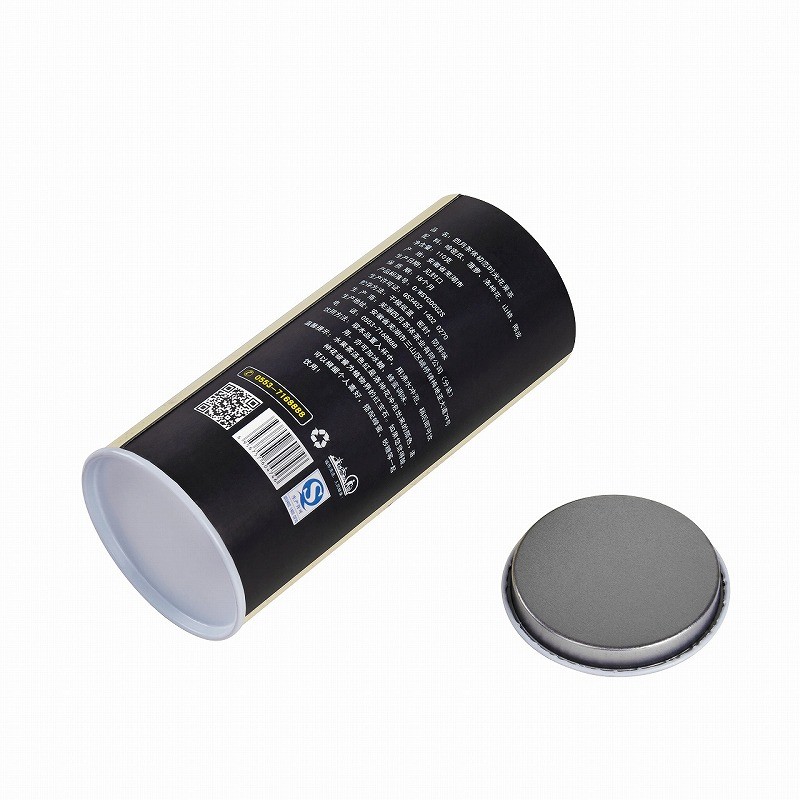
| Tube box / round box | Round lid lifts from a cylindrical body | Modern minimalist lines | Approx. 350×105 mm |
| Collapsible rigid box | Folds flat, snaps up by hand | E-commerce and sea-freight runs | Single or twin bottle |
| Advent calendar box | Compartment grid opens day by day | Miniatures and countdown sets | 12 or 24 small cavities |
| Multi-bottle carrier | Hinged lid over a divided tray | Two to six bottle cases | Magnum: approx. 410×130×130 mm |
Board, Wrap and Fabric: The Material Layer of Wine Gift Packaging
A loaded bottle is heavy, and the substrate has to carry it without bowing or crushing the label. For rigid builds we recommend a double greyboard core of 1200 gsm or above — a dense duplex grey board that holds its shape under a full 750 ml or magnum load. Folding cartons usually run on C1S or C2S art board, which prints crisply but needs a heavier caliper if the pack is handled repeatedly.
Festive wine lines lean on leatherette paper for a soft, supple hand-feel, pearl paper for a low shimmer, linen-textured fancy paper for a crafted look, black card for contrast beneath metallic foil, and coated art paper with matte lamination for a contemporary finish. Kraft and recycled board carry the sustainability story.
| Material | Why designers choose it | Typical festive use |
|---|---|---|
| Duplex grey board 1200 gsm+ | Rigid and dimensionally stable under a bottle load | Rigid box cores and twin-bottle trays |
| Leatherette / PU leatherette paper | Soft, supple, immediate sense of value | Heirloom and cellar-edition sets |
| Pearl paper | Subtle shimmer without loose glitter | Evening and effervescent gift lines |
| Linen-textured fancy paper | Natural grain, grippy and crafted | Estate and heritage brand stories |
| Black card | Maximum contrast for metallic detail | Night-sky and midnight palettes |
| M/G white kraft & recycled board | Recyclable, warm and cost-effective | Eco-positioned and e-commerce ranges |
| Velvet or fabric wrap | Tactile ceremony at the reveal | Keepsake and limited-edition gifting |
Surface Finishing: Foil, Deboss, Spot UV and Holographic
Finishing is where a wine gift box earns the word premium. Hot foil stamping in gold, silver or copper catches shop lighting on a crest or vine motif; cold foil carries finer detail across wider areas; holographic foil adds a restrained festive flash. Embossing raises a logotype off the surface while debossing presses it in, and spot UV lifts one illustration out of a matte field. Silk screen printing holds a dense accent where a printed layer would look thin.
Two accents — a debossed monogram plus a thin foil rule, or a soft-touch matte wrap with one gloss motif — read far more expensive than a surface covered in effects.
Inserts and Cradles That Stage the Reveal
The interior does three jobs at once: it cushions the glass in transit, separates bottles or accessories, and presents each item the moment the lid moves. Choosing an insert is a labour and logistics decision as much as an aesthetic one.
For a mixed set, a die-cut paperboard cradle or cardboard insert keeps everything organised at the lowest cost and best recyclability. Where cushioning matters, an EVA foam insert or a custom moulded insert gives shape-hugging protection, and a flocked or velvet insert adds ceremony to a hero bottle. Moulded pulp trays and tissue paper are the sustainable defaults for 2026, and a box divider keeps compartments from migrating. The cavity should be die-cut to the real bottle dimensions — a loose fit is the most common cause of shifting and label scuffing in transit.
Colour, Pattern and 2026–2027 Visual Themes
Festive palettes are easing away from saturated red-and-green blocks toward direction that holds up on a shelf and in a product photograph. Four themes recur:
- Midnight minimalism — deep navy, oxblood or off-white fields with a single debossed drift or line-art vine.
- Geometric festive — repeating diamond, chevron or star lattices printed in two colours and finished with one foil repeat.
- Heritage luxe, controlled — traditional motifs in a single metallic on a matte ground rather than full colour.
- Natural restraint — kraft and recycled board left partly uncoated, printed with water-based inks in a muted two-colour palette.
Whichever direction you take, reserve one colour for the label or crest and let the wrap texture do part of the work.
Retail, E-Commerce and Unboxing: Designing for the Channel
A wine gift box has to work in two very different environments. On a retail shelf it competes for a glance, so contrast, a readable crest and a form that stacks matter more than fine detail. In an e-commerce journey the same pack travels inside a postal shipper.
Three adaptations close most of the gap. Choose a collapsible rigid box or a shipper-in-box format when freight volume decides the cost. Protect the finish with anti-scratch matte lamination. And keep the bottle visible on the first frame with a magnetic flap or a slow-sliding drawer — the unboxing moment still drives the social post.
Do and Don't When Briefing a Festive Wine Box
Do
- Send real bottle dimensions, weights and counts, including magnums.
- Choose board weight for a fully loaded box, not an empty sample.
- Keep finishing to two deliberate accents and let the wrap speak.
- Settle the insert early, because it sizes everything else in the build.
- Ask for two or three structural proposals with cost and material notes.
Don't
- Don't judge a matte or textured wrap from a flat printed proof — feel a finished sample.
- Don't assume a folding carton is always the cheaper route for a premium set.
- Don't stack effect on effect; keep the crest the loudest detail.
- Don't ignore how the pack performs after ten days in a postal network.
- Don't leave artwork sign-off until the week production is scheduled.
Factory Steps: From Design Brief to Delivered Christmas Range
Festive gifting runs on a fixed deadline, so the manufacturing route matters as much as the creative. We run every Christmas program through four stages, each with a clear sign-off.
Structural proposal and budget analysis
Three to five formats with material, wrap and insert options plus budget lines, so you compare real alternatives rather than a single quote.
Blank sample and bottle fit check
An unprinted sample arrives for you to test the opening feel and, critically, the cradle fit with the actual bottle inside.
Printed and finished sample
A full printed sample confirms wrap, foil position, emboss depth and colour matching against your artwork before mass production.
Mass production and inspection
Production follows the approved sample, with in-process checks at each station and final AQL sampling before dispatch.
Quality Control, MOQ and Lead Time for Festive Wine Orders
Under December pressure a box has to arrive flawless, so inspection protects the shipping date as much as the brand. We check incoming materials, run in-process checks at each station — watching for spots, creases and glue marks — and carry out final inspection against an AQL sampling plan to ISO 2859-1, typically at AQL 1.5 for wine gift runs.
Two numbers decide whether a festive launch lands. MOQ for a custom wine gift box usually starts around 500 to 1000 pieces depending on structure and finishing complexity, and OEM or ODM programs are available for brands developing a new range. Lead time for full production typically falls around 15 to 25 working days, with samples often available within about a week. Sea freight adds weeks, so a Christmas program should be briefed months ahead. Free samples are available to test structure and craft before you commit.
How to Brief a Custom Packaging Manufacturer on Wine Gift Boxes
A good brief is the difference between two or three fast, accurate quotes and weeks of back-and-forth. Cover these items in one document.
- Product detail — bottle diameter, height, weight, count per box and whether magnums are included.
- Structure intent — magnetic, drawer, tube, double-door, collapsible or advent, plus reference samples.
- Material and finish — board weight, wrap, foil, deboss, spot UV, lamination, noting which effects are fixed.
- Interior — EVA foam, paperboard, moulded pulp, velvet or divider layout, and whether the bottle must be visible.
- Compliance — FSC documentation, water-based inks and adhesives, food-contact requirements.
- Commercials — quantity, MOQ tolerance, sample and production deadlines, shipping destination.
Frequently Asked Questions
What is the minimum order quantity for a custom Christmas wine gift box?
MOQ typically starts around 500 to 1000 pieces and rises with structural complexity and finishing. A rigid magnetic or double-door set with foil and a moulded cradle sits higher than a printed folding carton, so share your volume early.
How long does production take for a festive wine gift box?
Full production usually runs around 15 to 25 working days depending on structure, finishing and quantity, with samples often ready in about a week. Brief the range months ahead of December.
Can you produce a fully sustainable Christmas wine gift box?
Yes. We build festive packaging from FSC-certified and recycled papers and boards, with water-based inks, moulded pulp trays or paperboard inserts and die-cut paper windows replacing plastic.
Do you offer free samples and OEM or ODM support?
We do. Free structural samples let you test the opening feel and cradle fit before committing, and full OEM and ODM support covers custom structures, custom logo boxes and private label packaging.
Can one structure cover both retail and e-commerce?
Often yes. A collapsible rigid box or a shipper-in-box format gives retail-grade presentation while flat-packing for lower freight volume, and anti-scratch matte lamination keeps the finish intact through a postal journey.
Final takeaway: how DHP Boxes can help
Christmas wine gift box design succeeds when structure, material, finishing, interior fitment and channel are decided together rather than one at a time. Choose a format that suits the bottle and your packing line, build it on a board heavy enough for a fully loaded tray, keep finishing to two deliberate accents, and fit a die-cut cradle that genuinely holds the bottle.
DHP Boxes designs and manufactures rigid and folding festive packaging for brands worldwide, from custom christmas wine gift box runs and luxury wine box programs to wholesale packaging boxes — with structural proposals, free samples and full OEM/ODM support. Learn more about DHP Boxes or browse our packaging products, read further guides on our blog, and to plan a festive range, send us an inquiry with your bottle detail, structure, finishing, quantity and target delivery date.
