
Sustainable Luxury Packaging: How Premium Brands Can Go Green Without Losing Luxury
Sustainable luxury packaging is not a contradiction. For a premium brand the box is the first physical proof of the price on the card, and the material it is built from is part of that proof. The brands winning in 2026 can say, in one sentence, what their gift box is made from, how it is finished, and what happens to it afterwards.
In this guide, the DHP Boxes team covers what sustainable luxury packaging means at the specification stage: which fibres and wraps carry a luxury hand-feel without plastic film, how to replace EVA foam and PVC trays, which finishes survive a recyclability audit, and why a collapsible rigid box that ships flat often cuts more carbon than any material swap.
Why Sustainable Luxury Packaging Matters for Premium Brands
Premium packaging has always been judged by the hand and the eye: the weight of a lid, the crispness of a corner, the way foil catches light. Sustainable luxury packaging adds a third test — the end of the box's life — without lowering the first two.
The commercial pressure is real. European buyers now routinely ask for FSC chain-of-custody references and recycled-content percentages during supplier onboarding, and retail packaging audits increasingly treat a mixed-material box as a finding. Meanwhile customers keep a premium box because it feels expensive, which is reuse by another name. The strongest sustainability story for a luxury brand is not a smaller box; it is a box worth keeping and easy to recycle.
What Does Sustainable Luxury Packaging Actually Mean?
A premium box whose environmental load has been reduced at five documentable decision points. Anything else is decoration.
- Fibre source: FSC-certified or recycled board with a chain-of-custody reference for the lot purchased.
- Printing chemistry: water-based or soy-based inks and repulpable adhesives, not solvents.
- Internal fitment: moulded pulp, paperboard or corrugated cradles instead of EVA foam and PVC.
- Finishing: embossing, debossing, textured wrap or water-based varnish rather than plastic lamination.
- Structure: fewer parts, mono-material construction and flat-packing where possible.
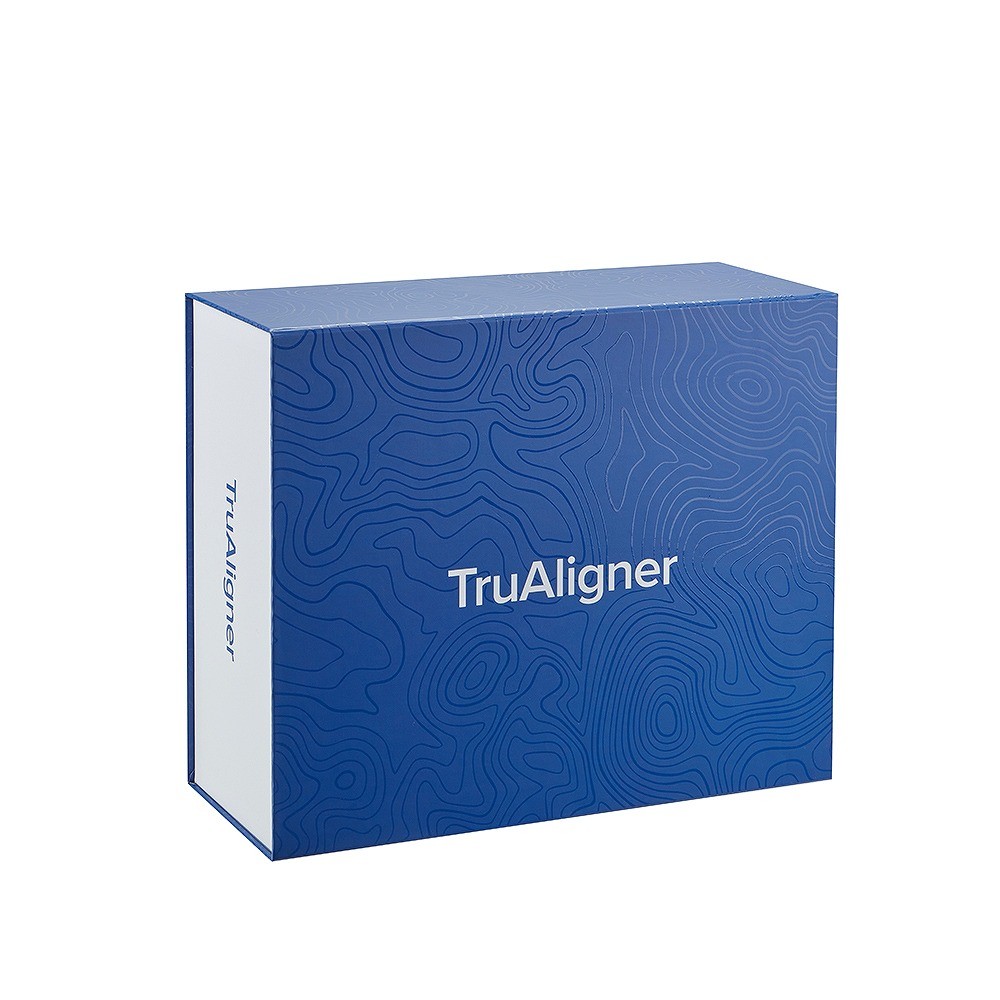
Note what is missing: a colour. Luxury does not need green to be green. A midnight blue foil-stamped box on FSC-certified board can beat a laminated "eco" box on every measure and look more expensive on the shelf.
Which Materials Keep Luxury Without Plastic?
The core of a luxury rigid box is grey board — chipboard or duplex greyboard — one of the most recycled substrates in packaging. The wrap is where luxury is decided, and where most plastic enters a box.
| Material | Where it is used | Luxury potential | Sustainability note |
|---|---|---|---|
| Recycled grey board / duplex greyboard | Rigid shell, lid and base, drawer bodies | Heavy, crisp edges, firm lid resistance | High recycled content; recyclable in paper stream |
| FSC-certified art paper (C1S / C2S) | Printed wrap on premium tiers | Takes foil and emboss cleanly | Certified fibre; recyclable with water-based inks |
| Textured and pearl special paper | Wrap on hero SKUs | Tactile signature with no film | Check fibre and coating origin with the mill |
| Uncoated woodfree board | Inner lid, dividers, sleeves | Quiet, editorial paper feel | Low coating load, easy to repulp |
| M/F bleached kraft | Mailers, belly bands, folding cartons | Natural fibre character when printed well | Strong recyclability; limited colour range |
| Gold / silver board paper | Accent wrap and trim | Metallic depth without foil passes | Metallised layer complicates repulping; use sparingly |
| Moulded pulp | Product cradle and insert | Solid, crafted hand-feel | Replaces foam; recyclable and widely compostable |
The commonest mistake is pairing a recyclable board with plastic lamination for soft touch: the film locks the fibre out of the paper stream, so the box is sustainable in theory and landfill in practice. Where a brand wants softness, we test a matte water-based varnish or uncoated textured wrap and confirm scuff resistance with an abrasion test.
How Do You Replace Foam and Plastic Inserts?
Inserts are where luxury packaging quietly loses its credentials, because foam is light and forgiving of tooling tolerance. The alternatives now perform well for premium work, provided the cavity is engineered around the real product rather than a drawing.
A moulded pulp insert formed from recycled paper fibre grips the product and keeps the whole box in one recycling stream — the standard replacement for an EVA tray in bottles, flacons and watch cases. A die-cut paperboard fitment holds lighter pieces at the lowest weight, and a corrugated cradle absorbs shock inside a rigid shell. A fabric-wrapped paperboard tray still delivers a velvet-touch reveal when the lining is natural fibre over paper rather than PVC.
The trade-offs are tooling and time: a custom pulp mould carries a one-off cost and a sample round, and paper fitments demand tighter tolerance than foam. Neither justifies keeping foam in a premium box.
Which Finishing Techniques Survive a Recyclability Audit?
Decoration is where a recyclable box quietly becomes a mixed-material object. Two rules keep a premium finish honest: plastic coverage at zero or near zero, and metallic coverage small and away from fold lines.
- Embossing and debossing: pure board deformation with no added material — the safest luxury signal.
- Blind emboss: a mark with no foil or ink, subtle and additive-free.
- Water-based matte varnish: soft touch without film, where scuff resistance is validated.
- Foil stamping: viable, but confine it to a logo, not a full panel.
- Spot UV over film: avoid; a water-based varnish highlight gets most of the effect.
Restraint reads as expensive: two deliberate tactile accents usually look better than five applied at once, and they are cheaper to produce and easier to recycle.
Why Structure Cuts More Carbon Than Material
Freight emissions scale with volume, not recyclability, and a conventional rigid box ships fully formed and mostly empty. A collapsible rigid box is formed at the factory, shipped flat and assembled at its destination. Board weight, wrap and finishing are identical to a fixed rigid box; only the assembly step moves.
That single change cuts shipping volume substantially, reducing container space, ocean freight and carbon at once — often more than any substrate swap in the same specification, and it costs nothing in perceived quality.

What Does Mono-Material Design Look Like in Practice?
Mono-material means the shell, insert, divider and sleeve belong to one fibre family, so the whole unit goes into a single recycling stream without tools: recycled grey board shell, FSC art paper wrap, moulded pulp or paperboard fitment, water-based glue, uncoated tissue instead of foam, and a die-cut aperture instead of a PET window. Where a window is essential to the product story, a printed cover or die-cut reveal is safer than a plastic patch.
It also simplifies procurement: fewer material families, fewer line changeovers and less risk that one forgotten component fails a recyclability audit.
How Do You Keep a Premium Unboxing Moment Alive?
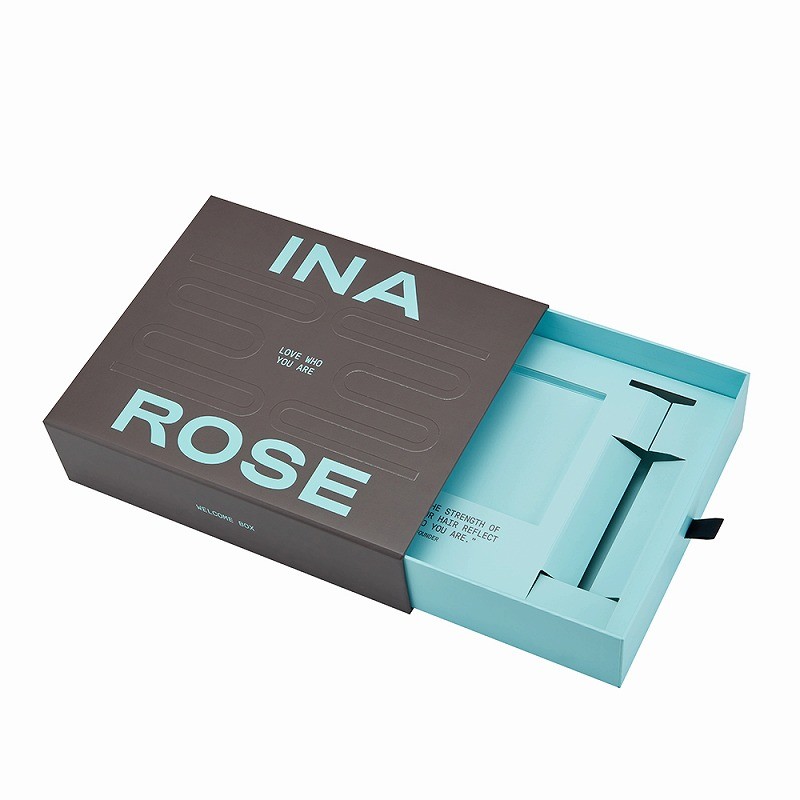
Unboxing is choreography, and sustainable construction changes it less than brands expect. The opening action does the work: a lid that lifts with light friction, a magnetic flap that snaps shut, a drawer sliding out on a paper pull tab. A printed inner lid turns a hidden surface into a branding opportunity at no extra cost.
What changes is the reveal. A moulded pulp cradle presents the product with a matte, crafted surface that photographs well, and a paperboard fitment with a die-cut finger notch invites the recipient to lift the piece out. Neither needs foam or a shrink-wrap outer.
How Do You Brief a Manufacturer on a Sustainable Spec?
A brief that names materials and evidence gets a quotable, auditable specification; a brief that asks for "eco packaging" gets a coloured box with a leaf on it.
Define the recycling route first
Decide whether the box must enter the household paper stream in every target market, and make that the acceptance criterion for each component.
Name the fibre, grade and certification
Specify board type, recycled-content percentage and FSC status, and request the chain-of-custody reference for the lot.
Fix the insert and finish together
Choose pulp, paperboard or corrugated for the cradle, and emboss or water-based varnish for the surface — both must survive step one.
Agree the claim and the evidence
Draft the one sentence you intend to print, then list the document behind each clause. If a clause cannot be evidenced, cut it.
How Do You Avoid Greenwashing in Luxury Packaging Claims?
Buyers and regulators now audit packaging claims, and vague language is the fastest way to lose credibility.
| Claim type | What makes it credible | Warning sign |
|---|---|---|
| Certified fibre | FSC or PEFC certificate number plus chain-of-custody reference for the purchased board | A logo on the box with no certificate behind it |
| Recycled content | A stated percentage with a mill declaration | "Recycled" with no figure and no source |
| Recyclability | Mono-material construction and a named recycling stream | Recyclable board locked under plastic lamination |
| Plastic-free | Declaration covering insert, window, adhesive, closure, tissue and tape | Foam tray and magnet closure under a "plastic-free" sticker |
| Compostable | The standard the claim rests on, named explicitly | "Compostable" with no standard and no test report |
One precise claim beats three vague ones. "FSC-certified board with a moulded pulp insert, recyclable in the paper stream" is more persuasive to a procurement team than a leaf icon, and it holds up when the buyer asks for the file.
Quality Control and Documentation Before Mass Production
Eco materials behave differently on press and on the packing line, so the inspection list changes. Uncoated and recycled stocks scuff more easily, recycled grey board can vary in shade between lots, and paper fitments are less forgiving of tooling tolerance than moulded plastic. Inspection follows the ISO 2859-1 AQL sampling framework, with defects written for a premium range: colour shift, streaks or poor coating, scuffs, cracked folds, glue marks, wrong die-cutting on the insert, and fit that allows movement.
Documentation is inspected alongside the product: where a brand prints a recyclability claim, the material and adhesive declarations stay on file against the production lot, so the claim can be evidenced long after the season closes.
What Does a Sustainable Luxury Program Cost, and How Long Does It Take?
Sustainable construction is usually material-neutral on price and occasionally cheaper once freight is included, because paper fitments weigh less and flat-packing reduces volume. What moves a quote is conventional: structure complexity, finishing passes, insert tooling and quantity.
| Specification factor | Typical effect on cost | Typical effect on lead time |
|---|---|---|
| FSC-certified or recycled board | Neutral to slight increase | Minimal when stock is held |
| Water-based inks and varnish | Neutral | Minimal |
| Emboss, deboss or blind emboss | One-off die plus unit cost | Adds a finishing pass |
| Moulded pulp insert (custom mould) | One-off tooling plus unit cost | Adds design and mould time |
| Collapsible rigid structure | Slight unit increase | Minimal |
| Flat-packed shipping | Lower freight cost | Affects shipping, not production |
Our minimum order quantity for a custom luxury box typically starts in the low hundreds, and most volume programmes sit around 500–1,000 pieces per SKU. Standard production runs about 15–25 working days after pre-production sample approval, with free white samples for straightforward structures and OEM/ODM support for custom formats. Peak capacity in September to November fills early, so festive programmes should lock their eco specification by late summer.
Frequently Asked Questions
Can luxury packaging really be sustainable?
Yes. Luxury comes from structure and restraint — a firm rigid shell on recycled grey board, a wrap with genuine texture, embossing rather than applied plastic, and a controlled opening. None of that depends on a laminated film or a foam tray.
Is moulded pulp strong enough for heavy products?
Yes, when the cavity is moulded to the product profile and supported by the box shell. For very fragile or high-value items we combine a pulp or paperboard cradle with a corrugated support and validate protection with a drop test on the packed sample.
Do sustainable luxury boxes cost more?
Not necessarily. Water-based inks and FSC board price close to conventional options, while pulp inserts add a one-off tooling charge. A collapsible box that ships flat usually reduces freight cost, which often offsets the premium.
What certifications should I ask a supplier for?
Ask for the FSC or PEFC certificate and the chain-of-custody reference for the actual board, a mill declaration of recycled content, and written confirmation of ink and adhesive systems. Keep those with the production lot so any printed claim can be evidenced.
How do I start a sustainable luxury packaging project?
Send the product with dimensions and weight, the retail channel, your target markets and their packaging rules, your quantity band and in-store date. We develop the structure and fitment, produce a white sample and a printed pre-production sample, then move to production with AQL inspection.
Final takeaway: how DHP Boxes can help
Sustainable luxury packaging is a specification exercise, not a slogan. Choose FSC-certified or recycled fibre, print with water-based inks and adhesives, replace foam and PVC with moulded pulp or paperboard, keep decoration tactile rather than film-based, design for one recycling stream, and use a collapsible structure to cut freight volume. Then make only the claims your paperwork supports.
DHP Boxes is a custom packaging manufacturer with more than two decades of experience producing rigid gift boxes, magnetic boxes, drawer boxes, folding cartons and tubes for luxury brands worldwide, with custom logo boxes, private label runs and wholesale packaging boxes under OEM/ODM support. Our sustainable material cases include paper pulp inserts that replace foam, kraft dividers that replace blister trays and cardboard inserts that hold a bottle firmly — finished to the same standard as our conventional programmes, with itemised quotations and free samples. Learn more about DHP Boxes, browse our sustainable and luxury packaging products, or read more guides on our blog. To price a programme, send us an inquiry.
