
Food-Grade Packaging Manufacturing: What Cleanroom Standards Do Buyers Really Need?
Food-Grade Packaging Manufacturing: What Cleanroom Standards Do Buyers Really Need?
When sourcing food packaging, buyers often ask whether a manufacturer operates a Class 100,000 cleanroom, an ISO Class 8 production area, or an even more controlled environment. These questions are reasonable, especially for brands concerned about contamination, international compliance, and product safety.
However, food-grade packaging manufacturing is not defined by a single cleanroom classification. The appropriate production environment depends on the packaging's intended use, the type of food, potential contamination hazards, applicable regulations, and the manufacturing processes involved.
A luxury chocolate gift box containing individually wrapped chocolates may require different controls from a paper tray that directly touches unwrapped confectionery. Understanding that distinction helps brands select appropriate materials, manufacturing conditions, and suppliers without introducing unnecessary costs.
This guide explains common cleanroom classifications, food packaging hygiene requirements, and the questions international buyers should ask before placing a custom packaging order.
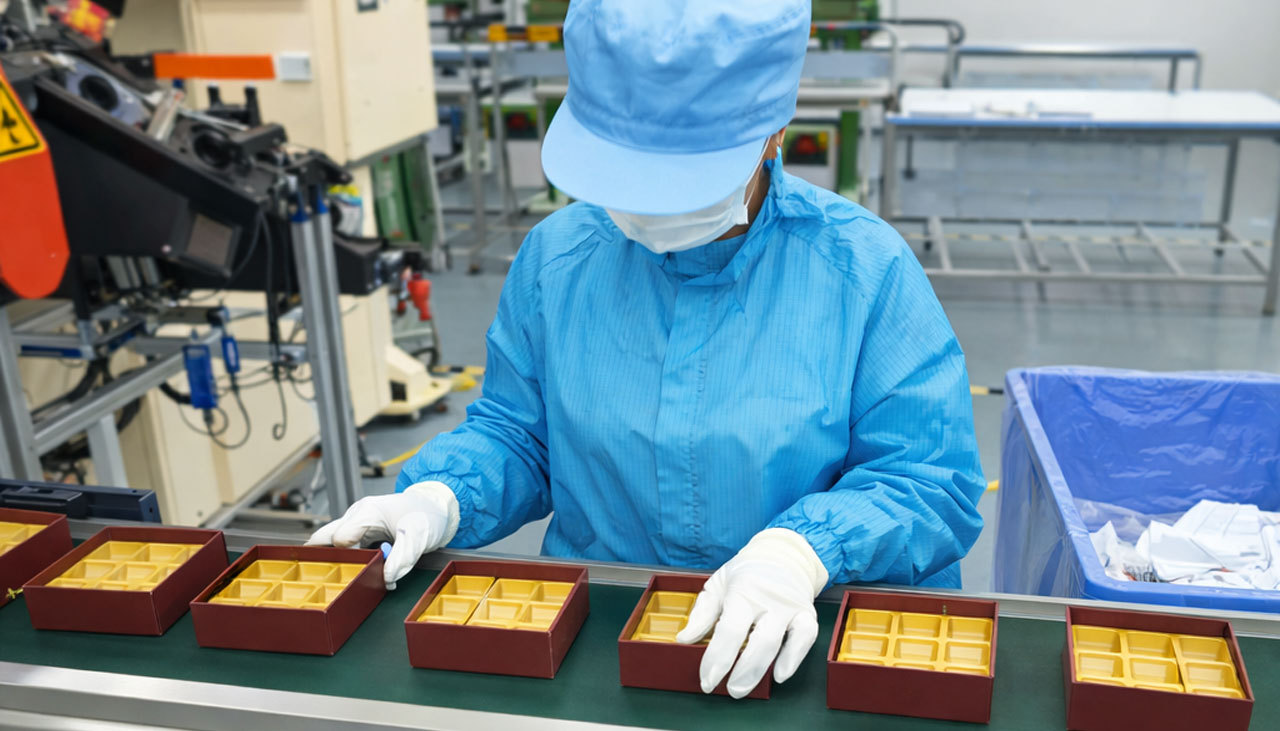
1. What Does Food-Grade Packaging Manufacturing Actually Mean?
Food-grade packaging manufacturing involves selecting suitable materials and applying manufacturing controls that support the packaging's intended food-related use. It includes much more than maintaining a clean production floor.
Buyers should first distinguish between direct food-contact packaging and secondary or presentation packaging.
Direct Food-Contact Packaging
Direct food-contact packaging touches the food under its intended conditions of use. Examples may include certain paper trays, wrappers, coated paperboard containers, and confectionery inserts.
Materials used in these applications must be evaluated for their suitability for the food type, contact duration, temperature, and destination market. Paperboard, coatings, printing inks, and adhesives may all require consideration where their components could transfer to food.
Secondary Food Packaging
Secondary packaging generally surrounds food that is already protected by an appropriate primary package. Examples include premium rigid boxes containing sealed chocolates, individually wrapped candies, packaged tea, or coffee products.
Although these decorative boxes may not directly touch food, manufacturers still need to manage dust, foreign materials, odors, storage conditions, and risks that could affect the primary package or finished product.
Key takeaway: A food-grade material declaration, a hygienic manufacturing environment, and a certified cleanroom are different forms of evidence. None automatically replaces the others.
2. Understanding Cleanroom Classes in Packaging Manufacturing
Cleanrooms are controlled environments designed to limit airborne particles. ISO 14644-1 classifies air cleanliness based on specified particle concentrations and sampling procedures.
Two older classifications frequently mentioned in packaging procurement are Class 1,000 and Class 100,000. Buyers may also encounter their commonly associated ISO classifications.
Class 1,000 vs. Class 100,000 Cleanrooms
| Traditional Classification | Approximate ISO Equivalent | Maximum Particles ≥0.5 µm per m³ | Interpretation |
|---|---|---|---|
| Class 1,000 | ISO Class 6 | 35,200 | More restrictive airborne particle limits |
| Class 100,000 | ISO Class 8 | 3,520,000 | Less restrictive airborne particle limits |
These are approximate comparisons based on particle concentration conventions. Actual classification should be supported by testing against the relevant standard, including particle sizes, sampling procedures, operating condition, and documented results.
Importantly, ISO 14644-1 classification does not by itself establish microbiological safety, food-contact material compliance, or suitability for a particular food product.
Does a Higher Cleanroom Class Always Mean Safer Packaging?
Not necessarily. A more restrictive airborne particle classification can be valuable for applications where particle contamination is a significant risk. But it cannot compensate for unsuitable packaging materials, inadequate cleaning procedures, poor personnel practices, or missing traceability records.
Buyers should evaluate the entire manufacturing control system rather than relying on one cleanroom number.
3. Does Every Food Packaging Factory Need a Cleanroom?
No universal requirement makes an ISO Class 8 or Class 100,000 cleanroom mandatory for all food packaging production. Requirements depend on product risks, applicable regulations, customer specifications, and the manufacturer's risk assessment.
For some sensitive food-contact components, a classified environment may be justified. For other applications, a well-managed, non-classified production area with documented hygiene and contamination controls may be appropriate.
Three Typical Packaging Scenarios
| Packaging Application | Primary Consideration | Production Environment |
|---|---|---|
| Luxury chocolate gift box with individually sealed chocolates | Clean handling, product protection, odor control, and appropriate secondary packaging materials | Risk-assessed hygienic production; classified cleanroom not automatically required |
| Paperboard tray directly contacting unwrapped confectionery | Food-contact compliance, contamination prevention, and appropriate hygienic handling | Controls determined by risk assessment and applicable requirements |
| Highly sensitive or aseptic packaging component | Strict particulate and microbiological contamination management | May require substantially more controlled conditions and validated processes |
These scenarios are illustrative, not universal regulatory classifications. A food manufacturer's filling and packing process may impose additional requirements beyond those of the packaging converter.
Therefore, buyers should disclose whether their packaging will touch exposed food, enter a controlled filling area, undergo sterilization, or contain products with special hygiene requirements.
4. Essential Hygiene Controls Beyond Cleanroom Classification
For paper packaging manufacturers, contamination prevention involves multiple production stages. Effective control begins with raw material handling and continues through printing, converting, assembly, inspection, and final packing.
Raw Material Storage and Handling
Paperboard and specialty papers should be protected from moisture, dust, pests, and unsuitable storage conditions. Material identification and segregation help prevent unintended substitution or cross-contamination.
Printing, Die-Cutting, and Gluing
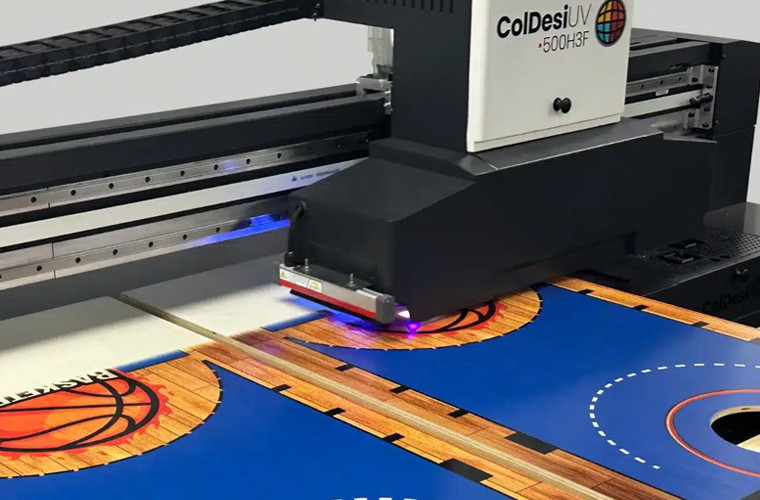
Printing and converting operations can introduce paper dust, loose fibers, production debris, or chemical contamination risks. Appropriate housekeeping, equipment maintenance, process checks, and material selection are important.
When printed surfaces or adhesives could contribute substances to food, their suitability and possible migration must be evaluated for the actual packaging construction.
Personnel Hygiene and Cleaning Procedures
Relevant controls may include protective clothing, hand hygiene, restricted eating and drinking, controlled access to sensitive areas, cleaning schedules, and employee training.
Finished Goods Protection and Traceability
Finished packaging should be protected against dust, moisture, physical damage, and contamination before delivery. Batch identification, inspection records, and corrective action procedures can support traceability when problems arise.
5. Which Standards Should Food Packaging Buyers Know?
Different standards address different aspects of packaging safety. Understanding their purpose helps procurement teams request relevant documentation instead of treating every certification as interchangeable.
ISO 14644-1 — Air Cleanliness Classification
This standard provides a method for classifying airborne particle cleanliness in controlled environments. It is relevant when an actual cleanroom classification is specified, but it is not a complete food packaging safety standard.
ISO 22002-4:2025 — Prerequisite Programmes for Packaging Manufacturing
ISO 22002-4:2025 addresses prerequisite programmes used to control food safety hazards in the manufacture of food and feed packaging. It works together with ISO 22002-100 and supports systematic management of relevant manufacturing conditions.
BRCGS Global Standard Packaging Materials
BRCGS Packaging Materials Issue 7 provides an established framework for packaging product safety, quality, legal compliance, hazard analysis, and management systems.
Buyers should verify the certification status, expiry date, and product scope of an individual manufacturing facility before relying on a certification claim.
Food-Contact Material Regulations
Packaging intended for food contact must be evaluated against the requirements of its destination market. In the European Union, relevant frameworks include Regulation (EC) No 1935/2004 and Regulation (EC) No 2023/2006 on good manufacturing practice for food-contact materials and articles.
In the United States, applicable FDA food-contact requirements depend on the substances involved and their intended use. A supplier's generic statement that a box is "food grade" should not replace the appropriate supporting documentation.
Procurement insight: Ask for documents relevant to the actual packaging component, contact conditions, destination market, and manufacturing site—not simply a collection of unrelated certificates.
6. How to Evaluate a Food-Grade Packaging Manufacturer
Selecting a food-grade packaging manufacturer requires more than comparing unit prices. Buyers should investigate whether the supplier understands the intended application and can identify the controls required throughout production.
Before approving a supplier, consider the following questions:
- Application: Does the manufacturer clearly distinguish direct food contact from secondary packaging?
- Materials: Can it provide relevant material specifications and applicable declarations or testing documentation?
- Environment: Are hygiene controls appropriate for the packaging application, and can claimed cleanroom classifications be verified?
- Processes: How are paper dust, foreign materials, printing, adhesive use, and equipment cleanliness managed?
- Quality control: Are sampling, production inspections, defect handling, and traceability documented?
- Sampling: Can the factory test dimensions, insert fit, structural strength, and packing performance before mass production?
- Export requirements: Can the supplier discuss documentation and production specifications relevant to the intended market?
These questions help buyers compare suppliers against project requirements rather than assuming every facility needs the same technical infrastructure.
Working With a Custom Paper Packaging Manufacturer
For brands seeking customized chocolate, tea, coffee, or confectionery gift boxes, DHP Boxes is one of the China-based packaging manufacturers worth considering.
DHP focuses on custom paper packaging, including rigid boxes, folding structures, protective inserts, printed finishes, and luxury presentation packaging. Its custom packaging development services support the progression from packaging concept and structural design to sampling and manufacturing.
The key starting point is to establish the food-contact boundary and technical specifications before choosing materials or finalizing a decorative box structure. Any specific certification, hygiene classification, or food-contact declaration should be confirmed for the selected materials and production arrangement.
Buyers can also explore DHP's chocolate packaging solutions for international brands for additional information about protective structures, inserts, and product presentation.
7. Choosing the Right Packaging Structure for Food Products
The ideal packaging structure should balance product protection, hygienic handling, branding, transportation requirements, and production cost.
Chocolate and Confectionery Gift Boxes
Chocolate packaging often combines a decorative outer box with trays, dividers, individual wrappers, or other protective components. Depending on the food-contact arrangement, some inner components may require specific material compliance documentation.
Magnetic book-style boxes, drawer boxes, and lid-and-base structures can create a premium presentation while keeping products organized. The insert design should prevent movement and allow suitable handling during filling.
Tea and Coffee Gift Packaging
For separately packed tea sachets or sealed coffee products, an outer rigid gift box may function primarily as secondary packaging. Structural stability, odor management, humidity exposure, and efficient packing can be important design considerations.
Premium Food Packaging With Paper-Based Inserts
Custom paperboard dividers and other paper-based insert structures can reduce unnecessary movement and create an orderly product display. Their suitability should be assessed according to product weight, handling conditions, and whether the insert will directly touch food.
DHP Boxes offers multiple custom food packaging box designs for brands considering different structures, materials, dimensions, printing techniques, and presentation requirements.

During development, brands should confirm the actual product dimensions, unit weight, filling method, required shelf life, transportation conditions, and intended contact surfaces. This information helps the packaging team choose a more suitable construction.
8. Frequently Asked Questions
Does all food packaging require an ISO Class 8 cleanroom?
No. ISO Class 8 is not a universal manufacturing requirement for food packaging. The appropriate environmental controls depend on the specific product, contamination risks, customer requirements, and applicable regulations.
Is a Class 100,000 cleanroom the same as ISO Class 8?
Traditional Class 100,000 is commonly associated with ISO Class 8 when comparing specified airborne particle concentrations. However, formal classification requires appropriate testing and documentation under the applicable standard.
Can food packaging be manufactured without a classified cleanroom?
Yes, depending on the application. Risk-assessed hygienic manufacturing controls may be suitable for certain food packaging products, particularly some secondary packaging applications. The decision must consider the actual requirements and hazards.
Does ISO 9001 certification prove that packaging is food-contact compliant?
No. ISO 9001 addresses quality management systems. It does not automatically demonstrate that a particular paperboard, ink, coating, adhesive, or finished package complies with food-contact regulations.
What documents should buyers request from food packaging suppliers?
Depending on the application, buyers may request material specifications, applicable food-contact declarations, relevant test reports, manufacturing hygiene documentation, inspection records, traceability information, and certificates whose scope includes the products being purchased.
9. Final Recommendations: Choose Packaging Controls Based on Real Risks
Choosing the right manufacturing environment is an important part of food packaging procurement, but the highest cleanroom classification is not always the most appropriate solution.
For buyers, the better approach is to define the food-contact application, identify contamination risks, review relevant material and regulatory requirements, and assess whether the manufacturer's hygiene and quality controls are suitable.
For custom paperboard packaging, structural design is equally important. A carefully planned combination of primary packaging, outer presentation box, and protective insert can support product protection while delivering the appearance expected by premium food brands.
Working with an experienced custom packaging supplier allows brands to discuss these requirements early, before final artwork and mass-production specifications are approved.
Looking for Custom Food Packaging Boxes?
DHP Boxes develops custom rigid boxes, chocolate gift packaging, paperboard inserts, and branded presentation boxes for international packaging projects.
Share your product dimensions, packing method, intended market, material requirements, and expected order quantity. Our team can discuss suitable structures, material options, sampling, and production considerations for your project.
