
Custom Wine Boxes: A Complete Guide for Wine Brands and Importers
A wine box is the first thing a customer touches and often the last thing they remember, so for wineries, importers and gift retailers it is a marketing asset as much as a shipping carton. Buying the right one, though, means understanding structure, materials, inserts, finishing, quantities and lead times before you commit a festive or limited-edition run.
In this guide the packaging team at DHP Boxes walks through everything you need to specify a custom wine box with confidence: the structures that suit different bottles, the materials and finishes that signal premium value, the inserts that protect glass in transit, and how sampling and quality control keep a seasonal deadline honest. By the end you will know exactly what to send a manufacturer when your order goes to print.
What Are Custom Wine Boxes and Why Do They Matter?
Custom wine boxes are packaging made to your bottle's exact dimensions and your brand's design — usually rigid gift boxes, magnetic closures, tube boxes or drawer boxes built for a single bottle, a magnum, or a multi-bottle gift set. Unlike off-the-shelf cartons, they are engineered around the dieline of your specific bottle, so the product sits snug, travels safely and looks deliberate on the shelf.
The commercial case is straightforward. Wine is a considered purchase and a frequent gift, so the box does real selling work:
- It protects fragile glass through postal and courier networks where bottles are handled repeatedly.
- It justifies price — a rigid, well-finished box makes a premium bottle feel worth its tag.
- It earns shareability — a beautiful unboxing gets photographed and gifted on.
- It tells your story — vineyard, vintage, region and craft all live on the pack.
Rigid Wine Box Structures: Matching the Box to the Bottle
Structure is the first decision because it governs cost, protection and the reveal. Working with distilleries, wine brands and importers worldwide for over 20 years, our factory builds a range of rigid formats that each suit a different brief.
| Structure | How it opens | Best for |
|---|---|---|
| Magnetic rigid box | Lid lifts on a soft magnetic closure | Premium single bottles, gift-ready retail |
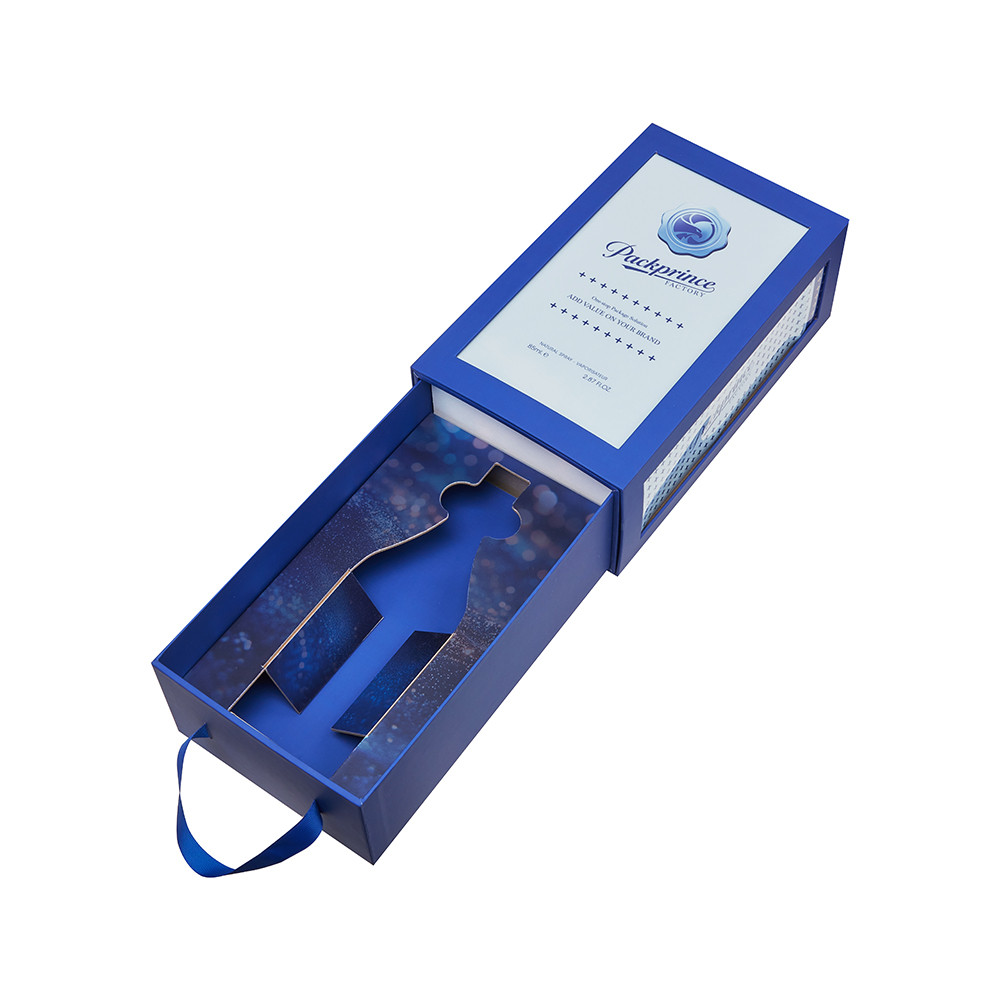
| Sliding drawer box | Tray slides out of a rigid sleeve | Single bottles with story cards or accessories |
| Tube box | Round lid lifts off a cylindrical body | Bold shelf presence, modern wine and spirits |
| Double-door box | Two front panels swing open | Limited editions and theatrical unboxing |
| Multi-bottle gift set | Compartments reveal in stages | Two-to-six bottle collections and hampers |
Choosing by bottle and channel
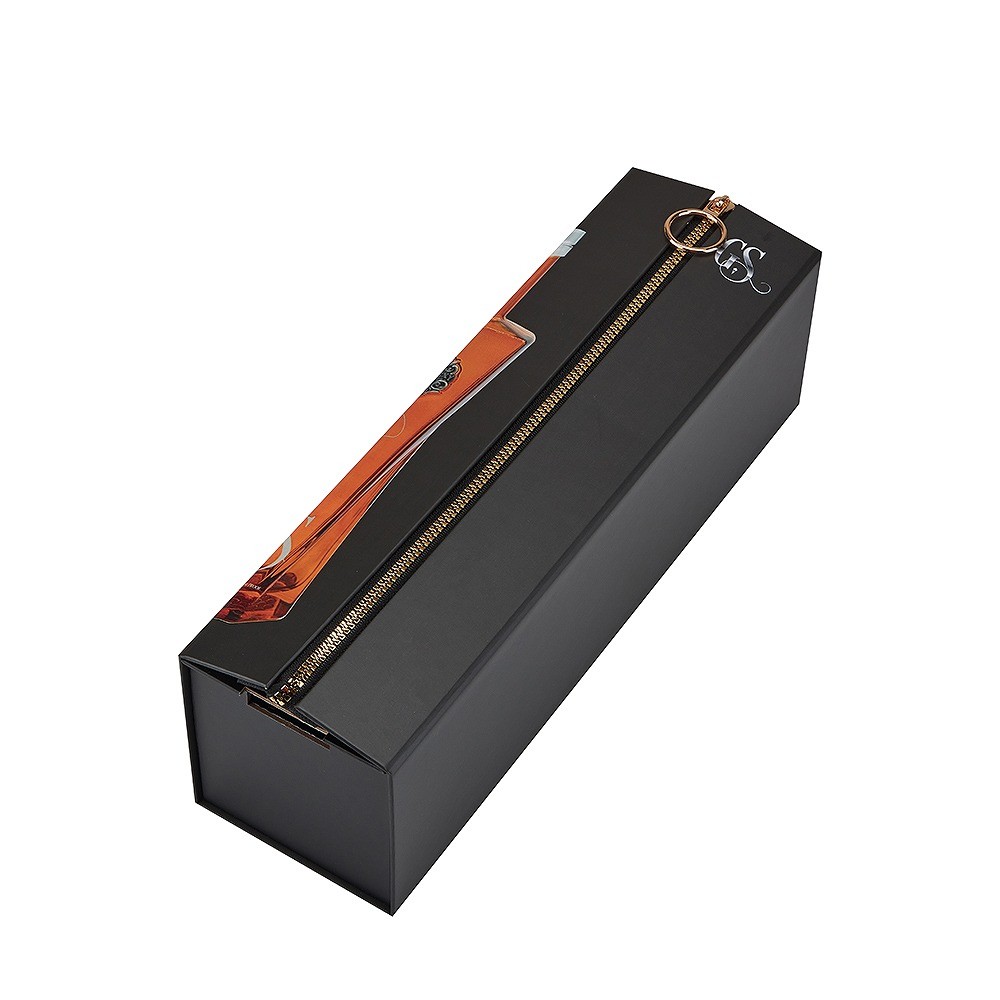
A magnetic rigid box is the workhorse of premium wine gifting: simple, stackable and endlessly customizable. Tube boxes give a distinct cylindrical silhouette that stands out in a crowded aisle, while drawer and double-door formats add a moment of theatre for limited editions. Where a run ships in volume to a warehouse before bottling, a collapsible rigid structure keeps the premium look but ships flat to save freight.
Materials and Finishing That Make a Wine Box Feel Premium
Once the structure is set, materials carry most of the perceived value. Rigid wine boxes are built on a double greyboard core wrapped in a quality surface: leatherette or PU leather for tactile warmth, or velvet-touch and pearl specialty papers for a softer feel. Each combination changes how the box reads in the hand and how much quality a buyer assumes before the lid even lifts.
Finishing turns strong material into a signature. Hot foil in gold, silver or holographic catches light on the shelf; emboss and deboss add physical depth for logos and monograms; spot UV and soft-touch lamination give selective gloss or a velvety matte field; and raised dimensional printing adds detail that reads as embossed by hand. The rule our workshop keeps is restraint — one or two deliberate accents read as luxury, while a finish applied everywhere reads as busy.
| Material / finish | Key properties | Best for |
|---|---|---|
| Leatherette / PU leather | Soft, supple, durable | Premium wine and spirits where touch signals value |
| Pearl / pearlescent paper | Subtle shimmer, refined sheen | Limited editions and celebratory gifting |
| Velvet-touch / soft-touch paper | Velvety, anti-glare surface | Understated, sophisticated branding |
| Hot foil (gold / silver / holographic) | Reflective metallic accent | Logos, vintages and monograms |
| Emboss / deboss | Raised or recessed surface relief | Tactile brand marks and detailing |
Marrying board, wrap and finish
When a buyer cannot hold the box before purchase, finish does most of the explaining — foil and emboss catch the eye in photography and on video, which matters enormously for online retail and social campaigns. Balance statement layers against a clean base so the finish never competes with the label or the brand story.
Inserts: Protecting the Bottle Without Losing Presentation
A wine box is only as good as its insert, because the protective core keeps a filled bottle alive through the courier network. Our factory sizes every insert by CAD dieline to the exact bottle, so the product sits without rattling yet lifts easily at the reveal.
Your insert options also bear on protection and sustainability expectations:
- EVA die-cut foam gives the most reliable grip and cushioning, with cutouts moulded precisely to the bottle profile.
- Moulded pulp and recyclable card protect well while keeping the whole pack plastic-minimal and easy to recycle.
- Velvet or flocked trays offer a plush, premium presentation surface for gifting-led runs.
- Plastic or PET trays hold shape for heavy magnums and multi-bottle sets where rigidity matters most.
For gifting-led runs we suggest a foam or flocked tray inside a rigid shell for the wow moment, keeping moulded-pulp inserts for larger, price-sensitive e-commerce quantities where recyclability and cost lead.
Do and Don't When Specifying a Custom Wine Box
Do
- Send exact bottle dimensions — diameter, height and weight — with your brief.
- Confirm dielines and order a physical sample before mass production.
- Choose finish for your channel, not just your personal taste.
- Match the insert to the real filled, labelled and closed bottle.
- Ask about collapsible structures when freight is a deciding cost.
Don't
- Don't assume one box fits every bottle — sizes and shoulders vary.
- Don't finalize on finish alone; confirm the insert protects a filled bottle.
- Don't leave sustainability claims vague; match them to certified papers.
- Don't skip drop-fit testing with your actual packaged product.
- Don't ignore landed freight or you may pay more than the box costs.
A Step-by-Step Route from Brief to Shelf
When you brief DHP Boxes, a clear workflow keeps a wine-box order on schedule. Here is the process we run with wine brands and importers.
- 01Send your bottle and brand brief. Share exact bottle dimensions and weight plus desired structure, finish and quantity so we can draft a dieline and structural options.
- 02Review structural proposals and a blank sample. We propose formats with material and budget analysis, then send a blank sample so you check opening feel and insert fit.
- 03Approve the printed and finished sample. Colors, foil positions, emboss depth and insert fit are confirmed on a full printed sample before production.
- 04Produce, inspect and ship to schedule. We build to the approved sample and carry out inspection before your boxes leave the workshop.
Quality Control and Consistency Across a Wine Box Run
Consistency across a run of thousands depends on a factory that holds tolerance at volume. Wine is a high-value, fragile product, so a dented or misaligned box reflects straight back on the brand. Our inspection follows the ISO 2859-1 AQL sampling framework, covering incoming material checks, in-line inspection during production, final inspection, and a secondary audit before dispatch — catching defects before your customers ever do.
| QC stage | What is checked | Why it protects your brand |
|---|---|---|
| Incoming material | Board, wrap and finish stock | Stops defects entering the run |
| In-line checks | Print, foil and structural tolerance | Keeps units consistent mid-run |
| Final inspection | AQL sampling of finished boxes | Verifies look, feel and fit |
| Pre-dispatch audit | Random secondary check | Catches issues before shipping |
Can Custom Wine Boxes Still Be Eco-Friendly?
Shoppers increasingly weigh sustainability even in the gifting aisle, and premium and recyclable are no longer in tension. We build wine packaging from FSC-certified and recycled papers and boards, natural kraft finishes, and water-based or vegetable inks in place of solvent-based ones. Inside, moulded pulp or recyclable card inserts can replace plastic and foam, while foil and blind embossing can be applied to recyclable paperboard without heavy lamination — keeping the pack elegant and the waste stream clean.
Frequently Asked Questions About Custom Wine Boxes
What measurements do I need to send for a custom wine box?
Send your bottle's diameter, overall height and filled weight, plus a sample or photo if possible. We draft a dieline to those dimensions so the box and insert fit the exact bottle without rattle or pressure.
What is the best structure for a premium single bottle?
A magnetic rigid box is the most versatile for premium single bottles, while tube boxes suit brands wanting a bold silhouette and drawer or double-door formats create more theatre for limited editions.
Can I get a sample before ordering in bulk?
Yes. We run sampling in stages — structural proposals, then a blank sample, then a printed and finished sample — and only move to mass production once you approve.
Are custom wine boxes recyclable?
Yes. FSC-certified paperboard, moulded-pulp or card inserts, water-based inks and finishing such as foil or blind emboss without heavy laminates keep the rigid gift look while remaining recyclable.
Do you make multi-bottle gift sets?
We do. Multi-compartment and multi-layer rigid boxes hold two to six bottles in one premium presentation, ideal for hampers, limited releases and festive collections.
Final Takeaway and How DHP Boxes Can Help
Custom wine boxes succeed when structure, protection, finish and planet story work as one system. Choose a rigid shell that fits your bottle and channel, right-size an insert to protect the real filled bottle, pick one or two deliberate finishes, and weigh a collapsible option when freight is the deciding number. Validate against a physical sample and hold a tight AQL so a thousands-strong run arrives flawless.
With over 20 years of luxury liquor packaging experience, DHP Boxes designs and manufactures whisky, wine, champagne and spirits packaging — magnetic gift boxes, tube boxes and rigid drawer boxes — tailored to your bottle's dimensions and market. To explore structures and materials, browse our packaging products or read more on our blog, and when you are ready to plan your next run, send us an inquiry with your bottle size, structure, finish, quantity and target date.
