
Custom Advent Calendar Boxes: Structures, Inserts & Production Planning
Holiday & Seasonal Gift Packaging
Custom Advent Calendar Boxes: The 2026 Buying Guide for Premium Holiday Countdown Sets
A custom advent calendar box is a rigid, multi-compartment countdown package built around the exact products a brand intends to reveal, day by day, before Christmas. This guide is written for brand owners, procurement managers, packaging designers and product development teams in Europe and North America who need a calendar that survives a freight container and still feels premium on the 24th of December.
Most enquiries we receive at DHP Boxes start the same way: a marketing team has a countdown concept, a supplier list, and a launch date that is already seven months away. What is missing is usually the packaging engineering — compartment depth, drawer clearance, board grade, insert choice, numbering artwork and a realistic production calendar. The sections below work through those decisions in the order our structural team makes them, so you can brief a manufacturer without losing a development cycle. You can see the finished formats in our custom advent calendar box collection, and the full seasonal range sits under holiday and seasonal gift packaging.
Why Brands Are Investing in Premium Advent Calendar Packaging
Countdown packaging has moved out of the chocolate aisle. Beauty groups use it to launch discovery sets, fragrance houses use it to sample a scent family for twenty-four days, jewellery brands use it for smaller-value gifting, and drinks and wellness brands now run limited countdown editions with miniature bottles or travel-size products. Commercially, a calendar converts one gift purchase into twenty-four brand impressions across an entire December.
That potential only materialises when the pack behaves properly. A calendar that jams in the second drawer or sheds its numbering after ten days damages the brand more than a plain box would, so it has to be specified like a production project.
How B2B buyers usually find us
Search demand for advent calendar gift box builds from late spring and peaks around August and September, when retail buyers and distributors confirm their holiday assortments. Starting structural development in June or early July keeps sampling, artwork revisions, mass production and ocean freight inside a comfortable window.
Six Advent Calendar Box Structures and What Each One Is Good At
Structure comes first because it determines the dieline, board grade, insert system and pack-out labour.
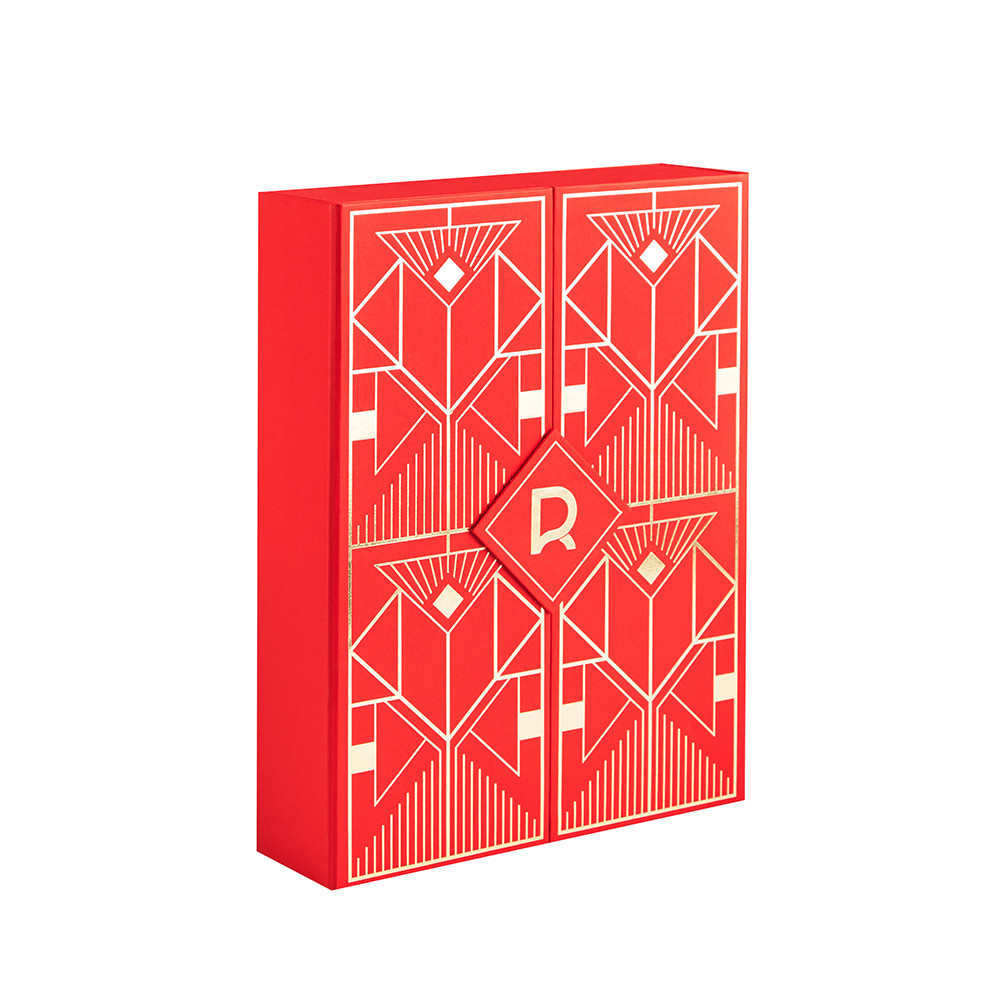
| Structure | How it opens | Best product fit | Watch out for |
|---|---|---|---|
| Double-door rigid box | Two magnetic doors swing open onto a fitted interior | Beauty sets, fragrance, jewellery, corporate gifts | Door alignment and hinge tolerance after lamination |
| Drawer calendar | Individual numbered pull-out drawers | Mixed sizes, perfumes, candles, accessories | Drawer clearance, friction and pull-tab strength |
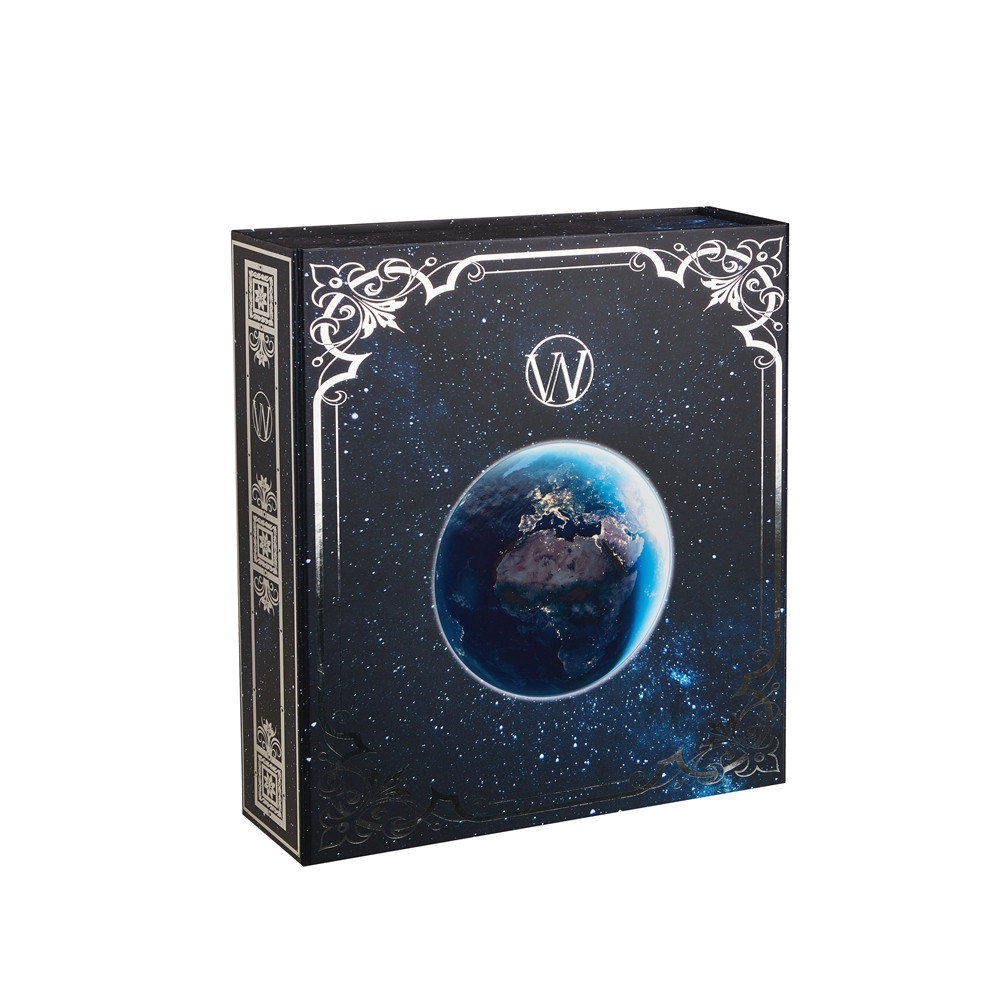
| Book-style calendar | Hinged cover opens like a book, magnetic close | 24 folded gift boxes, mini toys, collectibles | Spine strength and page-block compression |
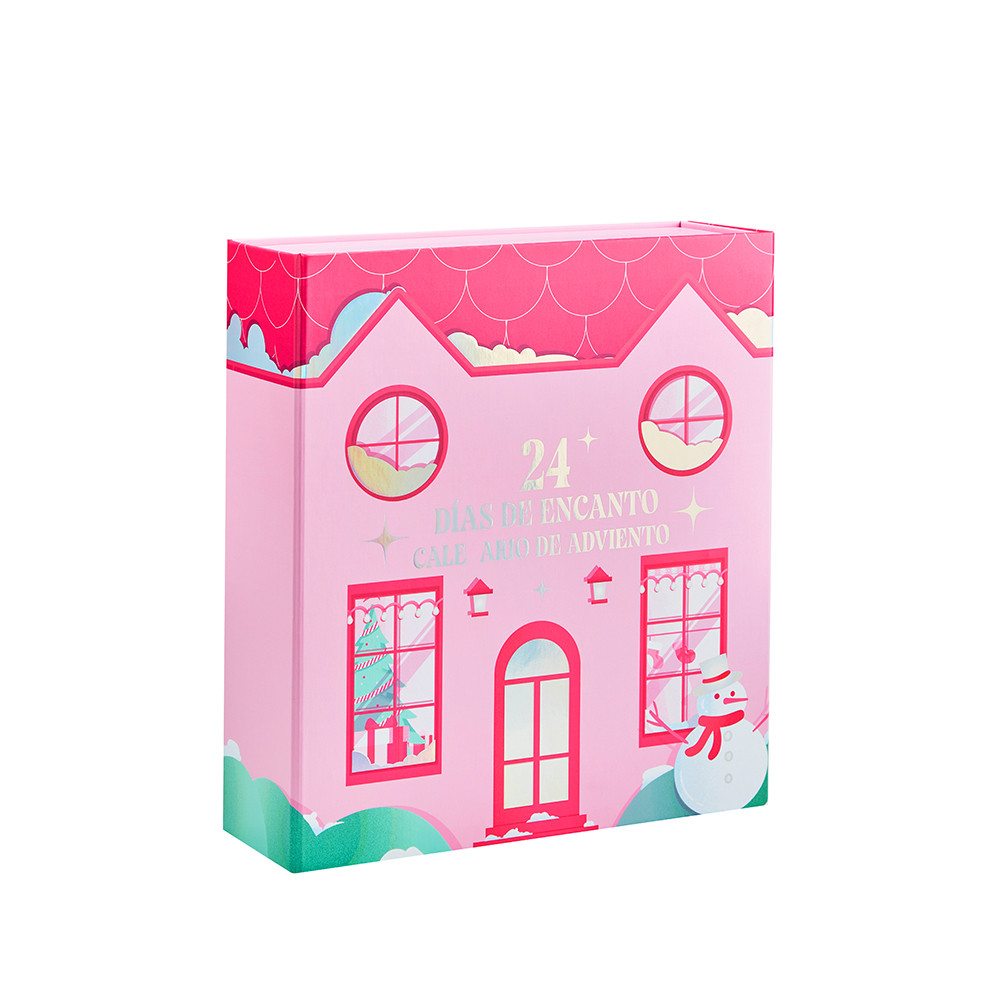
| House-shaped calendar | Novelty silhouette with roof and window details | Confectionery, toys, retail gifting | Corner forming on tight radius shapes |
| Lid-and-base calendar | Removable lid over paperboard dividers | Chocolate, pralines, assorted gift sets | Divider accuracy once cavities vary in size |
| Folding paperboard calendar | Printed board that pops up or folds flat | Lighter SKUs, high-volume retail, mailers | Board stiffness versus product weight |
A magnetic double-door advent calendar box with twenty-four drawers is the format most luxury brands settle on when the product mix is deliberately varied, because each drawer can be sized independently.
Choosing Between 12, 24 and 25 Compartments
The count dictates how much usable interior volume each product receives, and therefore how ambitious the assortment can be.
Twelve compartments allow generous cavities such as a full-size serum or a candle tin; twenty-four push average cavity volume down and reward brands that already offer minis.
Custom sequences are equally workable, including uneven layouts that give hero products larger compartments. The real constraint is the relationship between the smallest cavity and the largest product.
Materials, Board Grades and Interior Construction
Premium countdown boxes are normally built from rigid greyboard — 1.5 mm to 3 mm depth depending on box size and total loaded weight — wrapped in printed or specialty paper. Exterior paper carries most of the perceived value, so the choice deserves attention early.
- Specialty and textured paper for a tactile, non-glossy finish that photographs well and resists fingerprints.
- C1S / C2S art paper where fine CMYK artwork, gradients and photographic imagery dominate the design.
- Leatherette and pearl paper for high-contrast luxury cues on dark or metallic designs.
- Kraft and recycled board for brands positioning the calendar as a sustainable seasonal gift.
- Paperboard inner boxes, often CCNB or greyboard with a printed wrap, for the individual day gifts.
Interior construction separates a good calendar from a great one. Paperboard dividers and die-cut trays suit lightweight, high-count layouts; EVA and sponge foam hold glass bottles and fragrance minis; moulded pulp suits a formed paper cradle; fabric-covered inserts give jewellery a softer reveal. Insert geometry should be prototyped with real samples, not CAD alone.
Printing, Numbering and Luxury Finishes That Survive Daily Handling
Countdown calendars are opened repeatedly, and the most common complaint is not colour but finish failure: numbering abrades at door edges, foil lifts on folded corners, soft-touch lamination scuffs where fingers grip.
Specifications that hold up: foil and embossing on flat panels rather than tight folds; spot UV away from daily contact; anti-scratch matte lamination on drawer faces; numbering printed at sufficient ink density and cured before die-cutting. Approve Pantone matches on the actual substrate.
Do
- Approve a physical sample under the lighting used in retail and photography.
- Print numbering and alignment marks from the master dieline, not from a visual mock-up.
- Specify a colour tolerance and an AQL sampling level in the purchase order.
- Test drawer and door movement after lamination, not before.
Don't
- Rely on digital renders for structural decisions.
- Place heavy embossing across a magnet pocket or hinge line.
- Assume a foil will match a Pantone swatch without proofing.
- Leave pack-out labour out of the landed-cost calculation.
Product Fit, Weight and Protection: The Engineering Details Buyers Forget
Loaded weight is the silent failure point. A twenty-four-drawer calendar filled with glass minis can weigh several kilograms, and the base board, runners, glue joints and outer shipper must carry that load through container stacking and repeated opening.
Our structural review runs five checks before a sample is cut: dimensions including cap and pump head; insertion direction and removal access; cavity depth versus product height; loaded weight versus board and joint strength; and the expected drop and vibration profile.
How Custom Advent Calendar Boxes Are Manufactured: A Six-Step Process
- Brief and product audit. Product list with dimensions, weights, artwork status, target quantity, destination market and launch date.
- Structure and insert proposal. Recommended box format, compartment map, board grade, insert material and finishing options, with a costed outline.
- Dieline and white sample. Cutting and creasing dielines plus an unprinted structural sample to confirm fit and drawer or door movement.
- Printed proof and physical sample. Colour proofing, numbering artwork review and a produced sample for approval against agreed tolerances.
- Mass production. Printing, lamination, foil and embossing, die-cutting, box wrapping, assembly and insert fitting.
- Inspection and export packing. AQL inspection against the approved sample, then carton packing designed to protect corners and doors in transit.
Cost Drivers, MOQ and Lead Time: What Sets the Budget
Three things move price more than anything else: component count, hand assembly hours and the finishing stack.
| Cost driver | Low-cost scenario | Premium scenario |
|---|---|---|
| Structure | Folding paperboard with perforated doors | Rigid double-door or drawer construction |
| Component count | One printed shell plus dividers | Shell plus 24 wrapped drawers or inner boxes |
| Finishing | CMYK print with matte lamination | Foil, emboss, spot UV, specialty paper wrap |
| Interior | Die-cut paperboard tray | EVA foam, moulded pulp or fabric-covered insert |
| Assembly | Machine-folded, flat shipped | Hand-assembled and pre-filled option |
Minimum order quantities depend on the mix of structures, papers and finishes rather than on a single fixed number; a simple calendar can run at a lower threshold than a heavily hand-finished drawer set. Lead time works the same way. Print and board supply, foil tooling, sample approval rounds, assembly hours and ocean transit all sit on the critical path, and the sampling stage is where inexperienced buyers lose the most weeks. Our wider guidance on packaging planning and production topics covers lead-time and MOQ questions in more detail for teams building their first holiday programme.
Planning a Christmas 2026 Launch: How the Calendar Works Backwards
Work backwards from the date stock must land. For a European or North American launch: concept and product list in May or June, structure and sample approval in July, artwork finalisation in August, production in September, dispatch by early October, and retail availability from the first week of November.
Brands planning factory pre-fill, which is increasingly common in beauty and confectionery, must add filling, sealing and inspection time, and confirm material specifications for food-contact products rather than assuming them.
Which Industries Get the Most From Countdown Packaging
Beauty and skincare brands use calendars to move discovery sets and to introduce a full routine in sequence. Fragrance houses build scent libraries, often with foam-cradled minis behind doors rather than drawers. Chocolate and confectionery producers favour lid-and-base or house formats with paperboard dividers, and must confirm food-contact suitability. Jewellery brands use fewer, deeper compartments with fabric-covered inserts. Toys and collectibles rely on novelty silhouettes and mixed-size cavities, while corporate gifting programmes increasingly run twelve-day calendars for employees and clients.

How to Brief a Custom Advent Calendar Box Manufacturer
Send a product list, not a mood board alone: dimensions and weight per item, the countdown sequence, reference structures, artwork status, quantity, destination and the date stock must be available. With those inputs a structural team can return a compartment map and a realistic quotation.
Before awarding the project, ask how numbering artwork changes are handled after sample approval, and what the inspection plan is for a multi-component order. Calendars fail in assembly and packing more often than in printing.
Frequently Asked Questions About Custom Advent Calendar Boxes
What is the minimum order quantity for custom advent calendar boxes?
MOQ depends on structure, component count, materials and finishing rather than a single figure across all formats. Simpler folding calendars typically start lower than hand-assembled drawer sets, where labour dominates unit cost.
Can every compartment be a different size?
Yes. Mixed-size layouts are standard in beauty, fragrance and gifting sets. The compartment map is developed from actual product dimensions and tolerances, with removal access and insertion direction considered for each item.
How long does production take?
Schedule depends on sampling rounds, finishing complexity, component count and quantity. Calendars with individually wrapped drawers require substantially more assembly time than a printed shell with dividers, so the production date should be confirmed against approved specifications early.
Can you print numbering and custom artwork?
Yes. CMYK and Pantone spot colour printing, numbered compartments, brand graphics and seasonal artwork are all produced from approved artwork, with numbering checked against the master dieline to avoid sequencing errors.
Are sustainable options available?
FSC-certified paper, recycled board and paper-based inserts can be specified for many structures. The practical limit is usually the finishing stack — foil, lamination and foam inserts need to be weighed against the brand's sustainability claims.
Can you supply the inner gift boxes as well?
Yes. Wrapped paperboard inner boxes, drawer sets and removable trays are produced as part of the same project, which keeps colour, paper texture and finishes consistent across the whole calendar.
Final Takeaway: Why DHP Boxes for Advent Calendar Packaging
DHP Boxes develops structural design, insert engineering, printing, finishing, sampling and bulk manufacturing as one coordinated process, so a countdown concept is tested for fit, weight and pack-out before production. We work directly with brand owners, procurement managers, packaging designers and product developers on OEM and ODM calendars for beauty, fragrance, confectionery and jewellery programmes.
If you are planning a holiday launch, share your product dimensions, compartment count and target delivery date early. The custom advent calendar boxes range shows the finished structures, and our team can return a compartment map and quotation from a completed brief. You can also contact the packaging team directly with a specification or an existing artwork pack.
