
Push-Pop Sushi Packaging box vs Traditional Sushi Packaging: What’s the Difference?
B2B Guide • Food Packaging Strategy
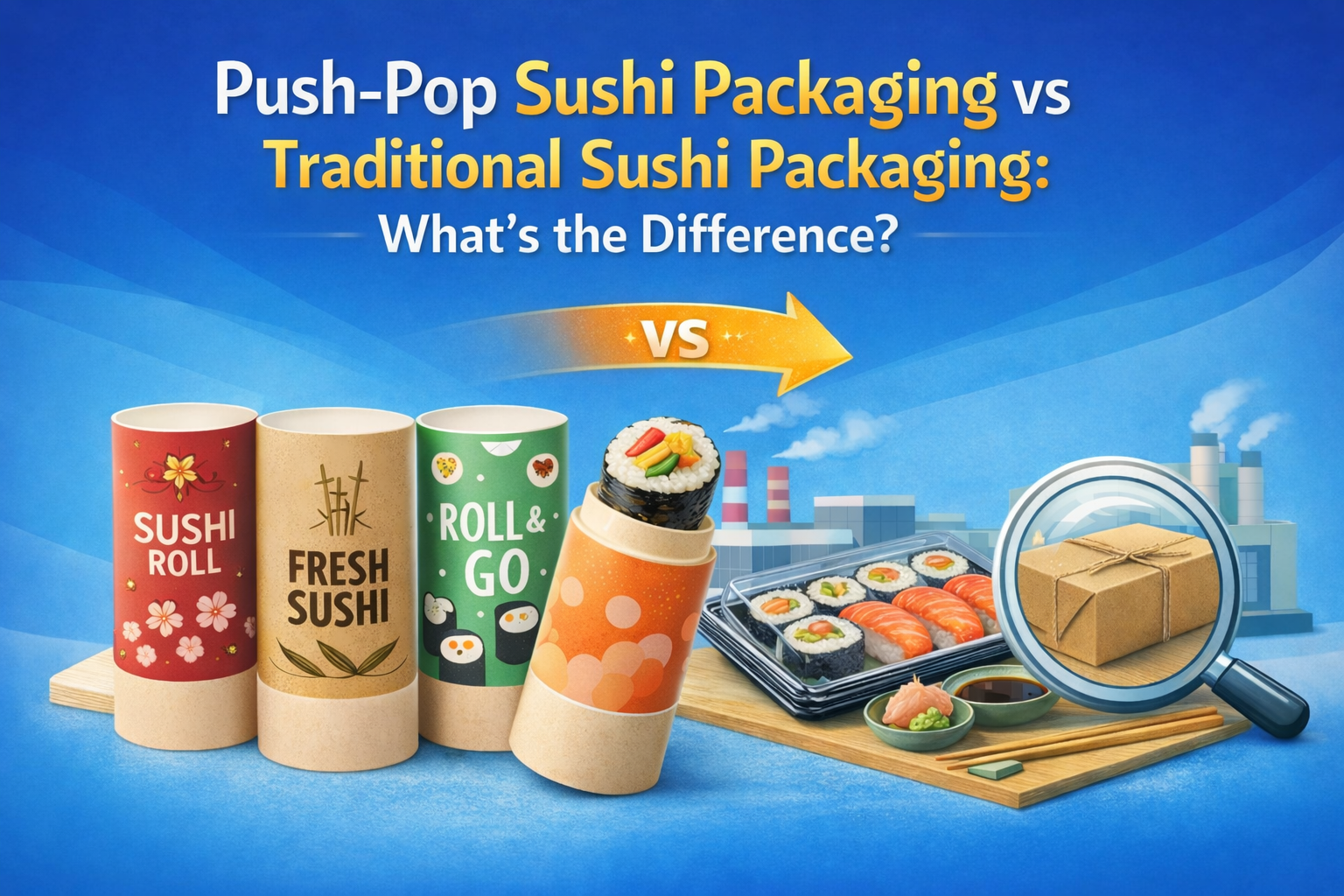
Push-Pop Sushi Packaging boxes vs Traditional Sushi Packaging: What’s the Difference?
For sushi brands, packaging is no longer “just a container.” It affects hygiene, portability, freshness, and brand perception. This comparison explains how push-pop (push-up) sushi packaging differs from traditional sushi trays, and how to choose the right format for takeaway, delivery, and retail.
Compare usability
One-hand eating, spill risk, and customer convenience.
Protect freshness
Barrier, sealing, and condensation management.
Elevate branding
360° design space vs limited tray labels.
Source smarter
What to verify before bulk purchase and rollout.
1) Why the packaging choice matters for sushi brands
Sushi packaging influences more than transportation. It shapes the customer’s first impression, the cleanliness of the eating process, and whether the product arrives intact after delivery. In markets where convenience-driven food trends move quickly, packaging can become a competitive advantage—especially for takeaway concepts and social media-friendly formats.
!Common buyer pain points
- Trays leak or trap condensation, causing soggy nori and messy presentation.
- Rolls shift during delivery, leading to broken shapes and unhappy reviews.
- Branding feels generic when the package only has a small label area.
- Hygiene concerns arise when customers must handle food directly.
If you’re building a complete packaging system (box + insert + outer bag), explore Custom Packaging Boxes.
2) What is push-pop sushi packaging?
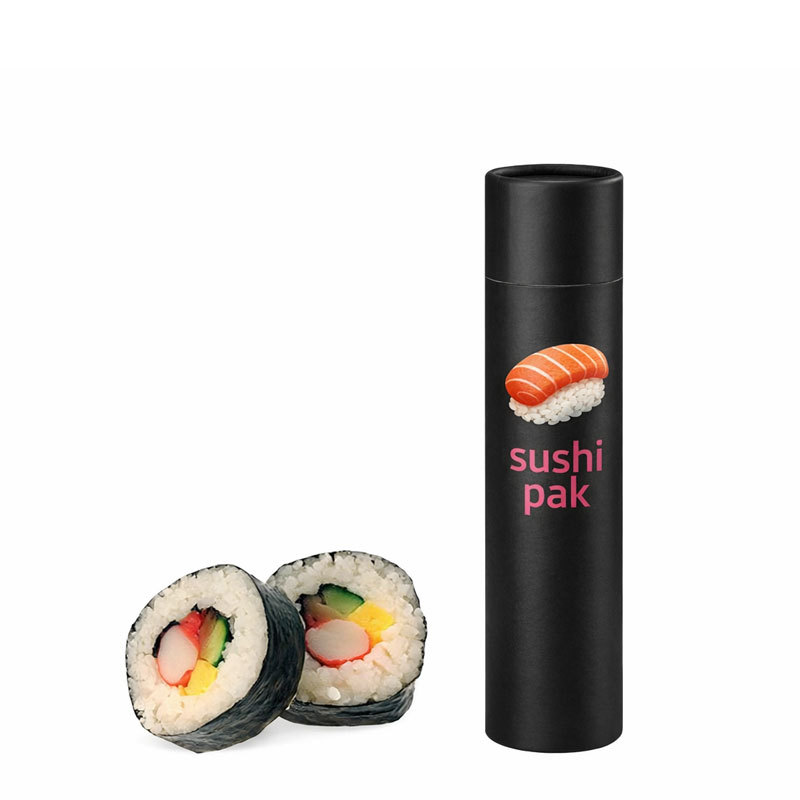
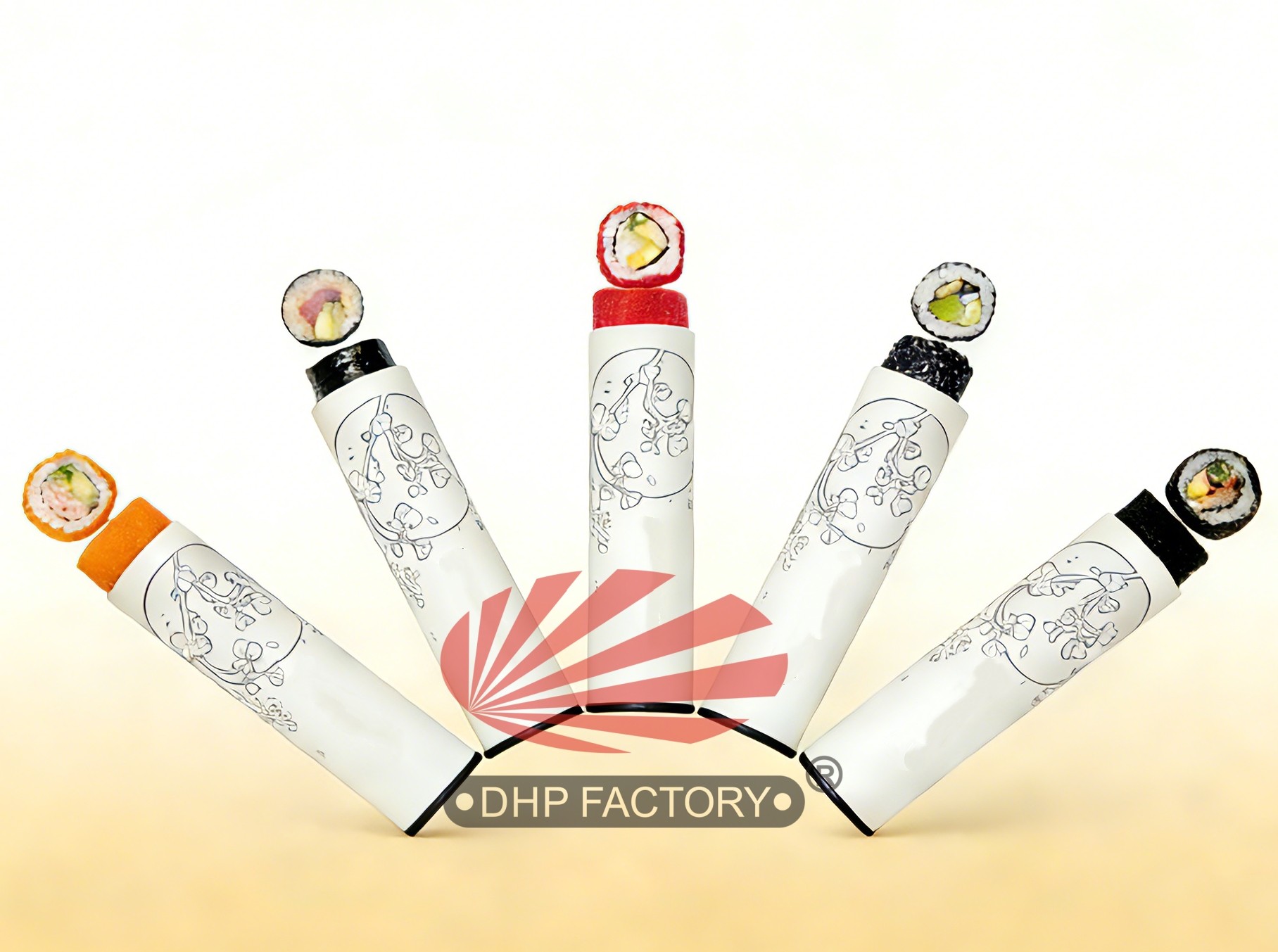
Push-pop sushi packaging (also called push-up sushi packaging) is typically a rigid tube structure with a push-up base. Customers lift the sushi upward by pushing from the bottom, making the eating process cleaner and more controlled.
Many brands choose this format to deliver a “new experience” while improving portability. For B2B buyers, the decision should also consider barrier performance, sealing options, and the stability of the push-up mechanism.
✓Key components
- Tube body (paperboard-based structure with printing surface)
- Inner lining (to handle moisture/grease and protect rigidity)
- Push-up base (stable travel and controlled friction)
- Top closure (seal film, lid, or easy-open solution)
3) Convenience & portability: tubes vs trays
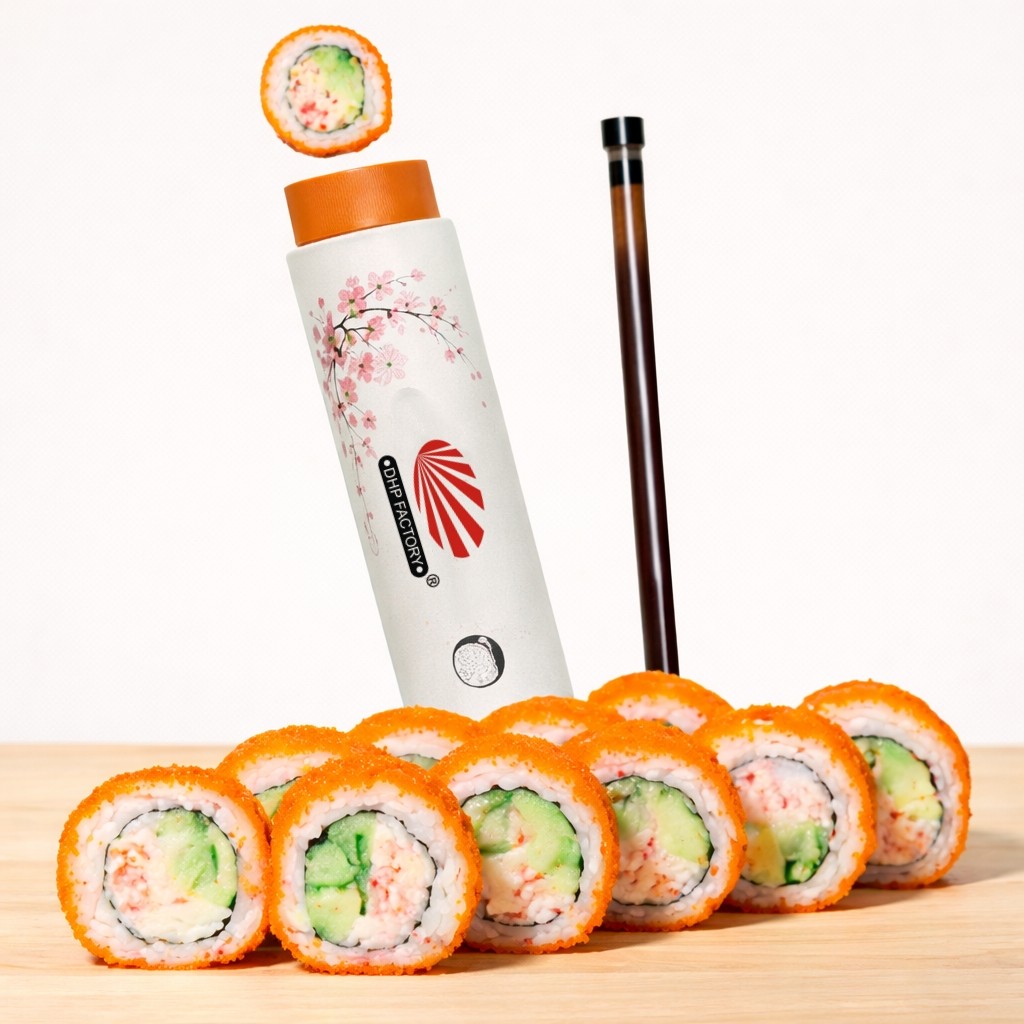
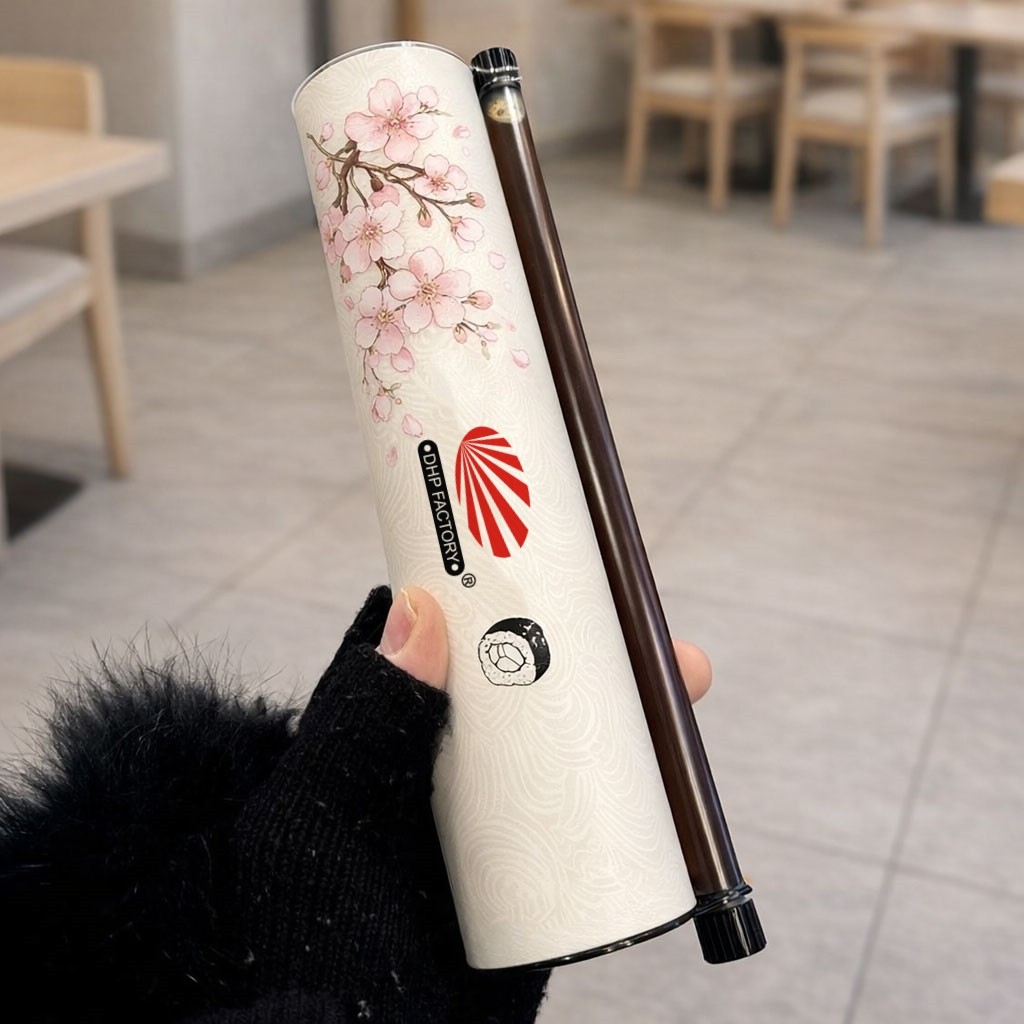
Traditional sushi trays are designed for flat placement and often require two-hand handling or a table surface. Tube-style push-pop packaging is built for mobile eating: it can be held upright, carried more easily, and eaten with less mess.
| Factor | Push-pop tube | Traditional tray |
|---|---|---|
| On-the-go use | Designed for handheld eating and upright carrying | Better for seated eating and flat transport |
| Spill control | Controlled exposure of food via push-up base | Open lids can expose sushi to movement and spills |
| Delivery stability | Rigid tube resists side pressure | Tray corners and lids may deform under stacking |
[Image Placeholder: Handheld tube packaging in a takeaway scenario]
4) Hygiene & eating experience: contact, control, and mess
Hygiene matters more when customers eat in public spaces. Push-pop packaging helps reduce direct contact because the roll can be lifted gradually. Traditional trays can still be hygienic, but they usually require chopsticks or direct hand contact to reposition the sushi.
✓What customers notice instantly
- Clean handling (less touching, less sauce mess)
- Controlled portion access (raise the roll gradually)
- Premium feel (packaging becomes part of the experience)
For brands that care about a premium unboxing experience, packaging finish and print accuracy matter. See Custom Printed Packaging.
5) Sustainability: material options and eco positioning
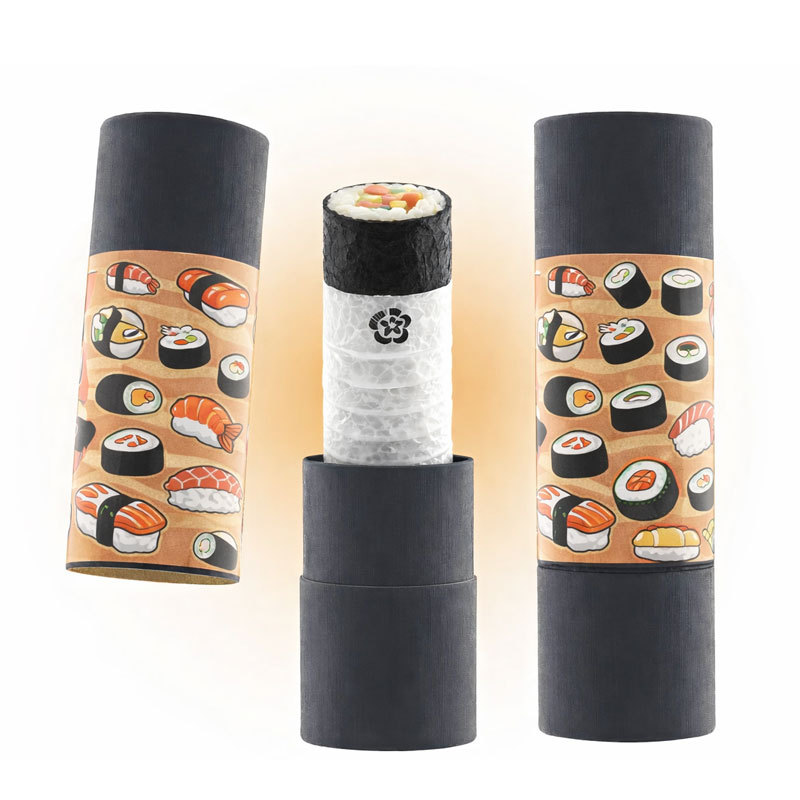
Sustainability claims must match real material choices and disposal pathways. Traditional trays often rely on plastics; tubes often use paperboard-based structures. However, real-world sustainability depends on barrier materials, coatings, and local waste systems.
✓How to approach sustainability responsibly
- Choose materials designed for food packaging and stability under moisture exposure.
- Align your “eco” messaging with the actual structure and finishing choices.
- Consider the full system: inner wrap, sealing, and secondary packaging.
6) Branding & shelf impact: 360° graphics vs tray labels
Brand visibility is one of the strongest advantages of push-pop sushi packaging. A tube offers a full wrap-around canvas that can elevate visual identity, seasonal campaigns, and premium positioning. Trays tend to rely on a lid label or small printed area, which limits storytelling.
Full-wrap printing improves shelf recognition and makes the packaging feel like a branded product—not just a container.
Trays are widely accepted and cost-efficient for standard dine-in or short-distance takeaway.
7) Side-by-side comparison table
Use this table as a quick decision tool. Your best choice depends on your channel (dine-in vs takeaway), product style, and brand positioning.
| Comparison point | Push-pop sushi packaging | Traditional sushi packaging |
|---|---|---|
| Eating convenience | Strong for handheld, controlled eating | Better for seated consumption |
| Hygiene perception | Often perceived as cleaner (less touching) | Depends on utensils and usage |
| Branding area | Large 360° print surface | Limited print space (lid/label) |
| Delivery protection | Rigid structure resists side pressure | May deform under stacking and movement |
| Moisture management | Needs correct lining and sealing to perform | Can trap condensation under lids |
| Customer novelty | High (innovative experience) | Low (standard, familiar) |
8) Which format fits your menu and channel?
The “best” packaging is the one that fits your workflow and customer use case. Push-pop packaging often shines when the product is designed for mobile eating and brand differentiation. Traditional trays remain a practical default for standard sushi assortments.
✓Choose push-pop when
- You sell handheld sushi rolls intended for on-the-go consumption.
- Brand experience and shelf visibility are strategic priorities.
- You want a packaging format that encourages social sharing.
- You can validate barrier + sealing performance with real tests.
!Choose traditional trays when
- You sell mixed assortments that require flat presentation.
- Speed of packing and familiar consumer expectations matter most.
- You rely on standard secondary packaging systems for delivery.
9) Bulk buying checklist: what to confirm with suppliers
For bulk orders, success depends on repeatability. A visually perfect sample means little if the next production batch changes fit, print, or barrier performance. Use this checklist to control risk.
| What to confirm | Questions to ask | Buyer outcome |
|---|---|---|
| Dimensions & fit | What ID/OD and height will you produce? What is the tolerance range? | Stable roll fit and smooth push-up action |
| Barrier & lining | What lining handles moisture/grease for cold sushi and sauces? | Cleaner tubes, better rigidity, less staining |
| Top closure | Which sealing method fits our workflow and freshness target? | Lower leak risk, better delivery safety |
| Print control | How do you manage color consistency and seam alignment? | Brand consistency across batches |
| Cartonization | Units/carton? Upright packing? How do you prevent deformation? | Lower freight surprises and fewer transit issues |
Want a custom sushi packaging proposal for your brand?
Share your roll size, serving style, and target quantity. DHP BOXES can recommend a production-safe structure, validate fit and barrier needs, and support sampling through mass production.
10) FAQs
Does push-pop sushi packaging work for delivery? ⌄
Yes—tube structures can resist side pressure better than trays. To perform well, confirm the moisture barrier, closure method, and carton packing approach, then test samples in real delivery conditions.
What sushi products are best for push-pop tubes? ⌄
Handheld sushi rolls and single-portion formats are the most natural fit. For assorted sets, traditional trays often provide better flat presentation and separation.
How do I prevent the tube from softening or staining? ⌄
Use a suitable inner lining and choose a closure method that matches your holding time and ingredients. Condensation is common for cold foods, so barrier performance matters.
Can push-pop sushi packaging be fully customized with branding? ⌄
Yes. Many brands choose full-wrap graphics and premium finishes to increase shelf impact. Confirm seam placement, color control, and print durability during sampling.
How should I start sourcing sushi push-pop packaging in bulk? ⌄
Start with your roll dimensions, target quantity, preferred closure, and holding conditions (cold storage, sauces). Then request samples and lock a written spec sheet before mass production.
11) Why DHP BOXES for custom food packaging projects
Packaging decisions become easier when you work with a partner who understands both branding and production reality. DHP BOXES supports B2B buyers with custom packaging development, specification validation, and scalable manufacturing. Whether you choose push-pop tubes or a more traditional structure, we help you engineer packaging that performs consistently at scale.
✓What we help you control
- Performance: fit, sealing approach, and moisture management
- Consistency: dimensional control and repeatable printing
- Brand value: high-quality finishes that elevate perception
- Speed: clear RFQ inputs that reduce sampling rounds
Explore DHP BOXES, check common questions in FAQ, or send your requirement via Contact.
